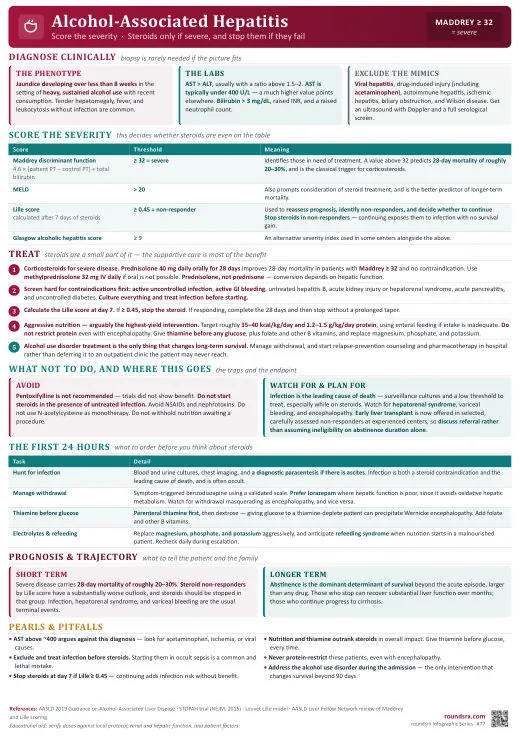
Acute Alcoholic Hepatitis
- AST typically 2–6× ULN (rarely > 500 in pure alcoholic hepatitis)
- AST:ALT ratio > 2:1 -classic pattern (alcohol damages mitochondrial AST, and ALT requires pyridoxal phosphate which is depleted in alcoholics)
- Recent heavy alcohol use (typically > 40g/day women, > 60g/day men for > 6 months)
- Jaundice (bilirubin often markedly elevated)
- Exclude other causes: viral hepatitis, drug-induced, autoimmune
- DF = 4.6 × (patient PT − control PT) + total bilirubin
- DF < 32: mild-moderate → supportive care
- DF ≥ 32: severe → consider prednisolone
- MELD also predicts mortality in alcoholic hepatitis
- MELD > 21: significant mortality risk, correlates with DF ≥ 32
- Supportive care -these patients are MALNOURISHED
- High-calorie, high-protein nutrition (35–40 kcal/kg/day) -nutrition may be the single most important intervention
- Thiamine (Vitamin B1) 100 mg IV/PO daily
- Folic acid 1 mg PO daily
- Multivitamin daily
- Alcohol cessation -absolute requirement
- Prednisolone (Orapred) 40 mg PO daily × 28 days → taper
- Calculate Lille score at day 7 -this is MANDATORY
- Lille > 0.45 = non-responder → STOP steroids (no benefit, only side effects)
- Lille < 0.45 = responder → complete 28-day course
- PLUS all supportive care above (nutrition, thiamine, folate, MVI)
- Active GI bleed
- Uncontrolled infection
- HBV/HCV co-infection
- Hepatorenal syndrome
| Test | Purpose |
|---|---|
| AST, ALT | AST:ALT > 2:1 classic. AST rarely > 500. |
| Total/direct bilirubin | Often markedly elevated (used in DF and MELD) |
| INR/PT | Synthetic function, used in DF calculation |
| Albumin | Synthetic function and inflammation (NOT a nutritional marker, see below) |
| CBC | Leukocytosis common; macrocytic anemia (MCV > 100) |
| BMP | Creatinine (HRS surveillance), electrolytes |
| Hepatitis serologies | Rule out viral hepatitis (HBV, HCV) |
| Lipase | Rule out concurrent pancreatitis |
| RUQ ultrasound + Doppler | Evaluate liver, rule out biliary obstruction, assess portal flow |
| Maddrey DF | Calculate: 4.6 × (PT − control PT) + bilirubin |
| MELD score | Additional prognostic tool |
| Drug | Dose | Indication |
|---|---|---|
| Prednisolone (Orapred) | 40 mg PO daily × 28 days → taper | Severe AH (DF ≥ 32). Stop if Lille > 0.45 at day 7. |
| Thiamine (Vitamin B1) | 100 mg IV/PO daily | All patients -prevent Wernicke encephalopathy |
| Folic acid | 1 mg PO daily | All patients -folate deficiency common in alcoholics |
| Multivitamin | 1 tab PO daily | Nutritional repletion |
| Nutritional supplementation | 35–40 kcal/kg/day | High-calorie, high-protein diet. Consult dietitian. |
| Lactulose | 15–30 mL PO q2–4h titrate to 3–4 BM/day | If hepatic encephalopathy present |
Patient: 52M with 25-year history of heavy alcohol use (12 beers/day), presenting with 3 weeks of progressive jaundice, abdominal distension, and confusion. Last drink 5 days ago.
Labs: AST 340, ALT 120 (ratio 2.8:1), total bilirubin 22, INR 2.4, albumin 2.1, Cr 1.2, WBC 15.8, MCV 108. Hepatitis B/C negative.
Scores: Maddrey DF = 4.6 x (26 - 13) + 22 = 81.8. MELD = 28.
Assessment: Severe alcoholic hepatitis (DF 81.8 >= 32). No contraindications to steroids (paracentesis: PMN 80, blood cultures negative, CXR clear).
Management: Prednisolone 40 mg PO daily. High-calorie nutrition (35 kcal/kg/day via oral + NG supplement). Thiamine 100 mg IV, folate 1 mg, MVI. Lactulose for encephalopathy. Day 7 Lille score: 0.18 (responder) - completed 28-day course. Bilirubin trended down to 8 by day 28. Discharged with alcohol cessation program referral.
Patient: 45F with daily vodka use x 10 years, presenting with jaundice, RUQ pain, fever 38.5C. AST 280, ALT 90, bilirubin 28, INR 2.8, Cr 1.8, albumin 1.9.
Scores: Maddrey DF = 92, MELD = 34. Paracentesis negative for SBP. Blood cultures negative.
Management: Started prednisolone 40 mg daily. Day 7: bilirubin rose from 28 to 34 (worsening). Lille score = 0.72 (non-responder, >0.45). Prednisolone STOPPED immediately (no benefit, only infection risk). Continued aggressive nutrition. Hepatology consulted for early transplant evaluation given first liver-decompensating event, supportive family, and willingness to pursue sobriety. Listed and transplanted at day 21. Good outcome.
Patient: 38M presenting with jaundice, nausea, and RUQ tenderness. Drinks 6-8 beers daily x 5 years. AST 220, ALT 85, bilirubin 6.5, INR 1.3, Cr 0.9, albumin 3.2.
Scores: Maddrey DF = 4.6 x (14.5 - 13) + 6.5 = 13.4 (< 32 = mild-moderate). MELD = 16.
Assessment: Mild alcoholic hepatitis. Does NOT meet criteria for steroids (DF < 32).
Management: Supportive care only: high-calorie high-protein diet, thiamine 100 mg PO daily, folate 1 mg, MVI. Alcohol cessation counseling with motivational interviewing. Gabapentin for alcohol cravings. Hepatitis serologies negative. LFTs trended: bilirubin 6.5 -> 3.2 over 2 weeks. Discharged day 5 with outpatient GI follow-up and alcohol treatment program.
| Parameter | Frequency | Target / Action |
|---|---|---|
| Lille score | Day 7 (MUST calculate) | > 0.45 = stop steroids. < 0.45 = complete course. |
| LFTs | Twice weekly | Trending bilirubin, AST, ALT improvement |
| BMP | Daily | Creatinine (HRS surveillance), electrolytes |
| Infection screening | Ongoing | Steroids mask infection -low threshold to culture |
| Glucose | QID while on steroids | Steroids cause hyperglycemia -sliding scale insulin |
| Mental status | Each assessment | Hepatic encephalopathy monitoring |