Landmark clinical cases that shaped modern medicine. Each case is presented as a clinical scenario, try to guess the diagnosis before revealing the answer.
Case 1 · 1809–1865
Genetics · Cardiology
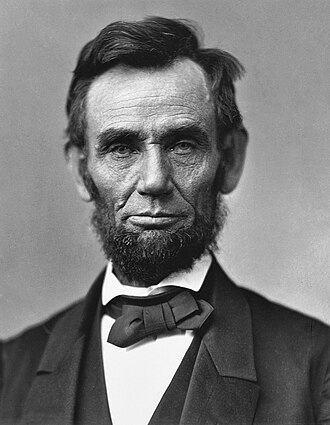
A 6-foot-4-inch statesman towers over his era, with disproportionately long limbs, large hands and feet, lax joints, and a thin, asymmetric face. He is famously melancholic and chronically constipated. He is assassinated at 56, so no one ever learns what his vasculature would have done with another decade.
Clinical Question: What connective tissue disorder does this habitus suggest, and what alternative syndrome must be considered when a marfanoid body comes with mucosal nodules?
Abraham Lincoln, The Marfan vs MEN2B Debate
Marfan syndrome was proposed in 1962, after a distant relative sharing an ancestor was diagnosed with it. The rival theory is MEN2B (multiple endocrine neoplasia type 2B): marfanoid habitus plus mucosal neuromas plus medullary thyroid carcinoma, argued from photographs showing bumpy lips and his lifelong constipation (colonic ganglioneuromatosis). Neither is proven; DNA testing of his relics has been debated for decades. Teaching points: the marfanoid-habitus differential is Marfan, MEN2B, homocystinuria, and Loeys-Dietz, and the distinction matters because each has a different fatal complication to get ahead of: aortic root dissection surveillance in Marfan, prophylactic thyroidectomy in MEN2B (medullary thyroid cancer arrives in childhood, screen with calcitonin and RET testing), and thrombosis prevention in homocystinuria.
Alexander Gardner portrait, November 1863 (public domain)
Case 2 · 1799
Airway · Critical Care
A 67-year-old retired general rides his estate for hours in snow and freezing rain. The next evening he develops a severe sore throat; by 2 AM he has a muffled voice, drooling, and can barely swallow or breathe. Over the next 21 hours his physicians bleed him four times, removing an estimated 40% of his blood volume, and apply blistering agents. A junior physician urges an emergency tracheotomy and is overruled by his seniors. The patient dies that night, sitting upright to breathe.
Clinical Question: What airway diagnosis best fits this presentation, and what would modern management have looked like?
George Washington, Acute Bacterial Epiglottitis
The retrospective consensus is acute bacterial epiglottitis: the classic adult picture is the 4 D's: dysphagia, drooling, distress, and dysphonia (the muffled "hot potato" voice), with rapid progression and upright posturing to keep the airway open. Modern management is airway first: secure it early and gently in a controlled setting, because agitation can convert a narrowed airway into a complete obstruction, then IV antibiotics covering H. influenzae, streptococci, and staphylococci (ceftriaxone plus vancomycin). The two teaching tragedies: the bloodletting added severe iatrogenic hypovolemia to a septic, airway-obstructed patient, and the one physician with the right answer, the tracheotomy, was the most junior in the room. Hierarchy that silences a correct junior voice is still a patient-safety theme today.
Portrait by Gilbert Stuart (public domain)
Case 3 · 1947–1963
Endocrinology
A young politician with a history of chronic back pain, fatigue, and GI complaints develops progressive skin hyperpigmentation, hypotension, and weight loss. Labs reveal hyponatremia and hyperkalemia. He is started on daily cortisone replacement and DOCA pellet implants, which he will take for the rest of his life. His medical records are kept strictly confidential due to the political implications of a chronic illness diagnosis.
Clinical Question: What endocrine disorder does this presentation suggest, and what is the classic electrolyte pattern?
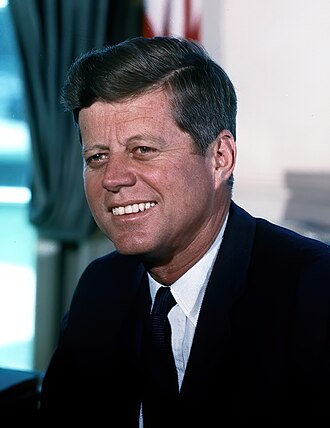
John F. Kennedy, Addison's Disease (Primary Adrenal Insufficiency)
JFK had autoimmune primary adrenal insufficiency characterized by cortisol and aldosterone deficiency. The classic electrolyte pattern is hyponatremia + hyperkalemia (from aldosterone deficiency). Hyperpigmentation occurs due to elevated ACTH stimulating melanocyte receptors. His case illustrates how adrenal crisis can be precipitated by physiologic stress, during his presidency, he required stress-dose steroids during multiple medical crises. His treatment regimen included hydrocortisone and fludrocortisone.
White House portrait, Cecil Stoughton, 1963 (public domain)
Case 4 · 1821
Oncology · GI
A 51-year-old exiled military leader on a remote island develops progressive epigastric pain, nausea, and anorexia over 18 months. He loses significant weight despite initially being overweight. His father died of a "pyloric obstruction." On autopsy, a large ulcerated mass is found at the pylorus with extension to adjacent lymph nodes. Modern hair analysis reveals arsenic levels 38× normal, raising debate about poisoning versus environmental exposure.
Clinical Question: What is the most likely diagnosis, and what hereditary cancer syndrome might this family history suggest?
Napoleon Bonaparte, Gastric Adenocarcinoma
Autopsy confirmed gastric adenocarcinoma at the pylorus. The family history (father, grandfather, and three sisters also died of stomach cancer) raises suspicion for hereditary diffuse gastric cancer (HDGC), associated with CDH1 mutations. The arsenic finding is likely from environmental exposure (green wallpaper containing copper arsenate was common in the era). Teaching points: alarm features for gastric cancer (weight loss, early satiety, progressive dyspepsia >55), family history red flags, and when to suspect hereditary cancer syndromes.
Portrait by Jacques-Louis David, 1812 (public domain)
Case 5 · 1921
Neurology · Infectious Disease
A 39-year-old politician vacationing at a Canadian island develops fever, malaise, and progressive ascending symmetric weakness over 3 days after swimming in cold water. He develops urinary retention and bilateral lower extremity paralysis. Sensory exam is notable for facial pain and leg dysesthesias. CSF shows mild pleocytosis. He never regains the ability to walk independently. The diagnosis at the time was poliomyelitis, but a 2003 retrospective analysis argued for an alternative diagnosis.
Clinical Question: What are the two leading diagnoses, and what clinical features help distinguish them?
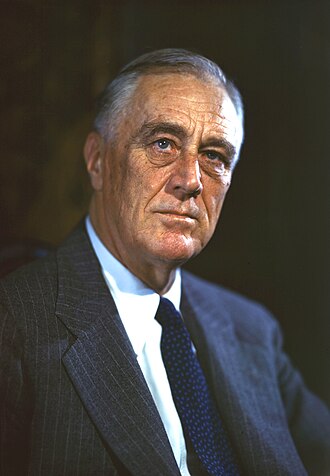
Franklin D. Roosevelt, Poliomyelitis vs. Guillain-Barré Syndrome
FDR was diagnosed with poliomyelitis, but a 2003 Bayesian analysis (Goldman et al.) argued Guillain-Barré syndrome was 8× more likely given his age (39, rare for polio), symmetric descending-to-ascending paralysis, facial pain, dysesthesias, and prolonged fever. Polio favors: asymmetric weakness, no sensory involvement, younger patients. GBS favors: symmetric ascending paralysis, sensory symptoms, areflexia, albuminocytologic dissociation. Teaching point: this case is a classic board question on distinguishing acute flaccid paralysis, always compare the pattern of weakness, sensory findings, and CSF profile.
1944 portrait. Photo: Leon Perskie, CC BY 2.0
Case 6 · 1984
Neurology
A 42-year-old retired heavyweight boxing champion, three years after his final fight, develops a progressively soft voice, slowed movements, a masked face, and a resting tremor. His gait has lost its famous quickness. Cognition is largely intact. His symptoms respond to dopaminergic therapy, and he lives 32 more years with slowly progressive disease.
Clinical Question: What movement disorder is this, and does his occupation change the diagnosis?
Muhammad Ali, Parkinson's Disease vs Post-Traumatic Parkinsonism
He was diagnosed with Parkinson's disease at 42: the cardinal features are bradykinesia plus rest tremor and/or rigidity, and a clear levodopa response supports idiopathic PD. The permanent debate is whether thousands of head blows caused or accelerated it: chronic traumatic encephalopathy (CTE, dementia pugilistica) is a tauopathy that can include parkinsonism, but it is only confirmed at autopsy. Teaching points: parkinsonism has a differential (drug-induced from antipsychotics and metoclopramide, vascular, PSP and MSA, post-traumatic); young-onset parkinsonism (under 40) demands a Wilson's disease workup (ceruloplasmin, slit-lamp for Kayser-Fleischer rings) because it is treatable; and repetitive head injury is a dose-dependent neurodegeneration risk, which is why return-to-play concussion rules exist.
1967 press photograph, New York World-Telegram (public domain)
Case 7 · 1963–2018
Neurology
A 21-year-old physics graduate student becomes clumsy, falls without explanation, and develops slurred speech. Exam shows a striking mix: brisk reflexes and spasticity in the same limbs that show wasting and fasciculations, with completely normal sensation. He is given roughly two years to live. He survives 55 more, producing his most important work from a wheelchair and, later, a speech synthesizer.
Clinical Question: What is the diagnosis, what two motor systems does it destroy, and why was this course so unusual?
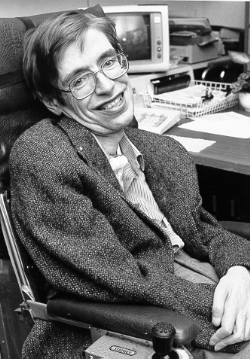
Stephen Hawking, Amyotrophic Lateral Sclerosis
ALS (Lou Gehrig disease, after the Yankees first baseman it killed in 1941) is defined by combined upper motor neuron signs (spasticity, hyperreflexia) and lower motor neuron signs (wasting, fasciculations) without sensory loss. Median survival is 3 to 5 years, usually from respiratory failure. Hawking's 55-year course is among the longest ever recorded: young-onset disease can progress slowly, though his was exceptional even for that. Exclude the treatable mimics before accepting the diagnosis: cervical myelopathy, multifocal motor neuropathy (responds to IVIG), and thyroid disease. What actually changes outcomes: non-invasive ventilation extends survival and quality of life, multidisciplinary clinic care, and early nutrition support (PEG); riluzole adds months, not years.
NASA/StarChild photograph (public domain)
Case 8 · 1888–1890
Psychiatry · Neurology
A 35-year-old painter suffers episodic attacks of confusion, hallucinations, and agitation, separated by lucid intervals of ferocious productivity. During one crisis he cuts off part of his left ear and presents it to a stranger. Asylum physicians diagnose "epilepsy" and reportedly treat him with digitalis. He drinks absinthe heavily and works with lead-based paints. At 37 he dies of a self-inflicted gunshot wound.
Clinical Question: What is the differential for episodic neuropsychiatric attacks with lucid intervals, and which classic drug toxicity turns vision yellow?
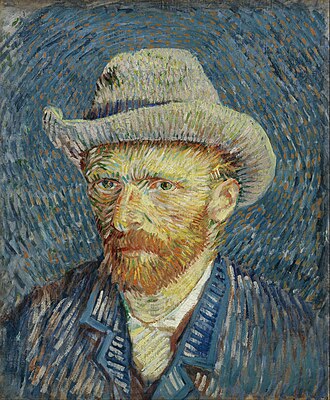
Vincent van Gogh, The Great Retrospective Differential
No single diagnosis is proven, which is exactly the teaching value. Leading candidates: temporal lobe epilepsy with interictal psychosis (his own physicians' diagnosis), bipolar disorder (episodic crises with hyperproductive intervals), absinthe and alcohol use with withdrawal, acute intermittent porphyria, and lead exposure from paint. The workup his story teaches for episodic psychosis with lucid intervals: EEG, urine porphyrins, heavy metals, substance history, never just a psychiatric label. The board pearl: digitalis toxicity classically causes xanthopsia (yellow-tinted vision) and halos around lights, and some speculate this colored his late palette; treat significant toxicity with digoxin immune Fab. His death is also a permanent reminder that psychiatric illness in a productive, functional person still kills.
Self-portrait, 1887 (public domain)
Case 9 · 1827
Toxicology · Hepatology
A 56-year-old composer with a 30-year history of progressive bilateral sensorineural hearing loss, chronic diarrhea, and heavy alcohol use presents with abdominal distension, jaundice, and recurrent fever. He undergoes paracentesis four times in his final months. He dies of hepatic failure. Modern analysis of his hair reveals lead levels 100× above normal. Genomic sequencing of his hair (2023) confirms hepatitis B infection and multiple genetic risk variants for liver disease.
Clinical Question: What are the likely causes of his liver disease, and what is the differential for his hearing loss?
Ludwig van Beethoven, Multifactorial Liver Failure & Lead Poisoning
His death was caused by hepatorenal syndrome from decompensated cirrhosis. Contributing factors included alcohol use, hepatitis B infection (confirmed by 2023 DNA analysis), and chronic lead exposure (from adulterated wine, a common practice in 19th-century Europe). The hearing loss differential includes lead ototoxicity, otosclerosis, and autoimmune inner ear disease. Teaching points: multifactorial liver disease, lead toxicity (abdominal colic, neuropathy, hearing loss, nephropathy), and the importance of considering environmental exposures.
Portrait by Joseph Karl Stieler, 1820 (public domain)
Case 10 · 1934
Hematology · Occupational
A 66-year-old physicist, the only person with Nobel Prizes in two sciences, presents with months of fatigue, recurrent fevers, and pallor. Labs show pancytopenia with a low reticulocyte count. For over 30 years she has handled radioactive isotopes without shielding, carrying vials in her pockets and admiring their glow at night, and she ran mobile X-ray units through World War I. She dies within months.
Clinical Question: What marrow diagnosis explains this pancytopenia, and how do you distinguish it from its mimics?
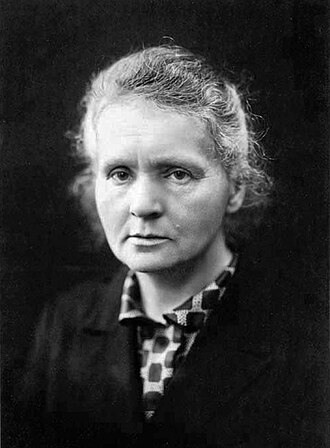
Marie Curie, Radiation-Induced Aplastic Anemia
Cumulative ionizing radiation destroyed her hematopoietic stem cells: aplastic anemia. Marrow is among the most radiosensitive tissues in the body (with gut and gonads), which is why radiation workers carry dosimeters today. The pancytopenia workup her case anchors: reticulocyte count first (low means a production problem), then smear, B12/folate, and marrow biopsy, where an empty fatty marrow = aplastic anemia, a hypercellular dysplastic marrow = MDS, and blasts = leukemia. Modern treatment: HSCT for the young with a matched sibling donor; ATG plus cyclosporine plus eltrombopag for the rest. Her lab notebooks are still radioactive (radium-226, half-life 1,600 years) and are stored in lead, readable only after signing a waiver.
Photograph c. 1920 (public domain)
Case 11 · 1853–1884
Hematology · Genetics
A queen with no family history of bleeding has a son who bruises massively from trivial injury, suffers crippling joint bleeds, and dies at 30 of a brain hemorrhage after a minor fall. Two of her daughters are healthy but pass the same disease to their sons, seeding it through the royal houses of Russia, Spain, and Prussia, including the heir to the Russian throne.
Clinical Question: What inheritance pattern is this, and how was the specific factor deficiency finally identified?
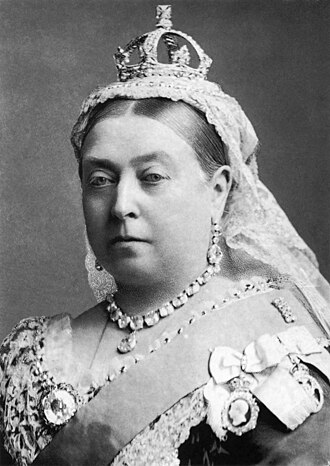
Queen Victoria, Hemophilia B Carrier (The Royal Disease)
Classic X-linked recessive inheritance: carrier mothers are healthy, half their sons are affected, half their daughters carry, and there is never male-to-male transmission. With no affected ancestors, the mutation was almost certainly de novo in Victoria or her immediate parentage. In 2009, genetic analysis of the Romanov remains (her great-grandson Alexei) identified an F9 splice-site mutation: hemophilia B (factor IX deficiency). Teaching points: hemophilia A (factor VIII, about 80% of cases) and B are clinically identical, with hemarthroses, deep muscle bleeds, and a prolonged aPTT with a normal PT; factor assays make the distinction because treatment is factor-specific. Alexei's bleeding, and Rasputin's sway over his desperate parents, is a case study in how untreatable illness breeds medical charlatans.
Photograph by Alexander Bassano, 1882 (public domain)
Case 12 · 1977–1981
Dermatology · Oncology
A 32-year-old Jamaican musician notices a dark streak under his right great toenail after a soccer injury. He attributes it to the injury. A biopsy eventually reveals malignant melanoma. He declines amputation of the toe due to religious beliefs (Rastafari), opting for excision of the nail bed only. Four years later he presents with metastatic disease to the lungs, liver, and brain. He dies at age 36.
Clinical Question: What subtype of melanoma is most common in dark-skinned individuals, and what is the ABCDE rule modification for subungual lesions?
Bob Marley, Acral Lentiginous Melanoma
Acral lentiginous melanoma (ALM) is the most common melanoma subtype in African American, Hispanic, and Asian patients. It occurs on palms, soles, and nail beds, areas often missed on routine skin exams. For subungual melanoma, use the ABCDEF rule: Age (peak 50–70), Band (brown-black, breadth >3mm), Change (rapid growth), Digit (thumb/great toe most common), Extension (Hutchinson sign, pigment extending to nail fold), Family history. His case highlights the critical importance of examining acral sites in all skin types and not dismissing nail pigmentation as traumatic.
Zurich concert, 1980. Photo: Ueli Frey, CC BY-SA 3.0
Case 13 · 1788–1820
Hematology · Psychiatry
A monarch in his 50s develops recurrent episodes of severe abdominal pain, constipation, tachycardia, and limb weakness. During acute episodes he becomes confused, agitated, and frankly psychotic, speaking rapidly for hours and exhibiting paranoid delusions. His physicians note his urine is dark, described as "port wine colored." He suffers at least 5 major episodes over 30 years, each lasting weeks to months.
Clinical Question: What metabolic disorder explains the combination of neurovisceral symptoms and dark urine?
King George III, Acute Intermittent Porphyria
The leading retrospective diagnosis is acute intermittent porphyria (AIP), a defect in porphobilinogen deaminase causing accumulation of ALA and PBG. The classic triad is abdominal pain + neuropsychiatric symptoms + autonomic dysfunction. Port-wine urine results from porphobilinogen oxidizing to porphobilin on standing. Attacks are triggered by fasting, medications, and stress. This case is a board-favorite for teaching the porphyrias and the differential of acute abdominal pain + psychiatric symptoms.
Coronation portrait by Allan Ramsay, 1762 (public domain)
Case 14 · 1906–1938
Infectious Disease · Ethics
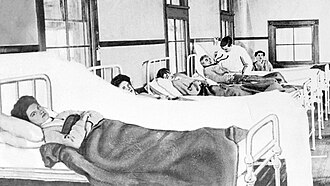
A healthy 37-year-old cook has never had a serious illness, yet typhoid fever outbreaks follow her from household to household across New York. An investigator links her to outbreak after outbreak; her stool grows Salmonella Typhi. She refuses gallbladder surgery, is quarantined, released on a promise not to cook, and is found five years later cooking at a maternity hospital under an assumed name after an outbreak there kills two people. She spends 26 years in quarantine.
Clinical Question: How does a person with no symptoms transmit typhoid for decades, and how is chronic carriage managed today?
Mary Mallon (Typhoid Mary), Chronic S. Typhi Carriage
Salmonella Typhi establishes chronic biliary carriage: it colonizes the gallbladder, forming biofilm on gallstones, and sheds in stool for years while the host feels well. About 2 to 5% of infected patients become chronic carriers, more with gallstones, and as a cook she delivered it directly into food. Modern management: prolonged fluoroquinolone therapy (about 4 weeks) clears most carriers; cholecystectomy for those with stones who fail antibiotics. The clinical typhoid refresher her name carries: stepwise fever with relative bradycardia (Faget sign), rose spots, and week-3 ileal perforation risk; treat with ceftriaxone or azithromycin, minding XDR strains. Her 26-year island quarantine remains the classic ethics case balancing individual liberty against public protection, argued again during every modern epidemic.
Mary Mallon (foreground), Riverside Hospital, 1909 (public domain)
Case 15 · 1951
Oncology · Ethics
A 31-year-old African American woman presents with vaginal bleeding. Biopsy reveals an aggressive cervical carcinoma. Despite radiation therapy, she dies 8 months later. Cells taken from her tumor, without her knowledge or consent, prove to be uniquely immortal in culture, doubling every 20–24 hours. They become the most widely used human cell line in biomedical research.
Clinical Question: What cell line was derived from this patient, and what ethical issues does it highlight?
Henrietta Lacks, HeLa Cells & Informed Consent
HeLa cells (from Henrietta Lacks) were the first immortalized human cell line. They have been used in polio vaccine development, cancer research, HIV/AIDS studies, and COVID-19 research, contributing to over 75,000 publications. Her case is the landmark example of informed consent failures in medical research. It directly influenced the development of modern bioethics guidelines including the Common Rule and Belmont Report.
Statue of Henrietta Lacks by Helen Wilson-Roe, Bristol (no verified free photograph of her exists). Photo: 14GTR, CC BY-SA 4.0
Case 16 · 1848
Neurology
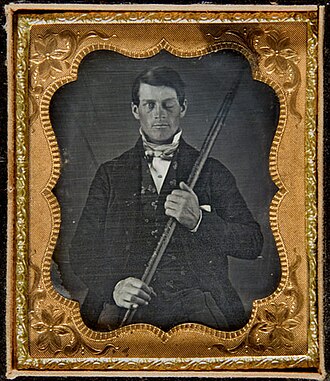
A 25-year-old railroad foreman survives a 3-foot, 7-inch iron rod blasting through his left frontal lobe during a blasting accident. He walks and talks within minutes. In the months that follow, his colleagues report he is "no longer Gage", previously reliable and respectful, he becomes impulsive, profane, and unable to follow through on plans.
Clinical Question: What neuroanatomical structure was damaged, and what syndrome does this localize to?
Phineas Gage, Frontal Lobe Syndrome
The rod destroyed the left prefrontal cortex, specifically the orbitofrontal and ventromedial regions. This case provided the first clinical evidence that the frontal lobes mediate personality, executive function, and social behavior. It remains foundational in neuroscience, used to teach frontal lobe localization, the distinction between "preserved intelligence" and impaired judgment, and the concept of acquired sociopathy.
Daguerreotype of Gage holding the iron that injured him. Photo: Jack & Beverly Wilgus, CC BY-SA 3.0
16 cases · Updated August 2026 · More cases coming soon