Falls & Delirium Prevention
| Drug Class | Examples to Stop/Minimize | Safer Alternative |
|---|---|---|
| Benzodiazepines | Lorazepam, midazolam, diazepam | Melatonin 3–5 mg for sleep. Trazodone 25–50 mg. Non-pharmacologic sleep hygiene. |
| Anticholinergics | Diphenhydramine (Benadryl) -#1 offender on inpatient med lists. Also: hydroxyzine, oxybutynin, promethazine, cyclobenzaprine. | Cetirizine (non-sedating antihistamine). Acetaminophen for pain. Remove diphenhydramine from every PRN order set. |
| Opioids (excess) | High-dose PRN without scheduled non-opioid adjuncts | Scheduled acetaminophen 1g q6h. Add gabapentin for neuropathic. Use opioids for breakthrough only. |
| Antihypertensives (excess) | Home doses continued despite lower inpatient BP → orthostatic hypotension | Hold/reduce home antihypertensives if SBP < 120 or symptomatic orthostasis. Reassess at discharge. |
| Sedating antipsychotics | Quetiapine, chlorpromazine at high doses | Use lowest effective dose. Time-limit orders. |
- Reorientation -whiteboard with date, day, nurse name. Clock in room. Familiar objects. Family at bedside.
- Sleep hygiene -lights off by 10 PM, minimize nighttime vitals, cluster care, earplugs + eye mask, avoid nighttime medication administration if possible
- Early mobility -PT/OT consult on admission for at-risk patients. Ambulate TID minimum. Chair for meals (not bed).
- Sensory aids -glasses and hearing aids AT BEDSIDE (not in a drawer). Dentures in for meals.
- Remove tethers -Foley (remove by day 2 unless specific indication), unnecessary IV lines, telemetry if not needed, restraints (worsen agitation)
- Nutrition + hydration -avoid NPO status if possible. Offer fluids. Malnutrition worsens delirium.
- Avoid physical restraints -restraints increase agitation, prolong delirium, increase falls (patients climb over them), and increase mortality
| Assessment | What to Check | Action |
|---|---|---|
| Injury survey | Head (laceration, hematoma), hip/pelvis (pain on log-roll), spine (tenderness), extremities | CT head if head strike (mandatory if on anticoagulation). Hip X-ray if hip/groin pain. C-spine if neck pain. |
| Neuro exam | GCS, pupil symmetry, focal deficits, gait (if ambulatory) | Document GCS and neuro status. If on anticoag + head strike → CT head STAT + repeat at 24h if on warfarin. |
| Vitals | Orthostatic BP/HR (lying → sitting → standing) | Drop ≥ 20/10 or HR rise ≥ 30 = orthostatic hypotension → volume depletion, meds, autonomic dysfunction |
| ECG | Arrhythmia, heart block, QTc prolongation | New arrhythmia → telemetry. Syncope-related fall → full syncope workup. |
| Labs | BMP (Na, glucose, Ca), CBC (anemia), INR if on warfarin | Correct metabolic causes. Check drug levels if applicable (digoxin, AEDs). |
| Medication review | Benzos, opioids, antihypertensives, anticholinergics, antipsychotics, diuretics | Deprescribe fall-risk meds. Use Beers Criteria AGS, 2023. Taper, don't abruptly stop. |
| Intervention | Details |
|---|---|
| Bed alarm | For high-risk patients (delirium, impaired mobility, prior fall). NOT physical restraints -restraints increase falls and agitation. |
| Non-slip socks + clear pathway | Remove clutter, ensure call bell within reach, bed in lowest position, nightlight on. |
| Medication reconciliation | Reduce/eliminate: benzodiazepines (#1 contributor), opioids, sedating antihistamines (diphenhydramine), antihypertensives causing orthostasis, anticholinergics. |
| Delirium prevention (HELP protocol) | Orientation aids (clock, calendar), minimize nighttime disruptions, early mobilization, hearing aids/glasses at bedside, avoid unnecessary catheters. |
| PT/OT consult | Gait assessment, strength training, assistive device evaluation. Early mobilization reduces deconditioning. |
| Treat underlying cause | Orthostatic hypotension → IVF, adjust meds. Syncope → cardiac workup. Delirium → find precipitant. Neuropathy → B12, glucose control. |
| Drug Class | Examples | Mechanism of Fall Risk | Action |
|---|---|---|---|
| Benzodiazepines | Lorazepam, diazepam, alprazolam | Sedation, impaired balance, cognitive slowing | Taper and discontinue. Use melatonin or trazodone for insomnia. |
| Anticholinergics | Diphenhydramine, oxybutynin, cyclobenzaprine | Delirium, sedation, blurred vision, urinary retention | Substitute: cetirizine for allergy, mirabegron for OAB. |
| Opioids | Oxycodone, morphine, tramadol | Sedation, dizziness, impaired coordination | Multimodal pain: acetaminophen, topical NSAIDs, nerve blocks. |
| Antihypertensives | Alpha-blockers (doxazosin), loop diuretics | Orthostatic hypotension, volume depletion | Liberalize BP target in frail elderly (SBP 150 may be acceptable). |
| Antipsychotics | Haloperidol, quetiapine | Sedation, orthostasis, EPS | Avoid for delirium if possible. If needed, use lowest dose × shortest duration. |
| Hypoglycemics | Sulfonylureas (glipizide), insulin | Hypoglycemia → syncope → fall | Liberalize glucose targets in elderly (A1c 7.5–8.5% acceptable). |
Patient: 84F on apixaban for Afib, found on floor next to bed at 3 AM. Unwitnessed. Denies head strike but cannot recall details. Oriented, no focal deficits. Small forehead hematoma.
Key findings: High-risk fall: elderly + anticoagulation + possible head strike + unreliable history. Intracranial hemorrhage can present delayed in anticoagulated patients, symptoms may appear hours later.
Management:
- CT head without contrast STAT (low threshold for imaging in anticoagulated patients with any head trauma)
- Neuro checks q1h × 4h, then q2h × 8h (delayed ICH risk)
- Fall risk assessment: Morse Fall Scale, bed alarm, non-skid socks, call light within reach, low bed position
- Medication review: identify fall-risk medications (benzos, opioids, anticholinergics, alpha-blockers, sleep aids)
- PT/OT evaluation for mobility assessment, assistive device needs, home safety evaluation before discharge
Teaching point: In anticoagulated patients, CT head should be obtained for any fall with possible head strike, even if the patient looks fine. Subdural hematomas in elderly anticoagulated patients can be insidious, expanding slowly over hours to days before symptoms appear.
Patient: 78M with HTN, BPH, T2DM. Third fall in 2 months. Home meds: amlodipine 10, doxazosin 4 mg, metoprolol 50 BID, trazodone 50 mg QHS. Orthostatic vitals: supine 148/82 → standing 108/58 with dizziness.
Key findings: Orthostatic hypotension (≥ 20 mmHg SBP drop or ≥ 10 mmHg DBP drop within 3 min of standing). Multiple contributing medications: doxazosin (alpha-blocker, worst offender), amlodipine, trazodone. Polypharmacy in elderly = falls.
Management:
- Deprescribe doxazosin (alpha-blocker, highest fall risk of all antihypertensives, minimal CV benefit in elderly)
- Switch BPH agent to tamsulosin 0.4 mg QHS (more uroselective, less orthostasis) or finasteride
- Reduce amlodipine if BP allows (contributor to vasodilation)
- Trazodone: assess if still needed for sleep, consider melatonin as safer alternative
- Non-pharmacologic: rise slowly, sit at bedside 1 min before standing, compression stockings, adequate hydration
Teaching point: The #1 intervention for falls is medication review. Deprescribing fall-risk medications prevents more falls than any exercise program or environmental modification. Doxazosin is the classic "stop this drug" answer on falls assessment.
Patient: 82F with osteoporosis (T-score -3.4), fell from standing. Unable to bear weight on left leg. Left leg shortened and externally rotated. XR: left intertrochanteric hip fracture.
Key findings: Hip fracture from low-energy fall, pathologic fracture through osteoporotic bone. Hip fractures in elderly carry 20-30% 1-year mortality. Time to surgery is critical, OR within 24-48h reduces complications and mortality.
Management:
- Orthopedic surgery consult for surgical fixation (intertrochanteric → intramedullary nail or sliding hip screw)
- Surgery within 24-48h of admission (delay > 48h increases mortality, pneumonia, DVT, delirium)
- Pain management: fascia iliaca block (regional anesthesia, superior to systemic opioids, reduces delirium risk)
- DVT prophylaxis, delirium prevention (avoid benzos/anticholinergics, reorient, early mobility post-op)
- Start osteoporosis treatment post-op: IV zoledronic acid after surgical healing + calcium/vitamin D (prevent next fracture)
Teaching point: A hip fracture is an orthopedic emergency, not an elective case. Every hour of surgical delay increases morbidity. The fascia iliaca block is a game-changer, it provides excellent pain control without the delirium risk of systemic opioids in elderly patients.
| Parameter | Frequency | Action |
|---|---|---|
| Neuro checks | q4h × 24h if head strike + anticoag | GCS, pupil reactivity, focal deficits. Decline → repeat CT head STAT. |
| Repeat CT head | 24h post-fall if on warfarin + head strike | Delayed SDH can develop. Even if initial CT negative. |
| Vitals + orthostatics | Daily until resolved | Orthostatic hypotension → adjust meds, IVF. |
| Morse Fall Scale | Each shift | Reassess fall risk. Update care plan. |
| Incident report | Immediately | Document fall circumstances, injuries, interventions. Notify family. |
| Parameter | Frequency | Target / Action |
|---|---|---|
| aPTT (heparin drip) | q6h until stable, then q12h | Target aPTT 60–80 sec (or per institutional protocol). Adjust infusion rate per nomogram. |
| INR (warfarin) | Daily while inpatient, then weekly → monthly when stable | Target INR 2.0–3.0. Bridge with heparin x 5 days AND until INR ≥ 2 for 24h before stopping heparin. |
| Platelets (HIT surveillance) | q2–3 days on heparin (days 4–14) | HIT: > 50% drop from baseline or platelets < 150K on heparin → check HIT antibody (PF4/heparin). 4T score to assess probability. If HIT → stop all heparin, start argatroban or bivalirudin. |
| Creatinine (DOAC dosing) | Baseline and periodically | CrCl determines DOAC eligibility. For VTE: apixaban approved down to CrCl 15 (AMPLIFY excluded < 25, so data weakest 15–25); rivaroxaban avoid < 30; dabigatran avoid < 30; edoxaban avoid < 15. For A-fib (different cutoffs): apixaban dose-reduce to 2.5 mg BID if ≥ 2 of (age ≥ 80, wt ≤ 60, Cr ≥ 1.5); rivaroxaban 15 mg daily if CrCl 15–50. Declining renal function may require switch to warfarin. |
| Bleeding symptoms | Each assessment | GI bleeding (melena, hematochezia), hematuria, gum bleeding, easy bruising, menorrhagia. Any major bleed → hold anticoagulation, assess need for reversal. |
| Recurrent VTE symptoms | Each assessment + patient education | New leg swelling/pain → repeat ultrasound. New dyspnea/chest pain → CTPA. Recurrence on anticoagulation → consider non-compliance, cancer workup, APS testing. |
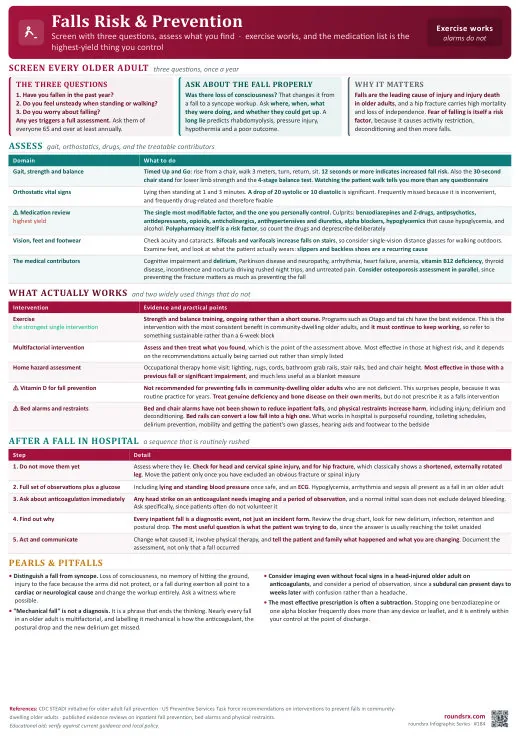
Text version
🧪 Labs: BMP (Na, glucose, Ca), CBC, INR if on warfarin
🧠 CT head: If head strike + anticoag → STAT + repeat 24h
💊 Meds: Deprescribe benzos, anticholinergics, opioids
🛏️ Prevent: Bed alarm, clear path, HELP protocol, PT/OT
📋 Document: Incident report, family notification
- Assess for injury: head strike → CT head (especially if on anticoagulation -delayed SDH). Hip pain → hip X-ray. Neuro exam.
- On anticoagulant + head strike: CT head STAT even if asymptomatic. Repeat in 24h if on warfarin (delayed bleed).
- Root cause: what was the patient doing? Medication-related? Orthostatic? Environmental (wet floor, cords)? Delirium? Seizure? Syncope?
- Incident report + family notification + attending notification + documentation