Herpes Zoster (Shingles)
VZV reactivation from dorsal root ganglia causes painful dermatomal vesicles. Treat within 72h of rash onset with valacyclovir to reduce severity and postherpetic neuralgia risk. Ophthalmology emergency if V1 (forehead/eye) involved. Shingrix vaccine is >90% effective and recommended for all adults ≥50.
🔍 Overview
Herpes Zoster, Key Concepts
- Reactivation of VZV from dorsal root ganglia (latent since primary varicella/chickenpox infection)
- Dermatomal distribution, unilateral, does NOT cross midline (except in immunocompromised with disseminated disease)
- Most common dermatomes: T3–L3 (thoracic > lumbar > cervical). Can affect any dermatome including cranial nerves.
- Risk factors: age >50 (most important), immunosuppression (transplant, HIV, chemo, steroids), stress, trauma
- Lifetime risk: ~30% of all adults will develop shingles; increases with age
- Infectious: vesicular fluid contains live VZV, can cause primary varicella (chickenpox) in non-immune contacts. Airborne + contact precautions until lesions crusted.
Clinical Syndromes & Complications
| Syndrome | Presentation | Key Points |
|---|---|---|
| Classic dermatomal zoster | Prodrome of pain/burning/tingling 2–3 days before rash. Then grouped vesicles on erythematous base in a single dermatome, unilateral. Pain is often severe, burning, stabbing, lancinating. | Clinical diagnosis in most cases. Rash evolves: papules → vesicles → pustules → crusting over 7–10 days. Pain may precede rash by days (can be confused with MI, pleurisy, renal colic). |
| Herpes zoster ophthalmicus (HZO) EMERGENCY | V1 (ophthalmic division of trigeminal) involvement. Vesicles on forehead, eyelid, nose. | Hutchinson sign = vesicles on tip/side of nose (nasociliary nerve) → 76% risk of ocular involvement. Urgent ophthalmology consult. Can cause keratitis, uveitis, retinal necrosis, blindness. |
| Ramsay Hunt syndrome | VZV reactivation in geniculate ganglion (CN VII). Vesicles in ear canal/pinna + ipsilateral facial paralysis + hearing loss/vertigo. | Triad: ear vesicles + facial palsy + CN VIII symptoms. Worse prognosis than Bell’s palsy for recovery. Treat with valacyclovir + prednisone. |
| Postherpetic neuralgia (PHN) | Pain persisting >90 days after rash onset. Burning, allodynia (pain from light touch), lancinating. | Most common complication. Risk increases with age (>60 years), severity of acute pain, and extent of rash. Antivirals within 72h reduce PHN risk. Treatment: gabapentin, pregabalin, duloxetine, lidocaine patch, capsaicin. |
| Disseminated zoster | >20 vesicles outside the primary + adjacent dermatomes. Looks like varicella. | Occurs in immunocompromised (HIV, transplant, chemo). Treat with IV acyclovir. Can involve lungs, liver, CNS. Airborne + contact precautions. |
| VZV vasculopathy / stroke | Stroke weeks–months after zoster (especially ophthalmic zoster). VZV infects cerebral arteries. | Risk of stroke is 1.3x higher for 1 year after zoster. Consider in unexplained stroke after recent shingles. Treat with IV acyclovir. |
Hutchinson sign = ophthalmology emergency. Vesicles on the tip or side of the nose indicate nasociliary nerve involvement (V1) and predict ocular complications in 76% of cases. Get urgent ophthalmology consult even if the eye looks normal, keratitis/uveitis can develop over days.
🧪 Workup
Diagnosis
- Clinical diagnosis in most cases, unilateral dermatomal vesicular rash is classic. Lab confirmation rarely needed.
- VZV PCR (swab of unroofed vesicle), gold standard when diagnosis is uncertain. Highly sensitive and specific. Also useful for disseminated zoster, atypical presentations, and immunocompromised patients.
- DFA (direct fluorescent antibody), rapid but less sensitive than PCR. Can distinguish VZV from HSV.
- Tzanck smear, multinucleated giant cells (same as HSV, cannot distinguish). Low sensitivity. Largely replaced by PCR.
When to confirm with lab testing: atypical presentations (no vesicles, unusual location, immunocompromised), disseminated disease, CNS involvement, zoster sine herpete (dermatomal pain without rash, diagnosed by VZV PCR of skin swab or CSF).
🚨 Management
Treatment
| Scenario | Treatment | Duration | Notes |
|---|---|---|---|
| Uncomplicated zoster | Valacyclovir (Valtrex) 1g PO TID | 7 days | Start within 72h of rash onset for best efficacy. Reduces pain duration, rash healing time, and PHN risk. Can still start after 72h if: new vesicles still forming, immunocompromised, or HZO. |
| HZO (ophthalmic zoster) URGENT | Valacyclovir 1g PO TID + ophthalmology consult | 7–10 days | Start antivirals regardless of timing. Ophthalmology for slit-lamp exam, IOP check, fundoscopy. May need topical steroids + cycloplegics if uveitis. |
| Ramsay Hunt | Valacyclovir 1g PO TID + prednisone 60 mg PO daily × 5 days then taper | 7 days antivirals | Combined antiviral + steroid improves facial nerve recovery. ENT referral. Worse prognosis than Bell’s palsy for complete recovery. |
| Disseminated / Immunocompromised | Acyclovir 10 mg/kg IV q8h | 7–10 days (until no new lesions × 48h) | IV therapy for disseminated disease, CNS involvement, or severe immunosuppression. Transition to PO valacyclovir when improving and able to take PO. |
Pain Management
| Phase | Medications | Notes |
|---|---|---|
| Acute zoster pain | Acetaminophen + NSAIDs (first-line). Gabapentin 300–1200 mg TID for neuropathic component. Short-course opioids if severe. | Pain can be intense, don’t undertreat. Start gabapentin early to reduce risk of PHN transition. |
| Postherpetic neuralgia (PHN) | Gabapentin (Neurontin) 300–3600 mg/day Pregabalin (Lyrica) 75–300 mg BID Duloxetine (Cymbalta) 60 mg daily Lidocaine 5% patch (topical, up to 3 patches/12h) Capsaicin 8% patch (applied in clinic) | First-line: gabapentin or pregabalin. Lidocaine patch for localized pain. TCAs (amitriptyline 25–75 mg QHS) are effective but limited by side effects in elderly. Opioids are last resort. |
Prevention, Shingrix Vaccine
- Shingrix (recombinant adjuvanted VZV vaccine), 2 doses IM, 2–6 months apart
- >90% effective at preventing shingles and PHN across all age groups ZOE-50, 2015
- Recommended for all adults ≥50 regardless of prior shingles episode or prior Zostavax (old live vaccine)
- Also recommended for immunocompromised adults ≥19 (transplant, HIV, autoimmune on immunosuppression), Shingrix is non-live and safe
- Common side effects: injection site pain (78%), myalgia, fatigue, self-limited 1–3 days
Shingrix replaced Zostavax. Zostavax (live attenuated) was only ~51% effective and waned significantly after 5 years. Shingrix maintains >85% efficacy at 4+ years. Shingrix is safe in immunocompromised (non-live vaccine). No need to check varicella history before vaccinating, >99% of adults ≥50 are VZV seropositive.
Shingrix Vaccination Schedule
| Detail | Recommendation |
|---|---|
| Vaccine | Shingrix (recombinant, adjuvanted), non-live subunit vaccine containing VZV glycoprotein E + AS01B adjuvant |
| Dose | 2 doses, 0.5 mL IM (deltoid). Dose 1 at day 0, Dose 2 at 2-6 months later |
| Who | All adults ≥ 50 years (immunocompetent). Immunocompromised adults ≥ 19 years (HIV, transplant, chemo, biologics, chronic steroids) |
| Efficacy | 97% effective in adults 50-69; 91% effective in adults ≥ 70 ZOE-50, 2015 ZOE-70, 2016 |
| Duration of protection | >85% efficacy maintained at 4+ years. Long-term data still accumulating. |
| Common side effects | Injection site pain (78%), myalgia (45%), fatigue (45%), headache (38%), shivering (27%), fever (21%), GI symptoms (17%). Self-limited 1-3 days. Warn patients, reactogenicity is high but normal. |
| Missed dose 2? | If >6 months since dose 1, give dose 2 as soon as possible. Do NOT restart the series, any interval is acceptable. |
| Coadministration | Can be given with other vaccines (flu, pneumococcal, Tdap, COVID-19) at different injection sites. No minimum interval required. |
When to Vaccinate vs. Defer
| Scenario | Vaccinate? | Notes |
|---|---|---|
| Active zoster (open vesicular lesions) | DEFER | Wait until acute episode resolves and lesions have fully crusted. Vaccinating during active disease offers no benefit and may confuse clinical picture. Typically wait 2-3 months after episode to vaccinate. |
| Recent zoster (crusted, healing) | WAIT | Wait until rash has fully resolved. No minimum interval required after resolution, but most experts suggest 2-3 months to allow immune reconstitution and ensure the episode is truly over. |
| History of prior shingles (remote) | YES | Shingles can recur. Prior episode is NOT a contraindication. Vaccinate to prevent future episodes. |
| Prior Zostavax | YES | Shingrix is recommended regardless of prior Zostavax. Wait at least 2 months after Zostavax before giving Shingrix. |
| Immunocompromised (HIV, transplant, chemo, biologics) | YES | Shingrix is non-live and safe. Recommended for immunocompromised adults ≥ 19 years. Ideally vaccinate during periods of disease stability or low-intensity immunosuppression. May have reduced efficacy. |
| Pregnancy | DEFER | Insufficient safety data. Defer until postpartum. |
| Moderate-severe acute illness | WAIT | Defer until recovered. Minor illness (e.g., mild URI) is NOT a reason to delay. |
| Known allergy to vaccine component | CONTRAINDICATED | Anaphylaxis to a prior dose or known allergy to any component (e.g., polysorbate 80). This is the only true contraindication. |
Open lesions = defer vaccination. Vesicular fluid contains live VZV and the patient is actively infectious. Vaccinating during active zoster does not treat the current episode (Shingrix is preventive, not therapeutic). Wait for full crusting, then vaccinate 2-3 months later to prevent recurrence. Meanwhile, ensure contact precautions until all lesions are crusted.
💊 Medications
Key Medications for Herpes Zoster
| Drug (Brand) | Dose | Key Notes |
|---|---|---|
| Valacyclovir (Valtrex) | 1g PO TID × 7 days | Preferred oral agent. Better bioavailability than acyclovir = more convenient dosing (TID vs 5x/day). Same efficacy. Dose-adjust for renal impairment. |
| Acyclovir (Zovirax) | Oral: 800 mg PO 5x/day × 7 days IV: 10 mg/kg q8h | Oral has poor bioavailability (requires 5x daily dosing, less convenient than valacyclovir). IV for disseminated disease, immunocompromised, CNS involvement. Hydrate aggressively to prevent nephrotoxicity. |
| Famciclovir (Famvir) | 500 mg PO TID × 7 days | Alternative to valacyclovir. Similar efficacy. Use if intolerant to valacyclovir. |
| Gabapentin (Neurontin) | 300–1200 mg PO TID | First-line for neuropathic pain (acute and PHN). Titrate slowly (start 300 mg QHS, increase every 3 days). Dose-adjust for renal function. Sedation, dizziness common initially. |
| Pregabalin (Lyrica) | 75–150 mg PO BID | Alternative to gabapentin for PHN. Faster onset. More predictable pharmacokinetics. Schedule V controlled substance. |
📋 On Rounds
What is the Hutchinson sign and why is it important?
Hutchinson sign = vesicles on the tip or side of the nose during herpes zoster. It indicates involvement of the nasociliary branch of V1 (ophthalmic division of trigeminal nerve), which also innervates the cornea and uvea. Positive Hutchinson sign predicts 76% risk of ocular complications (keratitis, uveitis, retinal necrosis). Requires urgent ophthalmology consult regardless of current eye symptoms.
When can you still start antivirals after 72 hours?
While antivirals are most effective within 72h of rash onset, you should still treat beyond 72h if: (1) New vesicles are still forming (active viral replication), (2) Immunocompromised patient (higher risk of dissemination and complications), (3) HZO (ophthalmic zoster) (risk of blindness justifies treatment at any time), (4) Ramsay Hunt (facial nerve at risk), (5) Disseminated zoster. The 72h window is a guideline, not an absolute cutoff.
How does Ramsay Hunt syndrome differ from Bell's palsy?
Ramsay Hunt = VZV reactivation in the geniculate ganglion causing the triad: (1) ear vesicles (external ear canal, pinna), (2) ipsilateral facial paralysis (LMN CN VII), (3) hearing loss or vertigo (CN VIII involvement). Bell's palsy = idiopathic (likely HSV-1-related) CN VII palsy without vesicles or hearing loss. Key differences: Ramsay Hunt has worse prognosis for recovery (complete recovery ~50% vs ~85% for Bell's), is treated with antiviral + steroid (vs steroid only for Bell's), and has visible vesicles in the ear.
What isolation precautions are needed for a hospitalized patient with shingles?
Localized zoster: Contact precautions + cover the lesions. Infectious until all vesicles are crusted. Keep away from immunocompromised patients, pregnant women (if non-immune), and neonates. Disseminated zoster: Airborne + contact precautions (VZV can spread via aerosol from disseminated lesions). The virus in vesicular fluid can cause primary varicella (chickenpox) in non-immune contacts, it does NOT cause shingles in others.
📣 Sample Presentation
One-Liner
"Mrs. Thompson is a 72-year-old woman presenting with 3 days of painful unilateral vesicular rash in a T6 dermatomal distribution, consistent with herpes zoster."
Key Points to Cover on Rounds
Herpes zoster, T6 dermatome, unilateral, does not cross midline. Onset 3 days ago with prodromal burning followed by vesicular eruption. Started valacyclovir 1g PO TID × 7 days (within 72h window). Pain management: acetaminophen + gabapentin 300 mg TID (titrating). No V1 involvement (no Hutchinson sign, no eye symptoms). Not immunocompromised, oral antivirals sufficient. Contact precautions until crusted. Shingrix vaccine after acute episode resolves (2–3 months). Monitoring for PHN development.
⚡ Summary
Summary
Recognize the Pattern
A painful vesicular rash in a single dermatome that does not cross the midline, from reactivation of latent varicella-zoster in a dorsal root ganglion. Pain frequently precedes the rash by days, so dermatomal pain with no visible cause is often the first presentation and gets attributed to something else.
Antivirals Work Best Inside 72 Hours
Valacyclovir 1 g TID for 7 days, or famciclovir, or acyclovir. Start within 72 h of rash onset, and still treat later if new vesicles are appearing, in ocular involvement, or in the immunocompromised. Antivirals shorten the acute illness and reduce postherpetic neuralgia; they do not eliminate the risk.
Hutchinson Sign Is an Ophthalmology Emergency
Vesicles on the tip or side of the nose mean nasociliary (V1) involvement and predict ocular complications in about 76% of cases. Get an urgent ophthalmology consult even when the eye looks normal, because herpes zoster ophthalmicus causes keratitis, uveitis and vision loss that is preventable if treated early.
Know the Other Named Syndromes
Ramsay Hunt syndrome: facial palsy with vesicles in the ear canal, often with hearing loss and vertigo, treated with an antiviral plus steroids and carrying a worse recovery than Bell palsy. Disseminated zoster, more than 20 lesions outside the dermatome or visceral involvement, needs IV acyclovir and airborne plus contact isolation. Zoster sine herpete, dermatomal pain with no rash, diagnosed by VZV PCR.
Treat the Pain Properly From the Start
Acute pain is often severe and under-treated. Use scheduled analgesia, adding gabapentin or pregabalin, a tricyclic, or topical lidocaine. Aggressive early pain control may reduce the risk of postherpetic neuralgia, so this is not simply comfort care.
Postherpetic Neuralgia Is the Main Morbidity
Pain persisting beyond 90 days, and the risk rises steeply with age. Treat with gabapentinoids, tricyclics, topical lidocaine or capsaicin, titrating to effect over weeks. Opioids are a poor long-term answer for what is neuropathic pain.
Isolation Depends on the Form
Localized zoster in an immunocompetent patient: contact precautions and cover the lesions. Disseminated zoster, or any zoster in an immunocompromised patient: airborne plus contact precautions. The fluid in the vesicles transmits varicella, not zoster, so a susceptible contact develops chickenpox, which matters for pregnant staff and immunocompromised patients on the ward.
Vaccinate With Shingrix
Two doses, and it replaced Zostavax. Zostavax was live attenuated, only about 51% effective and waned within 5 years; Shingrix maintains above 85% efficacy at 4 years and, being non-live, is safe in the immunocompromised. Vaccinate even after an episode of shingles, since recurrence occurs, and defer only until the acute episode has resolved.
📄 One Pager
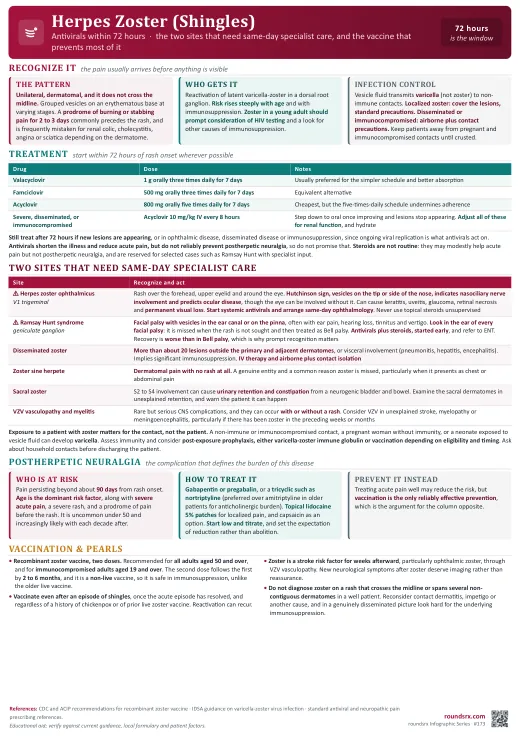
Text version
Herpes Zoster (Shingles), Quick Reference Card
Print this page (Ctrl/Cmd + P) for a condensed reference card.
HERPES ZOSTER, AT A GLANCE
📋 Dx: Clinical (unilateral dermatomal vesicles). VZV PCR swab if uncertain.
⚡ Tx: Valacyclovir 1g PO TID × 7d (start within 72h). IV acyclovir 10 mg/kg q8h if disseminated/immunocompromised.
👁️ HZO: V1 involvement + Hutchinson sign → urgent ophthalmology. Treat regardless of timing.
👂 Ramsay Hunt: Ear vesicles + facial palsy + hearing loss → antiviral + prednisone.
🔥 PHN: Pain >90 days. Gabapentin/pregabalin first-line. Lidocaine patch for localized pain.
💉 Prevent: Shingrix × 2 doses for all ≥50. >90% effective. Non-live = safe in immunocompromised.
⚡ Tx: Valacyclovir 1g PO TID × 7d (start within 72h). IV acyclovir 10 mg/kg q8h if disseminated/immunocompromised.
👁️ HZO: V1 involvement + Hutchinson sign → urgent ophthalmology. Treat regardless of timing.
👂 Ramsay Hunt: Ear vesicles + facial palsy + hearing loss → antiviral + prednisone.
🔥 PHN: Pain >90 days. Gabapentin/pregabalin first-line. Lidocaine patch for localized pain.
💉 Prevent: Shingrix × 2 doses for all ≥50. >90% effective. Non-live = safe in immunocompromised.
Related Topics
Cellulitis & Skin InfectionsCLABSI & Line InfectionsDiabetic Foot InfectionFungal InfectionsHantavirus (HPS & HFRS)Herpes Simplex (HSV)