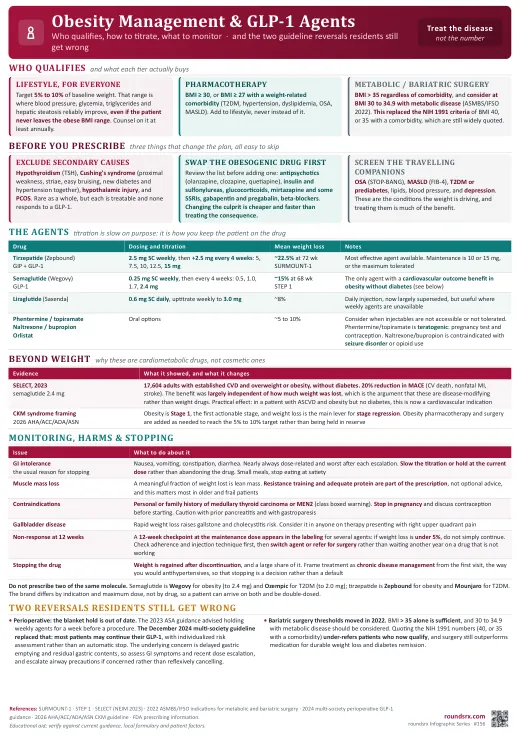
Obesity Management & GLP-1 Agents
| Drug | Mechanism | Weight Loss | Key Notes |
|---|---|---|---|
| Semaglutide 2.4 mg (Wegovy) PREFERRED | GLP-1 receptor agonist → ↑ satiety, ↓ appetite, delayed gastric emptying | ~15% body weight STEP 1, 2021 | Weekly SC injection. Titrate slowly over 16 weeks (nausea management). Also reduces MACE by 20% SELECT, 2023 -CV benefit independent of diabetes. Contraindicated: personal/family history of medullary thyroid carcinoma, MEN2. |
| Tirzepatide (Zepbound) MOST EFFECTIVE | Dual GIP + GLP-1 receptor agonist | ~20–25% body weight SURMOUNT-1, 2022 | Weekly SC injection. Most potent weight loss agent available. Also FDA-approved for T2DM (as Mounjaro). Same GI side effects and contraindications as semaglutide. |
| Liraglutide 3.0 mg (Saxenda) SCALE, 2015 | GLP-1 RA | ~5–8% | Daily SC injection. Less effective than semaglutide but first GLP-1 approved for obesity. Being replaced by weekly options. |
| Phentermine-topiramate ER (Qsymia) | Sympathomimetic + anticonvulsant (appetite suppression) | ~8–10% | Oral daily. Avoid in uncontrolled HTN, glaucoma, hyperthyroidism. Topiramate: teratogenic (REMS program), cognitive effects, metabolic acidosis, kidney stones. |
| Naltrexone-bupropion (Contrave) | Opioid antagonist + dopamine/NE reuptake inhibitor | ~5–6% | Oral. Good for patients with food cravings/binge eating. Avoid in seizure disorders, opioid use, uncontrolled HTN. Bupropion helps with smoking cessation too. |
| Orlistat (Xenical/Alli) | Lipase inhibitor (blocks fat absorption) | ~3–5% | GI side effects (oily stools, flatulence, fecal urgency) limit tolerability. OTC version (Alli 60 mg). Least effective. |
- Indications: BMI ≥ 40, or BMI ≥ 35 with obesity-related comorbidity (DM, HTN, OSA, NAFLD). ADA 2026: consider for BMI ≥ 30 with uncontrolled T2DM.
- Roux-en-Y gastric bypass: ~30% excess weight loss. DM remission in 60–80%. Malabsorptive → lifelong vitamin supplementation (B12, iron, calcium, folate, vitamin D).
- Sleeve gastrectomy: most commonly performed. ~25% excess weight loss. Fewer nutritional deficiencies than RYGB. GERD may worsen.
- Most effective long-term treatment for obesity and T2DM -superior to all medications for sustained weight loss and diabetes remission.
Patient: 44M, BMI 38, prediabetes (A1c 6.3), OSA on CPAP, knee OA limiting exercise. Failed 6-month structured diet program (lost 3 kg, regained). Motivated for pharmacotherapy.
Key findings: Pharmacotherapy indicated: BMI ≥ 30 (or ≥ 27 with comorbidities) after failing lifestyle modification. GLP-1 RAs have the most robust evidence for weight loss + cardiometabolic benefit among anti-obesity medications.
Management:
- Semaglutide 2.4 mg SQ weekly (Wegovy), titrate from 0.25 mg over 16 weeks to minimize GI side effects STEP 1, 2021
- Continue lifestyle modification (medication + lifestyle > either alone)
- Counsel on GI side effects: nausea (most common, improves with slow titration), eat smaller meals, avoid fatty foods
- Monitor: A1c (may normalize → prevent T2DM), BP, lipids, OSA symptoms (may be able to reduce CPAP pressure)
- If weight loss ≥ 5% at 3 months: continue. If < 5%: reassess adherence, consider alternative or combination
Teaching point: Anti-obesity medications are NOT a shortcut, they correct the neurohormonal dysregulation that drives weight regain. Just as we don't shame patients for needing metformin for diabetes, we shouldn't shame them for needing semaglutide for obesity. Weight regain after stopping is expected, not failure.
Patient: 52F, BMI 46, T2DM (A1c 9.4 on insulin + metformin), HTN on 3 drugs, OSA, NASH with fibrosis. Failed semaglutide (intolerable GI effects). Interested in surgical options.
Key findings: Bariatric surgery indicated: BMI ≥ 40 (or ≥ 35 with obesity-related comorbidities). This patient has multiple comorbidities likely to improve or resolve with surgery. T2DM remission rates: 60-80% after Roux-en-Y.
Management:
- Multidisciplinary bariatric evaluation: surgeon, dietitian, psychologist, medical clearance
- Roux-en-Y gastric bypass (RYGB): 25-35% total body weight loss, highest T2DM remission rate, durable results STAMPEDE, 2017
- Alternative: sleeve gastrectomy (20-25% weight loss, lower complication rate, simpler technically)
- Pre-op requirements: OSA screening, cardiac clearance, nutritional labs (B12, iron, folate, vitamin D), psych evaluation
- Lifelong supplementation post-RYGB: B12, iron, calcium + vitamin D, multivitamin (malabsorptive anatomy)
Teaching point: Bariatric surgery is the most effective treatment for severe obesity, it produces durable weight loss AND remission of T2DM, HTN, and OSA in a large proportion of patients. RYGB is superior to sleeve for T2DM remission but has higher long-term complication rates.
Patient: 58F, BMI 36, T2DM (A1c 8.1 on metformin), no ASCVD. Insurance covers tirzepatide for diabetes. Wants weight loss and glucose control simultaneously.
Key findings: Tirzepatide (dual GIP/GLP-1 agonist) achieves greater weight loss than semaglutide in head-to-head trials. At highest dose, mean weight loss ~20-25%, approaching surgical levels.
Management:
- Tirzepatide 2.5 mg SQ weekly → titrate q4 weeks to max 15 mg (slow titration essential for GI tolerance) SURMOUNT-1, 2022
- Continue metformin (complementary mechanism, renal protection)
- May be able to reduce or stop insulin as A1c improves
- Monitor for pancreatitis (rare but reported), gallstones (rapid weight loss increases risk)
- Discuss: weight regain occurs if medication is stopped, likely lifelong therapy needed for weight maintenance
Teaching point: Tirzepatide represents a paradigm shift, 20%+ weight loss was previously only achievable with surgery. The dual GIP/GLP-1 mechanism provides more weight loss than GLP-1 alone. Long-term data on cardiovascular outcomes is pending (SURPASS-CVOT ongoing).
- BMI plus waist circumference. BMI alone misses central adiposity, which is what carries the cardiometabolic risk. Measure both.
- Use lower BMI thresholds in South and East Asian patients, in whom metabolic risk begins at a lower BMI, so the standard cut-points under-call disease.
- Stage by complications, not by weight alone. The presence of a weight-related complication, rather than the number itself, is what justifies escalating therapy.
- Dysglycemia: A1c or fasting glucose. Prediabetes strengthens the case for a GLP-1 based agent.
- Lipids and blood pressure, with cardiovascular risk assessment.
- Liver: ALT and AST, with a fibrosis score such as FIB-4. Metabolic dysfunction-associated steatotic liver disease is common and usually silent.
- Obstructive sleep apnea: screen with STOP-BANG. It is underdiagnosed, and treating it improves the symptoms patients often attribute to weight alone.
- Mental health and eating pattern, including binge eating, which changes the therapeutic approach.
- TSH for hypothyroidism; consider Cushing syndrome where there are suggestive features, since neither is common but both are treatable.
- Review the medication list for weight-promoting drugs: several antipsychotics, some antidepressants, glucocorticoids, insulin and sulfonylureas, and certain antiepileptics. Substituting a weight-neutral alternative is often the highest-yield intervention available.