Outpatient Lipid Management
| Domain | 2018 Cholesterol Guideline | 2026 Dyslipidemia Guideline |
|---|---|---|
| Risk Calculator | 2013 Pooled Cohort Equation. Race input. Ages 40-79. 10-yr only. | PREVENT-ASCVD replaces PCE. Ages 30-79, race removed, adds CKD / HbA1c / SDI, 10- AND 30-year risk. |
| Risk Bands | <5 / 5-7.5 / 7.5-20 / ≥20% | <3 / 3-<5 / 5-<10 / ≥10%. Lowered to compensate for PREVENT producing lower scores. |
| Primary Prevention LDL Goal | "≥50% reduction" -no numeric goal. | NEW numeric goals: PREVENT ≥10% → LDL <70. PREVENT 5-<10% → LDL <100. |
| Secondary Prevention LDL Goal | <70 universally for clinical ASCVD. | Split: very-high-risk ASCVD <55 (non-HDL-C <85) vs standard-risk <70 (non-HDL-C <100). Most clinical ASCVD qualifies as very high risk. Lp(a) ≥50 + ASCVD with goals unmet: PCSK9 antibody recommended (Class 1); it does not change the VHR definition. |
| Lp(a) and ApoB | Optional risk enhancers. | Lp(a) once per lifetime in all adults. ApoB once LDL-C and non-HDL-C goals are met, particularly with TG ≥150, DM, or achieved LDL <70, to expose residual particle burden. No apoB goal tiers are published: goals pair LDL-C with non-HDL-C, and apoB appears only as ≥120 (risk enhancer) and ≥140 (severe-hypercholesterolemia equivalent). |
| Early Intervention | None formally. | NEW category: HeFH at diagnosis (incl. age 8-10), age ≤30 with LDL ≥160, strong family hx, high 30-yr PREVENT. |
| Non-Statin Add-Ons | Stepwise ladder: statin → ezetimibe → PCSK9i mAb. | Parallel options: ezetimibe / bempedoic acid (CLEAR Outcomes 2023) / PCSK9i mAb / inclisiran (siRNA, SC q6mo). Combination from start expected for VHR. |
| HIV Primary Prevention | Per general guidance. | Pitavastatin 4 mg recommended in HIV age 40-75 regardless of LDL threshold (REPRIEVE 2023: 35% MACE reduction). |
- PREVENT-ASCVD: statins (and the lipid add-ons behind them).
- PREVENT total CVD: blood pressure drugs in stage 1 hypertension, and SGLT2 inhibitors or GLP-1 therapy in type 2 diabetes.
- PREVENT-HF: no drug at all, only whether to check a natriuretic peptide or troponin for silent stage B heart failure.
| The decision | Which PREVENT number | Threshold | Why that outcome |
|---|---|---|---|
| Start a statin, pick the intensity, set the LDL goal | 10-year PREVENT-ASCVD | <3% low · 3 to <5% borderline · 5 to <10% intermediate · ≥10% high | Statins are being used to prevent hard atherosclerotic events, so the guideline uses the hard ASCVD equation rather than total CVD (2026 ACC/AHA dyslipidemia, Class 1). |
| Treat stage 1 hypertension (130-139/80-89) with a drug | 10-year PREVENT total CVD | ≥ 7.5% (or clinical CVD, diabetes or CKD) | Blood pressure lowering prevents heart failure as much as MI and stroke, so the outcome that matches the therapy is total CVD (2025 AHA/ACC hypertension, Class 1). Below 7.5%, lifestyle for 3 to 6 months, then treat if BP stays ≥ 130/80. |
| Add an SGLT2 inhibitor or GLP-1 therapy in type 2 diabetes | 10-year PREVENT total CVD | ≥ 7.5% in CKM stage 2 to 3 | These drugs cut both atherosclerotic events and heart failure, largely independent of glucose lowering, so total CVD is the matching outcome (2026 CKM guideline, Class 1). |
| Call it CKM stage 3 | 10-year PREVENT total CVD | ≥ 20% | That rate (about 2% per year) is the risk equivalent of established cardiovascular disease, which is what stage 3 is meant to capture. |
| Check a natriuretic peptide or troponin for pre-HF (stage B) | 10-year PREVENT-HF | ≥ 5% | Stage B heart failure is silent and treatable, and the HF equation is the only one that speaks to it (2026 CKM, Class 2a). This is the output that needs a BMI, since BMI is a predictor in the HF model only. |
| Order a coronary calcium score as a tiebreaker | 10-year PREVENT-ASCVD | 5 to <10%, or selected 3 to <5% | CAC is used where the statin decision is genuinely uncertain, so it follows the same ASCVD number that sets the bands. Upgraded to Class 1 in 2026 (2018: Class 2a), in men ≥ 40 and women ≥ 45, and each CAC stratum now carries its own LDL-C goal: see the CAC ladder. |
| Treat a young adult whose 10-year risk looks low | 30-year PREVENT-ASCVD | ≥ 10%, ages 30 to 59 | Ten-year risk is almost always low at that age even with high lifetime exposure, so the 30-year horizon is what justifies a moderate-intensity statin (2026 ACC/AHA dyslipidemia, Class 2a). Same rule applies at LDL-C 160-189. |
| 10-yr PREVENT-ASCVD Risk | Category | 2026 Recommendation | vs 2018 (Pooled Cohort Equation) |
|---|---|---|---|
| < 3% | Low | Health behavior counseling (Class 1) when LDL-C is also < 160 and, at ages 30-59, the 30-year PREVENT-ASCVD risk is < 10%. A moderate-intensity statin is reasonable (Class 2a, ages 30-59) if LDL-C is 160-189 or 30-year risk is ≥ 10%, to cut cumulative exposure to atherogenic lipoproteins: 10-year risk is almost always low at that age even when lifetime exposure is high. Otherwise reassess in 4-6 yr. | 2018 cutoff was <5% (low). Threshold tightened in 2026 because PREVENT scores run lower than PCE -keeps the same population on lifestyle-only. |
| 3% to < 5% | Borderline | Lipid-lowering therapy can be considered after a benefit-risk discussion. If started: moderate-intensity statin (Class 2a), goal LDL-C < 100 and non-HDL-C < 130. The number needed to treat is higher here, so risk enhancers (Class 2a) and, in selected patients, a CAC score (Class 1) carry the decision. | 2018 borderline was 5-7.5%. 2026 lowered the band to 3-<5% to compensate for PREVENT producing lower scores than PCE. Population qualifying is roughly similar. |
| 5% to < 10% | Intermediate | At least a moderate-intensity statin is recommended (Class 1) after a clinician-patient discussion, for a 30-49% LDL-C reduction; toward the upper end of the band a high-intensity statin is beneficial (≥ 50%), since benefit tracks the absolute LDL-C drop. Goal LDL-C < 100 and non-HDL-C < 130 (Class 2a). Decision still uncertain: a CAC score should be used (Class 1). | 2018 used 7.5-20% as "intermediate." 2026 added a numeric LDL goal here (<100) -2018 had none for primary prevention. |
| ≥ 10% | High | High-intensity statin recommended (Class 1) for a ≥ 50% LDL-C reduction. Goal LDL-C < 70 and non-HDL-C < 100 (Class 2a). Not at goal on a maximally tolerated statin: add ezetimibe (Class 2a), then a PCSK9 antibody or bempedoic acid (Class 2b). Escalation is goal-driven, not automatic. | 2018 high-risk was ≥20% (or 7.5-20% with enhancers → high-intensity). 2026 added <70 numeric LDL goal -2018 had no primary-prevention numeric goal at all. |
▶ Primary vs secondary prevention -don't mix the rules (tap to expand)
First question: Has the patient already had an ASCVD event (MI, stroke/TIA, coronary revasc, PAD with imaging)?
- NO → Primary prevention. Calculate PREVENT 10-yr risk:
- ≥ 10% → high risk → LDL < 70
- 5 to < 10% → intermediate → LDL < 100
- 3 to < 5% → borderline → SDM, optional therapy
- < 3% → lifestyle
- YES → Secondary prevention. Do NOT use PREVENT -calculator is not validated post-event. Classify by clinical features:
- Very-high-risk ASCVD (multiple major events, or one major event + multiple high-risk conditions; most patients with ASCVD) → LDL < 55
- Standard-risk ASCVD (clinical ASCVD without very-high-risk features) → LDL < 70
| Indication | Definition | Statin Intensity / LDL Goal | vs 2018 Guideline |
|---|---|---|---|
| 1. Clinical ASCVD (secondary prevention) + ASA 81 mg daily | Prior MI, stable angina, coronary revasc, stroke/TIA, PAD with imaging confirmation | High-intensity (atorvastatin 40-80 or rosuvastatin 20-40). Very-high-risk ASCVD [qualifies by EITHER: multiple major ASCVD events (ACS in the past 12 mo, prior MI, prior ischemic stroke, symptomatic PAD) / one major event + multiple high-risk conditions (age >65, prior coronary revascularization, current smoking, DM, HF, HTN, LDL >100 on max statin + ezetimibe)]: LDL goal < 55, non-HDL-C < 85. Standard ASCVD: LDL goal < 70, non-HDL-C < 100. Evidence: 4S, 1994 · HPS, 2002 · PROVE-IT, 2004 · TNT, 2005 · SPARCL, 2006 | 2018 used <70 universally. CHANGED 2026 split into very-high-risk (<55) vs standard (<70), each paired with a non-HDL-C goal (<85 and <100). The guideline sets no apoB goal tiers. |
| 2. Severe hypercholesterolemia | LDL ≥ 190 mg/dL (often FH (familial hypercholesterolemia)) | High-intensity regardless of risk. Goal LDL reduction ≥ 50%. Add ezetimibe / bempedoic acid → PCSK9i / inclisiran early. Treat all HeFH (heterozygous FH) starting at diagnosis (2026 emphasis: don't delay). Children with HeFH: consider statin from age 8-10. | Same indication as 2018. EARLIER START 2026 emphasizes treating HeFH at diagnosis (incl. children 8-10) rather than delaying to adulthood. |
| 3. Primary prevention by PREVENT risk | Adult age 30-79 with LDL 70-189, no DM, no prior ASCVD event. Use this row only if rows 1-2 and 4-5 don't apply. The criteria are exclusion gates: age <30 → row 5, LDL ≥190 → row 2, DM → row 4, prior ASCVD → row 1, LDL <70 → no statin needed. PREVENT score then drives intensity. | See PREVENT category table above. ≥ 10% = high-intensity statin, LDL < 70. 5-<10% = moderate-intensity statin, LDL < 100. 3-<5% = SDM (shared decision-making) + risk enhancers / CAC (coronary artery calcium). Evidence: WOSCOPS, 1995 · JUPITER, 2008 · HOPE-3, 2016 | CHANGED Major restructure: 2018 was age 40-75 with PCE thresholds (<5/5-7.5/7.5-20/≥20%). 2026 is age 30-79 with PREVENT thresholds (<3/3-<5/5-<10/≥10%). 2018 had no numeric primary-prev LDL goal; 2026 added <70 high / <100 intermediate. |
| 4. Diabetes | DM age 40-75 with LDL 70-189 (regardless of risk score); age 20-39 if diabetes is long-standing (T2DM ≥ 10 yr, T1DM ≥ 20 yr) or there is albuminuria, eGFR < 60, retinopathy, neuropathy or ABI < 0.9 | Moderate-intensity baseline (Class 1), goal LDL < 100 and non-HDL-C < 130. High-intensity is reasonable with multiple ASCVD risk factors (Class 2a), goal LDL < 70 and non-HDL-C < 100. PREVENT-ASCVD ≥ 10% triggers add-on ezetimibe or a PCSK9 antibody to reach LDL < 70 (Class 2b), not a change in statin intensity. Established ASCVD follows row 1. Evidence: CARDS, 2004 · HPS-DM | 2018 was age 40-75 only. EXPANDED 2026 reaches down to age 20-39 for long-duration diabetes or a diabetes-specific risk enhancer (Class 2b). High-intensity is triggered by multiple ASCVD risk factors, while PREVENT-ASCVD ≥ 10% triggers add-on ezetimibe or a PCSK9 antibody, not a change in statin intensity. |
| 5. Early intervention NEW 2026 | HeFH at any age, age ≤ 30 with LDL ≥ 160, strong family hx of premature ASCVD, high 30-yr PREVENT risk | Start statin earlier than the traditional age-40 cutoff. Rationale: cumulative LDL exposure ("LDL pack-years") drives lifetime ASCVD risk; delaying treatment in young high-LDL patients wastes the longest-yield treatment window. | NEW 2026 2018 had no formal "early intervention" category. Young patients with LDL 160-189 and no other risk factors mostly got lifestyle. 2026 enabled by PREVENT 30-yr risk estimation. |
- Multiple major ASCVD events. The major events are: ACS within the past 12 months, a prior MI (other than that ACS), a prior ischemic stroke, and symptomatic PAD.
- One major ASCVD event PLUS multiple high-risk conditions: age > 65, prior coronary revascularization, current smoking, diabetes, history of HF, hypertension, LDL-C > 100 despite maximally tolerated statin + ezetimibe.
▶ Step 2 of CPR, Personalize: Risk Enhancers (2026 list)
| Risk enhancer (2026 definition) | Why PREVENT misses it | vs 2018 |
|---|---|---|
| Premature ASCVD in a parent or sibling (onset before 55 in men, 65 in women) | Inherited risk that no PREVENT input captures. With several affected first-degree relatives, even a CAC of 0 reassures less. | UNCHANGED |
| Lp(a) ≥ 125 nmol/L (≥ 50 mg/dL) | Genetically set, atherogenic, and not moved by lifestyle or statins. At this level ASCVD risk is about 1.4-fold higher; at ≥ 250 nmol/L (100 mg/dL) it is at least 2-fold. An elevated value calls for more intensive LDL-C lowering and early control of every other risk factor (Class 1). | UNCHANGED threshold. NEW 2026 measured once in every adult (Class 1); 2018 made it optional. |
| LDL-C persistently 160-189, non-HDL-C 190-219, or apoB ≥ 120 mg/dL | PREVENT takes total and HDL cholesterol, not LDL-C, so a persistently high LDL-C adds information, and it is the direct target of the therapy being discussed. | CHANGED apoB cutoff was ≥ 130. |
| Triglycerides persistently ≥ 150 fasting or ≥ 175 nonfasting | Marks remnant, apoB-rich particles that LDL-C does not count. | CHANGED 2018 used ≥ 175 only; a fasting cutoff of 150 was added. |
| hsCRP ≥ 2 mg/L on more than one occasion (if measured) | Marks inflammatory risk. At borderline risk, hsCRP ≥ 2 mg/L on 2 successive occasions with no other identifiable cause makes a high-intensity statin useful (Class 2a), from JUPITER, 2008, where the event reduction was in line with the LDL-C lowering achieved. | CHANGED now needs a repeat value. NEW 2026 the high-intensity statin recommendation. |
| Chronic inflammatory disease (lupus, rheumatoid arthritis, advanced psoriasis, inflammatory arthritis) | Promotes ASCVD through LDL-independent inflammatory pathways the equations cannot see. | CHANGED HIV moved out: it is now its own statin indication at ages 40 to 75. |
| CKM syndrome | Clusters excess adiposity, dysglycemia and kidney disease, which PREVENT only partly captures through eGFR and diabetes status. See CKM syndrome. | CHANGED replaces the 2018 "metabolic syndrome" and "CKD" entries. |
| Reproductive risk markers: premature menopause, preeclampsia, gestational diabetes, gestational hypertension, preterm delivery | Sex-specific markers of later ASCVD that are not inputs to the equations, so they have to be asked about. | EXPANDED 2018 named premature menopause and preeclampsia. |
| Higher-risk ancestry (for example South Asian, Filipino) | PREVENT has no race or ancestry term, and these groups have more ASCVD than their measured risk factors predict. | EXPANDED 2018 named South Asian only. |
| High polygenic risk score (if measured) | Genetic risk that is independent of family history and lipids. A low score on one panel does not guarantee low genetic risk. | NEW 2026 |
| CAC (Agatston units) | What to do, and why | LDL-C / non-HDL-C goal | vs 2018 |
|---|---|---|---|
| 0 Absent. About 40% of intermediate-risk adults | Reasonable to defer therapy and focus on lifestyle if the patient prefers, then repeat CAC in 3 to 7 years (Class 2a), because a zero carries a very low observed 10-year event rate and 20 to 25% of intermediate-risk adults convert to CAC > 0 within 3 to 5 years. Do not use a zero to withhold a statin with FH or LDL-C > 190, diabetes over age 40, current smoking, or a strong family history of premature ASCVD: in diabetes the low event rate holds for only about 5 years, and smokers with CAC 0 have had mortality similar to nonsmokers with mild to moderate CAC. | None set | CHANGED 2018 said reassess in 5 to 10 years, with similar exceptions (diabetes, smoking, family history). |
| 1-99 and < 75th percentile Minimal (1-9) to mild (10-99) | Moderate-intensity statin is reasonable (Class 2a) for a 30 to 49% LDL-C reduction. Any calcium is proof of atherosclerosis, so the question shifts from whether plaque exists to how hard to treat it. Applies equally to mild CAC found incidentally on a noncardiac CT. | < 100 / < 130 | CHANGED 2018 favored a statin here mainly after age 55 and set no goal. |
| 100-299 or ≥ 75th percentile Moderate. About 25% of intermediate-risk adults are ≥ 100 | Lipid-lowering therapy recommended (Class 1), statin first, for a ≥ 50% LDL-C reduction. At CAC ≥ 100 the observed event rate is comparable to that of high-risk adults, which is the zone where statin benefit is established. | < 70 / < 100 | CHANGED 2018: "reasonable to initiate", no numeric goal. Now Class 1 with a goal. |
| 300-999 Severe | Therapy recommended (Class 1), ≥ 50% reduction, and it is reasonable to intensify (raise the statin intensity, then add ezetimibe, a PCSK9 antibody or bempedoic acid) to the secondary-prevention goal (Class 2a), because event rates at CAC ≥ 300 match those of adults with established, treated ASCVD. | < 70 / < 100; reasonable to push to < 55 / < 85 | NEW 2026 |
| ≥ 1000 Extensive | Therapy recommended (Class 1), ≥ 50% reduction. Event rates are more than double those at CAC 400 to 999, so this is treated like very-high-risk ASCVD even without an event. | < 55 / < 85 | NEW 2026 |
| Intensity | Expected LDL Reduction | Drugs / Doses |
|---|---|---|
| High-intensity | ≥ 50% | Atorvastatin 40-80 mg; rosuvastatin 20-40 mg |
| Moderate-intensity | 30-49% | Atorvastatin 10-20 mg; rosuvastatin 5-10 mg; simvastatin 20-40 mg; pravastatin 40-80 mg; lovastatin 40 mg; fluvastatin 80 mg; pitavastatin 1-4 mg |
| Low-intensity | < 30% | Simvastatin 10 mg; pravastatin 10-20 mg; lovastatin 20 mg; fluvastatin 20-40 mg |
| Population | 2026 LDL Target | vs 2018 Cholesterol Guideline | ApoB Target / Trigger to intensify |
|---|---|---|---|
| Very high-risk ASCVD (multiple major ASCVD events, or 1 major event + multiple high-risk conditions; the majority of patients with ASCVD) | < 55 mg/dL ≥ 50% reduction from baseline | 2018 had <70. CHANGED The 2022 ACC consensus pathway first proposed <55 for this group; 2026 codified it. HeFH and CKD are no longer named in the high-risk-conditions list; CKD stage 3+ with ASCVD gets the same <55 goal through its own recommendation. | Non-HDL-C < 85 mg/dL. Add PCSK9i / inclisiran if LDL ≥ 70 on max statin + ezetimibe / bempedoic acid. Check apoB once LDL and non-HDL goals are met, to expose residual particle burden. |
| Standard-risk ASCVD (clinical ASCVD without very-high-risk features) | < 70 mg/dL ≥ 50% reduction | 2018 also < 70. UNCHANGED | Non-HDL-C < 100. Add ezetimibe / bempedoic acid if LDL > 70 on max statin; PCSK9i / inclisiran if still not at goal. |
| Primary prevention -high risk (PREVENT ≥ 10%) | < 70 mg/dL or ≥ 50% reduction | 2018 had no numeric primary-prevention LDL goal (only "≥50% reduction"). NEW 2026 | High-intensity statin baseline. Add non-statin if not at goal. |
| Primary prevention -intermediate risk (PREVENT 5 to < 10%) | < 100 mg/dL or ≥ 30-49% reduction | 2018 had no numeric goal; just "30-49% reduction" with moderate statin. NEW 2026 | Moderate-intensity statin baseline. |
| Primary prevention -borderline risk (PREVENT 3 to < 5%) | If treated: < 100 (or ≥ 30% reduction) | 2018 borderline band was 5-7.5%; 2026 shifted to 3-<5% to compensate for PREVENT producing lower scores. CHANGED | Treatment optional / SDM. CAC scoring helpful tiebreaker. |
| Diabetes | < 70 if ASCVD or multiple risk factors; < 100 otherwise | 2018 used "moderate-intensity for all DM 40-75"; 2026 keeps that as Class 1 regardless of risk score and extends to age 20-39 for long-duration diabetes or a diabetes-specific risk enhancer. EXPANDED | ADA 2025. SGLT2i / GLP-1 RA also lower CV events independent of LDL. |
| FH (heterozygous) | < 100 (or < 70 if also ASCVD); ≥ 50% reduction | 2018 same numeric goals. 2026 emphasizes "treat at diagnosis regardless of age"; supports statin in HeFH children from age 8-10. EARLIER START | PCSK9i / inclisiran often required to hit goal. |
| FH (homozygous, rare) | < 100 (treatment-intensive) | 2018 same goal. UNCHANGED | Apheresis ± PCSK9i ± lomitapide ± evinacumab. Pediatric referral early. |
- 2026 ACC/AHA Dyslipidemia Guideline: screen all adults starting at age 20 with a fasting or non-fasting lipid panel. Repeat every 4-6 yr if normal; more frequently if borderline or treated. NEW 2026: measure Lp(a) once per lifetime in all adults and apoB in patients with elevated TG, DM, low LDL on therapy, or borderline-risk decisions.
- USPSTF 2022: statin initiation recommended for adults 40-75 with ≥ 1 CV risk factor and 10-yr ASCVD risk ≥ 10% (still in effect; 2026 ACC/AHA goes further with PREVENT-based thresholds).
- Children (rare): universal screening once between ages 9-11 and again 17-21 (NHLBI 2011). Targeted earlier if family history of premature ASCVD or hypercholesterolemia. HeFH children: 2026 supports statin from age 8-10.
- Special situations trigger earlier screening: family history of premature ASCVD, FH suspicion, xanthomas, premature CAD/stroke, pancreatitis (TG concern), DM, CKD, autoimmune disease, HIV.
- Total cholesterol, HDL, direct LDL -minimally affected by fasting state
- Triglycerides -increase 20-30% non-fasting; redraw fasting if > 400
- Friedewald equation: LDL = TC - HDL - (TG / 5). Inaccurate when TG > 400 or LDL < 70 -use direct LDL or Martin-Hopkins method.
- Children, post-MI acute, severe illness: fasting preferred for accuracy.
| Test | Reason We Check | What It Changes |
|---|---|---|
| Fasting lipid panel (TC, LDL, HDL, TG, non-HDL) | Establish baseline + PREVENT calculator inputs | Drives statin initiation and intensity. Non-HDL = TC − HDL (more accurate than LDL when TG ≥150; goal = LDL goal + 30). |
| Lp(a) ONCE per lifetime ROUTINE 2026 | Genetic risk factor; doesn't change with lifestyle/statin. 2026 guideline upgraded this to routine adult measurement. | Lp(a) ≥ 50 mg/dL (or ≥ 125 nmol/L) is a major risk enhancer. Pushes borderline patients toward statin. Lp(a) ≥ 50 + ASCVD with LDL-C and non-HDL-C goals unmet on a maximally tolerated statin: add a PCSK9 antibody (Class 1). It does not by itself redefine very high risk. Cascade-screen family. PCSK9i and inclisiran modestly lower Lp(a) ~25%; apheresis for refractory. |
| ApoB ROUTINE 2026 | Atherogenic particle count. 2026 emphasis: useful when LDL goal met (especially TG ≥150, DM, or LDL < 70). | There is no apoB goal ladder in the guideline. Pair each LDL-C goal with its non-HDL-C goal (< 55 with < 85, < 70 with < 100, < 100 with < 130) and use apoB as the test that finds residual risk after those are met. Its only guideline numbers are ≥ 120 (risk enhancer) and ≥ 140 (severe hypercholesterolemia, alongside LDL ≥ 190). ApoB above goal even when LDL "looks OK" → intensify therapy (small dense LDL pattern). |
| BMP / eGFR | CKD is a risk enhancer + drug-safety baseline | eGFR < 60 = CKD = risk enhancer. Statin choice: pravastatin or atorvastatin OK without renal adjustment; rosuvastatin reduce dose at eGFR < 30. |
| HbA1c / fasting glucose | Diabetes is a major statin indication | If DM diagnosed, automatically falls into the moderate-to-high intensity statin group regardless of PREVENT score. |
| TSH | Hypothyroidism is the #1 reversible secondary cause of hypercholesterolemia | Untreated hypothyroidism → high LDL; treat thyroid before initiating statin (LDL often normalizes on levothyroxine alone). |
| LFTs (ALT, AST) | Baseline before statin (severe liver disease is a relative contraindication) | Mild elevation isn't a contraindication. NAFLD/MASLD is common and statins are generally safe (and may help). Avoid statin only if active hepatitis or cirrhosis with decompensation. |
| CK (only if myalgia or risk factors for myopathy) | Baseline before statin in select patients | Routine CK before statin not recommended. Check at baseline only if hx of myopathy, on multiple statins, or high-risk drug interactions. |
| UACR (selected) | Albuminuria suggests CKD risk enhancer | UACR ≥ 30 in a non-DM patient → CKD as risk enhancer; pushes toward statin. |
- Family history: premature ASCVD (M < 55, F < 65) in first-degree relatives, hypercholesterolemia in family
- Physical exam: tendinous xanthomas (Achilles, knuckles), xanthelasma, corneal arcus < 45 yo (highly suggestive)
- Genetic testing: LDLR (most common), APOB, PCSK9 gain-of-function. Positive in ~80% of FH cases. Confirms diagnosis and enables cascade family screening.
- Cascade screening: test all first-degree relatives if FH confirmed -50% will be affected.
- Secondary causes to rule out: hypothyroidism (TSH), nephrotic syndrome (UACR, albumin), cholestatic liver disease (LFTs, alk phos), drugs (steroids, retinoids, antipsychotics, calcineurin inhibitors).
- Secondary causes (most common): uncontrolled DM (insulin resistance), alcohol, obesity, hypothyroidism, nephrotic syndrome, drugs (estrogens, tamoxifen, beta-blockers, thiazides, isotretinoin, antipsychotics, protease inhibitors, glucocorticoids, immunosuppressants).
- Treat the secondary cause first: tighten DM control, eliminate alcohol, replace thyroid hormone, switch offending drugs.
- Familial hypertriglyceridemia / chylomicronemia syndrome: persistent TG > 1000 despite lifestyle, lipemic serum, eruptive xanthomas, lipemia retinalis, recurrent pancreatitis. Genetic testing (LPL, APOC2, APOA5, GPIHBP1, LMF1).
- Acute pancreatitis triggered by hypertriglyceridemia: treat with insulin drip + heparin (if not bleeding) or apheresis for severe cases. Long-term: fibrate + icosapent ethyl + dietary fat restriction.
▶ How to Escalate Lipid Therapy, Step by Step (tap to expand)
| Bucket | Trigger | Starting Intensity |
|---|---|---|
| Secondary prevention (clinical ASCVD) | Prior MI, stable angina, coronary revasc, ischemic stroke/TIA, PAD with imaging | High-intensity statin always. LDL goal < 55. No PREVENT calculation needed, eligibility is the diagnosis. |
| Severe hypercholesterolemia (presumed FH) | Untreated LDL ≥ 190 | High-intensity statin always. Treat HeFH at diagnosis, even children at age 8-10. Goal LDL < 70 (or < 55 if also clinical ASCVD). |
| DM age 40-75 | Any T1DM or T2DM | Moderate-intensity baseline; high-intensity with established ASCVD or multiple ASCVD risk factors. PREVENT ≥ 10% adds ezetimibe or a PCSK9 antibody (Class 2b) rather than changing statin intensity. |
| Primary prevention | Otherwise healthy adult, calculate PREVENT 10-yr risk | ≥ 10% → high-intensity (goal < 70); 5-<10% → moderate; 3-<5% → moderate via SDM; < 3% → lifestyle, reassess in 4-6 yr. |
| Early-intervention (NEW 2026) | HeFH any age, age ≤ 30 with LDL ≥ 160, strong family hx premature ASCVD, or high 30-yr PREVENT | High-intensity statin. The "lower for longer" principle, plaque burden accrues over decades. |
| Intensity | Drugs | Expected LDL Drop |
|---|---|---|
| High-intensity | Atorvastatin 40-80 mg, rosuvastatin 20-40 mg | ≥ 50% from baseline. This is the verification target at 4-12 weeks, more reliable than an absolute LDL number for adherence. |
| Moderate-intensity | Atorvastatin 10-20 mg, rosuvastatin 5-10 mg, pravastatin 40-80 mg, simvastatin 20-40 mg, pitavastatin 1-4 mg | 30-49% from baseline. |
| Lifestyle only | Mediterranean diet, sat fat < 6%, 10-25 g/day fiber, 150 min/week exercise, smoking cessation | Stacked: 20-30% LDL drop, comparable to a moderate-intensity statin. Always reinforced regardless of drug step. |
| Drug | When / Why | LDL Drop |
|---|---|---|
| Ezetimibe (Zetia) 10 mg PO daily USUAL 1ST ADD-ON | Cheap (generic), oral, easy. IMPROVE-IT (2015) showed CV benefit when added to statin in post-ACS. Default first add-on in most pathways. | ~15-25% additional |
| PCSK9 monoclonal Ab (evolocumab, alirocumab) SC q2-4 wk | Far-from-goal patients, ASCVD with LDL still ≥ 70 on statin + ezetimibe, FH. Largest absolute LDL drop available. FOURIER (2017), ODYSSEY (2018). | ~50-60% additional |
| Inclisiran (Leqvio) SC at month 0, 3, then q6 months | Adherence advantage, 2 injections per year. For patients who can't manage q2-4 wk SC. CV outcome data pending (ORION-4). | ~50% additional |
| Bempedoic acid (Nexletol) 180 mg PO daily STATIN-INTOLERANT | Statin-intolerant patients (true myopathy, not nocebo). Oral. CLEAR Outcomes (2023): 13% MACE reduction in statin-intolerant patients. | ~17-25% additional |
| TG Level | Do This | Why |
|---|---|---|
| 150-499 on statin, ASCVD or DM with risk | Add icosapent ethyl (Vascepa) 2 g BID | REDUCE-IT (2019): 25% MACE reduction. Don't substitute combination omega-3 (EPA+DHA), only icosapent ethyl has the outcome data. |
| 500-999 | Fenofibrate 145 mg daily + icosapent ethyl; continue statin for ASCVD risk | Pancreatitis prevention is the indication for the fibrate, NOT MACE reduction. Use fenofibrate (not gemfibrozil) when combining with statin, gemfibrozil inhibits statin glucuronidation and raises rhabdo risk. |
| ≥ 1000 | Urgent: fibrate + icosapent ethyl + strict dietary fat < 15% calories + eliminate alcohol | Imminent pancreatitis risk. Treat secondary causes (DM, alcohol, estrogen, retinoids). Genetic workup if persistent (LPL deficiency, ApoCII deficiency, familial chylomicronemia). |
| Scenario | Do This | Why |
|---|---|---|
| Recent ACS / very-high-risk ASCVD with LDL still > 100 | Initiate high-intensity statin + ezetimibe together; consider PCSK9i upfront if LDL very far from goal | 2026 guideline shift: combination therapy from day 1 for very-high-risk, not sequential. |
| True statin intolerance (documented myopathy on 2+ statins at low dose, CK or rhabdo, not nocebo) | Switch to bempedoic acid ± ezetimibe ± PCSK9i | CLEAR Outcomes proved bempedoic acid reduces MACE in this population. Try lower dose of a different statin first (rosuvastatin 5 mg every other day) before declaring intolerance. |
| Pregnancy | STOP all statins; resume after delivery and breastfeeding | Teratogenic. Bile acid sequestrants (cholestyramine) are the only LDL-lowering option in pregnancy if absolutely needed. |
| HoFH (homozygous familial hypercholesterolemia, LDL often > 500) | Refer to specialty lipid clinic: statin + ezetimibe + PCSK9i + lipoprotein apheresis ± lomitapide (Juxtapid) ± evinacumab (Evkeeza) | Standard therapy can't reach goal in HoFH. Apheresis and ANGPTL3 inhibition (evinacumab) are LDL-receptor-independent. |
| Elevated Lp(a) (≥ 50 mg/dL or ≥ 125 nmol/L) | Intensify LDL-lowering (lower LDL target, PCSK9i preferred, drops Lp(a) ~25%). Counsel family screening. | No Lp(a)-specific drug is approved yet (pelacarsen, olpasiran in trials). PCSK9i is the only currently-available lipid drug that lowers Lp(a). Niacin and aspirin are no longer recommended for Lp(a) alone. |
| Frail elderly with limited life expectancy | Consider one tier lower than indicated intensity, or deprescribe; SDM | Polypharmacy risk and competing mortality may outweigh CV benefit at advanced age. Not an absolute rule, individualize. |
| Statin-induced new-onset DM (~9% relative increase) | Continue the statin; treat the DM | CV benefit far outweighs (~1 DM case per 1000 patient-years vs major MACE reduction). Patients at risk are usually already pre-diabetic. |
| Muscle symptoms without CK elevation (most "statin myalgia") | Trial off → rechallenge same statin, or switch to a different statin at lower dose, or alternate-day dosing of rosuvastatin | SAMSON (2020): ~90% of statin-attributed symptoms are nocebo (placebo arm and statin arm had identical symptom rates). Don't abandon the drug class on the first complaint. |
▶ Lifestyle Interventions (always first or concurrent)
| Intervention | Approximate LDL Reduction | Notes |
|---|---|---|
| Mediterranean diet | ↓ 5-10% | PREDIMED, 2013 -reduced MACE 30%. Olive oil, nuts, fish, vegetables, whole grains. Limited red meat / processed food. |
| Saturated fat < 6% calories | ↓ 5-15% | Replace with mono/polyunsaturated fats (olive oil, nuts, fish). Replacing with refined carbs does NOT help. |
| Soluble fiber 10-25 g/day | ↓ 5-10% | Oats, beans, psyllium (Metamucil), fruit. Binds bile acids in the gut. |
| Plant sterols/stanols 2 g/day | ↓ 6-15% | Available in fortified margarines, yogurts, supplements. |
| Aerobic exercise 150 min/week | Modest direct LDL effect; raises HDL | Larger benefit on TG (↓ 20-30%), HDL (↑ 5-10%), insulin sensitivity, weight. |
| Weight loss | ↓ 5-8% per 10% weight loss | Especially helps TG, HDL, ApoB; mild LDL benefit. |
| Smoking cessation | Minimal LDL effect | HDL increases ~5 mg/dL within 3 weeks. Major MACE benefit independent of lipids. |
| Alcohol moderation | ↓ TG significantly | Heavy alcohol drives TG; even modest reduction helps. Avoid completely if TG > 500. |
- Identify the indication: clinical ASCVD, severe LDL ≥ 190, DM, primary prevention by PREVENT, or 2026 early-intervention category (HeFH / age ≤ 30 with LDL ≥ 160 / strong family hx). If none → lifestyle, reassess in 4-6 yr.
- Calculate PREVENT 10-yr risk (and 30-yr if young) using the PREVENT calculator. Categorize: low / borderline / intermediate / high.
- Choose intensity by 2026 thresholds:
Intensity 2026 indication (any of) Default drug + dose High-intensity
≥ 50% LDL ↓- Clinical ASCVD (any: MI, stable angina, coronary revasc, stroke/TIA, PAD with imaging) -secondary prevention is always high-intensity
- LDL ≥ 190 (presumed FH; treat HeFH at diagnosis, age 8-10 in children)
- DM with high-risk features: established ASCVD, PREVENT ≥ 10%, or multiple risk enhancers
- Primary prevention with PREVENT ≥ 10% (high-risk band, LDL goal < 70)
- Early-intervention category (NEW 2026): HeFH at any age, age ≤ 30 with LDL ≥ 160, strong family hx of premature ASCVD, or high 30-yr PREVENT risk
Atorvastatin 40-80 mg
Rosuvastatin 20-40 mgModerate-intensity
30-49% LDL ↓- Primary prevention with PREVENT 5-<10% (intermediate band, LDL goal < 100)
- DM age 40-75 without high-risk features (baseline DM indication)
- DM age 20-39 with long-duration diabetes (T2DM ≥ 10 yr, T1DM ≥ 20 yr) or albuminuria, eGFR < 60, retinopathy, neuropathy or ABI < 0.9 (NEW 2026 expansion, Class 2b)
- Borderline PREVENT 3-<5% if SDM favors treatment (LDL goal < 100 if treated)
Atorvastatin 10-20 mg
Rosuvastatin 5-10 mg
(alt: pravastatin 40-80, simvastatin 20-40, pitavastatin 1-4, fluvastatin 80, lovastatin 40)Lifestyle only PREVENT < 3% AND no DM, no clinical ASCVD, LDL < 190. Reassess in 4-6 yr. Consider moderate-intensity if LDL 160-189 (severe hypercholesterolemia subgroup). , Start at the indicated intensity -don't titrate up. Each ~39 mg/dL LDL drop ≈ 22% MACE reduction per year (CTT meta-analysis); starting low and creeping up wastes treatment time. The 2026 "lower for longer" framing explicitly supports starting strong from day 1. Step down only for documented intolerance.Modify drug choice (not intensity tier) for special populations:- Asian patients -more sensitive to rosuvastatin; start 5 mg per FDA labeling (esp. Japanese descent)
- eGFR < 30 -rosuvastatin max 10 mg; pravastatin or atorvastatin preferred (no renal dose adjustment needed)
- HIV on protease inhibitor -avoid simvastatin / lovastatin (severe CYP3A4 interactions); use pravastatin, pitavastatin, or rosuvastatin
- Transplant on cyclosporine -pravastatin or pitavastatin at low dose; avoid simva / lova
- Pregnancy -STOP all statins (teratogenic). Resume after delivery / breastfeeding.
- Frail elderly with multiple comorbidities -consider one tier lower than the indicated intensity; weigh life expectancy and polypharmacy risk
- Start atorvastatin or rosuvastatin -most potent, generic, well-tolerated. Atorvastatin 40-80 mg or rosuvastatin 20-40 mg for high-intensity; atorvastatin 10-20 or rosuvastatin 5-10 for moderate.
- Counsel: lifelong therapy, myalgia possible (low rate), nocebo effect common. Frame around "lower for longer" -longer treatment = more benefit.
- Recheck lipid panel in 4-12 weeks: measure LDL ± apoB ± non-HDL-C. Verify adherence and ≥ 30-50% LDL drop.
- If not at LDL / apoB goal: confirm adherence and max-tolerated statin → add non-statin in parallel options (2026 reframing): ezetimibe (PO, cheap), bempedoic acid (PO, statin-intolerant alternative), PCSK9 mAb (SC q2-4 wk, fastest LDL drop), or inclisiran (SC q6mo, adherence advantage). Choice driven by cost, route preference, comorbidities.
- Recheck in 4-12 weeks after each escalation. Combination therapy is the rule, not the exception, for very-high-risk ASCVD.
| Triglyceride Level | Action |
|---|---|
| < 150 mg/dL | Normal. Lifestyle continues. |
| 150-499 (mild-moderate) | Statin first (also lowers TG modestly). Address secondary causes (DM, alcohol, weight). If clinical ASCVD, or DM with risk factors and TG persistently 150-499 on statin (high PREVENT risk): add icosapent ethyl 2 g BID (REDUCE-IT, 2019). |
| 500-999 | Fibrate first (fenofibrate 145 mg daily) to prevent pancreatitis. Statin still indicated for ASCVD risk if criteria met. Add icosapent ethyl. Aggressive lifestyle. |
| ≥ 1000 | Pancreatitis risk -urgent. Fibrate + icosapent ethyl + strict dietary fat restriction (< 15% calories temporarily). Eliminate alcohol. Treat secondary causes. Genetic workup if persistent. |
- After starting or changing therapy: recheck lipid panel in 4-12 weeks (sweet spot 6-8). This is when the ≥ 50% LDL-reduction goal is measured -drug reaches steady-state nadir by ~4 weeks, so don't recheck earlier (risk of falsely concluding non-response). Liver enzymes only if symptoms or hx of liver disease.
- Stable on regimen at goal: annual lipid panel.
- Don't routinely check CK unless myalgia. Don't routinely check LFTs unless symptoms or specific concern (FDA dropped routine LFT monitoring in 2012).
- Adherence is key: ~50% of patients discontinue statins within 1 year. Re-engage with myalgia management, dose-adjustment, alternative regimens before declaring failure.
| Drug | Dose | Notes |
|---|---|---|
| Atorvastatin (Lipitor) PREFERRED | 10-80 mg PO daily (any time of day) | Most-prescribed statin. Hepatic clearance (CYP3A4) -watch interactions with macrolides, azoles, amiodarone, diltiazem, verapamil, grapefruit. Safe in CKD (no renal dose adjustment). |
| Rosuvastatin (Crestor) PREFERRED | 5-40 mg PO daily | Most potent per mg. Minimal CYP3A4 metabolism -fewer drug interactions. Reduce dose at eGFR < 30 (max 10 mg). Asian patients more sensitive (start 5 mg). |
| Pravastatin (Pravachol) | 10-80 mg PO daily | Hydrophilic, minimally metabolized by CYP -safest interaction profile. Useful in HIV (PI interactions), transplant patients on cyclosporine. Less potent. |
| Simvastatin (Zocor) AVOID 80 mg CYP3A4 DOSE CAPS | 10-40 mg PO at bedtime | Avoid 80 mg dose -FDA black-box for rhabdomyolysis. Hard FDA dose caps from CYP3A4 interactions: max 20 mg with amlodipine, amiodarone, or ranolazine; max 10 mg with diltiazem, verapamil, or dronedarone. Contraindicated with strong CYP3A4 inhibitors (azole antifungals, clarithromycin, erythromycin, HIV protease inhibitors, cobicistat, nefazodone), plus gemfibrozil, cyclosporine, and danazol. The amlodipine cap is the one missed most often on the wards. Because 20 mg is only moderate-intensity (~30% LDL drop), a capped patient who needs high-intensity therapy should be switched to atorvastatin or rosuvastatin, not left underdosed. Cheap. |
| Pitavastatin (Livalo) | 1-4 mg PO daily | Newer, minimal CYP3A4 metabolism, preferred in HIV (lopinavir/ritonavir). More expensive. |
| Lovastatin, Fluvastatin | 20-80 mg daily | Older, less commonly used. |
▶ Choosing within high-intensity: atorvastatin 40 vs 80 mg (or rosuvastatin 20 vs 40)
| Scenario | Atorva dose | Why / Evidence |
|---|---|---|
| ACS / post-MI (within 30 days) | 80 mg | PROVE-IT, 2004 -atorva 80 cut MACE 16% vs prava 40 post-ACS (LDL 62 vs 95). MIRACL, 2001 supported in-hospital initiation. Standard post-ACS protocol = atorva 80. |
| Very-high-risk ASCVD (multiple major ASCVD events, or 1 major event + multiple high-risk conditions) | 80 mg | 2026 LDL goal < 55 (non-HDL-C < 85). 80 mg is needed to drive LDL low enough before adding ezetimibe / PCSK9i. |
| Not at LDL goal on 40 mg at 4-12 wk | Escalate to 80 mg first | Intensify within the same drug before adding a second agent. 40 → 80 adds ~6% more LDL reduction; cheaper and simpler than starting ezetimibe. |
| HeFH with very high baseline LDL | 80 mg | When you need a reliable ≥ 50% drop from LDL 200-300+, 80 outperforms 40 at the margin. |
| Primary prevention with PREVENT ≥ 10% | 40 mg | 40 mg already delivers ≥ 50% LDL ↓ -enough for the high-risk band's < 55 goal in most patients. Reassess at 4-12 wk and escalate if needed. |
| Stable CAD without recent event | 40 mg | 40 is fine; reserve 80 if not at < 70 after 4-12 wk. |
| Older adults / polypharmacy / frail | Start 40 mg | Better tolerated. Escalate only if not at goal. Frail elderly -consider one tier down even when high-intensity is otherwise indicated. |
| Drug-interaction risk (macrolides, azoles, amiodarone, dilt/verapamil, grapefruit, protease inhibitors) | 40 mg (or switch to rosuvastatin) | 80 mg amplifies CYP3A4 interactions. Rosuvastatin has minimal CYP3A4 metabolism -safer choice if interactions are unavoidable. |
▶ Choosing within moderate-intensity: which statin and which dose
| Scenario | Preferred drug + dose | Why |
|---|---|---|
| Default starting choice (most patients) | Atorvastatin 10-20 mg or rosuvastatin 5-10 mg | Most potent per mg, both generic, well-tolerated, atorva any time of day. Atorva 20 → ~38% LDL drop; rosuva 10 → ~43%. |
| HIV on protease inhibitor (lopinavir, ritonavir, atazanavir + ritonavir) | Pravastatin 40-80 mg or pitavastatin 1-4 mg | Avoid simvastatin / lovastatin (severe CYP3A4 interactions → rhabdo risk). Pravastatin is hydrophilic, minimally CYP-metabolized. Pitavastatin similar profile, more expensive. Rosuva is also acceptable. |
| Transplant on cyclosporine | Pravastatin 20-40 mg or pitavastatin 1-2 mg (low-dose) | Cyclosporine raises statin levels; pravastatin / pitavastatin minimize this. Avoid simvastatin and lovastatin. Atorva/rosuva can be used at reduced doses. |
| Drug interactions limit options (chronic macrolide, azole, amiodarone, dilt/verapamil, grapefruit-heavy diet) | Rosuvastatin 5-10 mg or pravastatin 40-80 mg | Both have minimal CYP3A4 metabolism. Switch from atorva/simva when interactions are unavoidable. |
| Asian patients (esp. Japanese descent) | Rosuvastatin 5 mg start (per FDA labeling) | Polymorphisms in OATP1B1 / SLCO1B1 increase rosuvastatin exposure. Start 5 mg and titrate; full 10 mg may behave like 20 mg in this population. |
| eGFR < 30 / dialysis | Atorvastatin 10-20 mg or pravastatin 40-80 mg | Atorva and prava don't need renal adjustment. Rosuvastatin: max 10 mg if eGFR < 30. Avoid statin in dialysis primary prevention (4D, AURORA showed no benefit); continue if already on it for ASCVD. |
| Pure cost-sensitive patient (no insurance, no comorbidities) | Simvastatin 20-40 mg at bedtime | Cheapest generic. Watch CYP3A4 interactions. Avoid 80 mg (FDA black-box for rhabdo). Atorva is now generic and similarly priced -prefer it when available. |
| Cannot tolerate atorva or rosuva at any dose | Pravastatin 40-80 mg | Hydrophilic statin with the lowest myalgia rate in head-to-head data. Less potent than atorva/rosuva (mid-moderate intensity at max), but a real option in true intolerance before declaring "non-statin only." |
| Pregnancy | STOP all statins | Teratogenic (FDA category X historically; 2021 FDA softened wording but pregnancy is still a contraindication for moderate or high doses). Bile acid sequestrants are the only acceptable lipid agent in pregnancy. Resume after delivery / breastfeeding. |
▶ Low-intensity statin: when (rarely) it's the right answer
| Scenario | Drug + dose | Why |
|---|---|---|
| True statin intolerance, working up the ladder | Rosuvastatin 5 mg every other day or atorvastatin 10 mg every 3 days | Alternative-day regimens count as "low-intensity" by total weekly exposure. Many "intolerant" patients tolerate these (n-of-1 rechallenge after SAMSON, 2020). Better than declaring "non-statin only." |
| Frail elderly with severe polypharmacy | Pravastatin 10-20 mg or simvastatin 10 mg | When the goal is "any statin exposure" rather than achieving an LDL target, and the patient won't tolerate higher doses. Individualize -frailty, life expectancy, falls risk, drug burden all weigh in. |
| Drug-interaction forced floor (e.g., HIV on PI plus other CYP3A4 inhibitors) | Pravastatin 10-20 mg or pitavastatin 1 mg | When even moderate-intensity at standard dose isn't safe due to overlapping inhibitors. Combine with ezetimibe to recover some LDL drop without raising statin dose. |
| Borderline 3-<5% PREVENT with patient hesitance | Lifestyle first; if statin chosen via SDM: pravastatin 10-20 mg | Some patients in the borderline band insist on a "lowest possible" exposure. Defensible compromise: low-intensity statin + lifestyle + reassessment in 6-12 mo. CAC scoring is more useful here than dose-titration. |
▶ When to stop a statin: LFT, CK, and clinical thresholds
| ALT or AST level | Action |
|---|---|
| < 3× ULN, asymptomatic | Continue. Don't stop, don't even recheck unless symptoms develop. Most mild transaminitis on statin is unrelated (NAFLD/MASLD, alcohol, viral hepatitis). |
| 3-5× ULN, asymptomatic | Repeat in 1-2 weeks. Transient → continue. Persistent → work up other causes (NAFLD, alcohol, viral, autoimmune) before blaming the statin. |
| > 3× ULN WITH symptoms (fatigue, jaundice, RUQ pain, dark urine) | Hold the statin. Evaluate for clinical hepatitis. Rechallenge later with a different statin (pravastatin or pitavastatin -lowest hepatic burden) if no other cause is identified. |
| > 10× ULN OR clinical hepatitis (jaundice + INR rise + symptoms) | Permanent discontinuation. Work up acute liver failure. Switch to non-statin LDL-lowering: ezetimibe, bempedoic acid, PCSK9i, or inclisiran. |
- NAFLD / MASLD -statins are safe and may IMPROVE liver outcomes (don't withhold)
- Compensated cirrhosis (Child-Pugh A) -generally safe; benefit usually outweighs risk
- Stable mild ALT elevation (e.g., chronic 1.5× ULN from fatty liver) -continue
- Active acute hepatitis (viral, drug-induced, autoimmune) -hold until resolved
- Decompensated cirrhosis (Child-Pugh B or C with ascites / encephalopathy / variceal bleeding) -relative contraindication
- Acute liver failure -absolute contraindication
| CK level | Action |
|---|---|
| < 5× ULN, asymptomatic | Continue. Common with exercise, IM injection, sex/race normal variation. |
| < 5× ULN WITH myalgia | Trial off, confirm symptoms resolve, rechallenge. Most "intolerance" is nocebo (SAMSON, 2020 -about 90% of the symptom burden was reproduced by placebo, and half of participants restarted a statin). |
| 5-10× ULN with myalgia | Hold statin, monitor CK trend. Rule out hypothyroidism (#1 reversible mimic), vitamin D deficiency, drug interaction (CYP3A4 inhibitors). Rechallenge with low-dose alternative regimen (rosuva 5 mg every other day, atorva 10 mg every 3 days). |
| > 10× ULN OR myoglobinuria / AKI | Stop immediately. Treat as rhabdomyolysis -IV fluids, monitor for AKI, evaluate for trigger (drug interaction, exercise, viral). Permanent discontinuation of that statin. Switch to bempedoic acid (no muscle effects) or ezetimibe-based regimen ± PCSK9i. |
- LFTs at baseline -yes (identifies pre-existing liver disease that affects regimen choice). Do NOT recheck routinely -only if symptoms (FDA 2012 update).
- CK at baseline -only in selected patients: prior myopathy, multi-statin exposure, high-risk drug interactions, severe renal/hepatic disease. Routine CK is not recommended.
- TSH -check at baseline AND if myalgia develops. Hypothyroidism is the #1 reversible cause of statin-mimicking myalgia and the #1 reversible cause of secondary hypercholesterolemia.
| Drug | Dose | LDL Reduction | Key Use / Trial |
|---|---|---|---|
| Ezetimibe (Zetia) 2ND LINE | 10 mg PO daily | ~20-25% | First add-on after maxed statin. IMPROVE-IT, 2015 -reduced MACE post-ACS. Cheap, well-tolerated, no major interactions. |
| Evolocumab (Repatha) PCSK9i | 140 mg SC q2 weeks OR 420 mg monthly | ~50-60% | FOURIER, 2017. GLAGOV, 2016: plaque regression on IVUS. EBBINGHAUS, 2017: no cognitive harm. For ASCVD or FH not at goal on max statin + ezetimibe. Expensive (~$5,800/yr but coverage often available with prior auth). |
| Alirocumab (Praluent) PCSK9i | 75 or 150 mg SC q2 weeks | ~50-60% | ODYSSEY OUTCOMES, 2018. Same indications as evolocumab. |
| Inclisiran (Leqvio) siRNA | 284 mg SC at 0, 3 months, then q6 months | ~50% | ORION 9/10/11. Twice-yearly injection -excellent adherence advantage. Same indications as PCSK9 mAbs. CV outcome trial pending. |
| Bempedoic acid (Nexletol) | 180 mg PO daily | ~17-25% | ATP-citrate lyase inhibitor (acts upstream of HMG-CoA reductase). Useful in statin intolerance -no muscle effects. CLEAR Outcomes, 2023: 13% MACE reduction. Watch hyperuricemia, gout flare. |
| Bempedoic + ezetimibe (Nexlizet) | 180 mg / 10 mg PO daily | ~38% | Combination pill, useful for statin-intolerant patients needing more LDL drop than either alone. |
| Cholestyramine, colestipol, colesevelam (Welchol) RARELY USED | Cholestyramine 4 g BID; colesevelam 3.75 g daily | ~15-30% | Bile acid sequestrants. GI side effects (constipation), interfere with absorption of other drugs (separate by 4 h). Niche use. Colesevelam also lowers A1c modestly. |
| Drug | Dose | Notes |
|---|---|---|
| Fenofibrate (Tricor, Trilipix) PREFERRED FIBRATE | 145 mg PO daily (with food) | Reduces TG ~30-50%. Safe to combine with statins. Watch Cr (mild reversible rise common -don't reflexively discontinue), myopathy when combined with statin (low rate). Indication: TG ≥ 500. |
| Gemfibrozil (Lopid) AVOID WITH STATIN | 600 mg PO BID | Inhibits statin glucuronidation -markedly increases rhabdomyolysis risk. Use only as monotherapy, not combined with statin. Otherwise effective for TG. |
| Icosapent ethyl (Vascepa) CV BENEFIT | 2 g PO BID with meals | Pure EPA (not mixed omega-3). REDUCE-IT, 2019: 25% MACE reduction in patients with ASCVD or DM + TG 150-499 on statin. Mixed omega-3 (Lovaza, fish oil supplements) does NOT show this benefit -don't substitute. |
| Omega-3 (Lovaza, OTC fish oil) TG ONLY | 4 g daily | Lowers TG ~20-30%. STRENGTH 2020 was negative for CV outcomes. Use only if pure EPA (Vascepa) not available; inferior choice. |
| Niacin (Niaspan) RARELY USED | 500-2000 mg PO daily | AIM-HIGH 2011 and HPS2-THRIVE 2014 were negative for CV outcomes when added to statin. Side effects: flushing (worsened by alcohol/spicy food, reduced by ASA pretreatment), hyperglycemia, hyperuricemia/gout, hepatotoxicity. Largely abandoned. |
- Confirm: stop statin, confirm symptoms resolve, restart same or different statin -if symptoms recur reproducibly, label intolerant.
- Rule out alternatives: hypothyroidism (TSH), vitamin D deficiency, polymyalgia rheumatica, drug interaction (CYP3A4 inhibitors).
- Switch statin: try a hydrophilic statin (pravastatin) or low-dose alternative (rosuvastatin 5 mg every other day, atorvastatin 10 mg q3 days). Many patients tolerate alternative regimens.
- Add non-statin agents: ezetimibe + bempedoic acid + PCSK9i / inclisiran can replicate statin LDL-lowering without statin exposure.
- CoQ10 supplementation -modest evidence; some patients report benefit, low harm. 100-200 mg daily.
- Heterozygous FH: ~1 in 200-500. Untreated LDL typically 200-400, with premature CAD often by age 40 men / 50 women.
- Homozygous FH: rare (~1 in 1 million), LDL often > 500, CAD in childhood, requires apheresis ± PCSK9i ± lomitapide / evinacumab.
- Diagnosis: LDL ≥ 190 + family hx of premature CAD, or genetic confirmation. Dutch Lipid Clinic Network or Simon Broome criteria.
- Treatment: high-intensity statin + ezetimibe early. PCSK9i / inclisiran often needed -insurance approval is reasonable for FH. Goal: LDL reduction ≥ 50%, < 100 (or < 70 if also ASCVD).
- Cascade family screening: test all first-degree relatives. Children of an affected parent have 50% risk.
- Lipoprotein(a): often elevated in FH; check once. PCSK9i and inclisiran modestly lower Lp(a); apheresis for very high Lp(a) refractory to drugs.
| Agent (Class) | Mechanism | Lp(a) Reduction | Status |
|---|---|---|---|
| Pelacarsen (TQJ230) PHASE 3 | Antisense oligonucleotide (ASO) -hepatic LPA mRNA, monthly SC injection | ~80% | Lp(a)HORIZON outcome trial enrolling. Results expected 2025. |
| Olpasiran PHASE 3 | siRNA -hepatic LPA mRNA, q12-week SC injection | ~95% | OCEAN(a)-Outcomes Phase 3 enrolling. PALM-1 / Phase 2 (NEJM 2022) showed durable 95% Lp(a) reduction. |
| Lepodisiran PHASE 2 | siRNA -single-dose hepatic LPA silencing, durable | ~94% at 1 year off single dose | Phase 2 ALPACA published 2024 (NEJM). Outcome trial in development. Single-dose durability is the differentiator. |
| Muvalaplin PHASE 2 | Oral small molecule -disrupts apo(a)-apoB-100 assembly, blocks Lp(a) particle formation | ~65-85% | Phase 2 (JAMA 2024) -first oral Lp(a)-lowering agent. Pill-form advantage if outcome trials confirm benefit. |
| Lipoprotein apheresis FDA-APPROVED | Selective Lp(a) and LDL removal via column, weekly or biweekly | ~50-75% per session | FDA-approved for Lp(a) ≥ 60 mg/dL with progressive ASCVD despite max therapy. Burdensome (4-6 hour sessions q1-2 weeks). Reserved for refractory disease until drugs approved. |
| Population | Considerations |
|---|---|
| Pregnancy | STOP all statins, ezetimibe, fibrates, niacin, PCSK9i -teratogenic or insufficient data. Bile acid sequestrants safe. Resume after delivery / breastfeeding. |
| Elderly (> 75) | Continue statin if life expectancy > 1 year and tolerating. Initiate based on individualized risk-benefit. ASPREE 2018: aspirin in elderly without prior CV disease no benefit + harm. Statins still beneficial for secondary prevention. |
| HIV / on protease inhibitors | Avoid simvastatin and lovastatin (severe CYP3A4 interactions). Use pravastatin, pitavastatin, or rosuvastatin. PCSK9i safe. REPRIEVE, 2023: pitavastatin 4 mg reduced MACE 35% in HIV patients age 40-75 even at low-moderate ASCVD risk and LDL below standard treatment threshold -statin recommended for primary prevention in HIV regardless of LDL. |
| CKD (eGFR < 60) | CKD itself is a risk enhancer -lowers threshold for statin. Pravastatin or atorvastatin OK without renal adjustment. Rosuvastatin reduce dose at eGFR < 30 (max 10 mg). SHARP, 2011: simva + ezetimibe reduced MACE 17% in CKD pre-dialysis. Avoid statin if on dialysis without prior ASCVD (4D, AURORA negative). |
| Liver disease | Statins safe in NAFLD/MASLD (often help). Avoid in active hepatitis or decompensated cirrhosis. Mild ALT elevation alone is not a contraindication. |
| Transplant on calcineurin inhibitors | Cyclosporine increases statin levels. Use pravastatin or pitavastatin at low dose. Avoid simvastatin/lovastatin. |
Patient: 52F, BP 128/82, LDL 145, HDL 48, TG 150, A1c 5.7%, no DM, no ASCVD, non-smoker, mother had MI at 58. PREVENT 10-yr risk = 6.8%.
Key findings: 2026 intermediate-risk band (PREVENT 5 to <10%). Risk enhancer present (premature ASCVD in mother < 65). LDL above 130 also an enhancer.
Management:
- Start moderate-intensity statin per 2026 guideline (intermediate-risk band): atorvastatin 20 mg or rosuvastatin 10 mg.
- LDL goal < 100 mg/dL (2026 added a numeric goal for the intermediate band; 2018 had none for primary prevention).
- Risk enhancers (mother MI < 65, LDL ≥ 130) reinforce the indication; CAC score is optional now -more useful as a tiebreaker in the borderline 3-<5% band, less needed at PREVENT 6.8%.
- Lifestyle: Mediterranean diet, exercise 150 min/week, smoking cessation if applicable.
- Recheck lipid panel in 4-12 weeks; intensify to high-intensity or add ezetimibe if not at < 100 (or push lower given her risk enhancers).
Teaching point: The 2026 framework relabels 5-7.5% (an old PCE borderline tier) as intermediate risk (PREVENT 5-<10%), with a numeric LDL goal of < 100. CAC scoring is most useful in the new borderline 3-<5% band, where SDM dominates -CAC = 0 reasonably defers statin; CAC > 100 supports starting.
Patient: 65M with prior MI 2 years ago, hypertension on lisinopril. On atorvastatin 80 mg, aspirin 81 mg, metoprolol. LDL 92, HDL 42, TG 180, apoB 78.
Key findings: Very-high-risk ASCVD per 2026 (one major event + multiple high-risk conditions: age ≥ 65 AND HTN). LDL goal is therefore < 55 mg/dL (non-HDL-C < 85), not < 70. He's far from goal at LDL 92 despite max-intensity statin -needs combination therapy.
Management:
- Continue atorvastatin 80 mg (already at maximum-intensity).
- Add ezetimibe 10 mg daily -expected ~20% further LDL drop → ~LDL 73 (IMPROVE-IT, 2015). Still won't hit < 55.
- Add PCSK9i (evolocumab 140 mg SC q2 wk or alirocumab 75-150 mg SC q2 wk) -another ~50-60% drop → LDL ~30, comfortably below 55. Alternative: inclisiran 284 mg SC at 0, 3 months, then q6 mo for adherence advantage. FOURIER, 2017 · ODYSSEY OUTCOMES, 2018.
- Consider adding icosapent ethyl 2 g BID for residual TG-driven ASCVD risk at TG 180 (REDUCE-IT, 2019).
- Reinforce lifestyle, adherence, and aspirin.
Teaching point: The 2026 guideline split ASCVD into very-high-risk (LDL < 55, non-HDL-C < 85) and standard-risk (< 70, non-HDL-C < 100). One MI + age ≥ 65 + HTN = very-high-risk → triple therapy (statin + ezetimibe + PCSK9i / inclisiran) is often the rule, not the exception. Ezetimibe alone won't get this patient to goal -don't stop there.
Patient: 45M, recurrent epigastric pain. Lipid panel: TG 1,840, LDL incalculable, HDL 28. A1c 8.4%, drinks 4-5 beers nightly. Lipase 320 (mildly elevated).
Key findings: Severe hypertriglyceridemia with pancreatitis. Multiple secondary causes (uncontrolled DM, alcohol).
Management:
- Acute: NPO, IV fluids, treat pancreatitis. Insulin drip ± heparin for severe hypertriglyceridemia. Apheresis if persistent > 1000 with worsening pancreatitis.
- Long-term: fenofibrate 145 mg daily (TG ≥ 500 → pancreatitis prevention).
- Strict alcohol cessation. Tighten DM control (likely needs insulin or GLP-1 RA).
- Dietary fat restriction (< 15% calories temporarily).
- Add icosapent ethyl 2 g BID -25% MACE reduction in DM/ASCVD with persistent TG 150-499 on statin (REDUCE-IT 2019). Distinct from generic OTC fish oil (mixed EPA/DHA, no CV benefit).
- Once TG < 500 and stable: start moderate-intensity statin (atorvastatin 20 mg or rosuvastatin 10 mg) -DM is an automatic 2026 statin indication. LDL goal < 100 (or < 70 if PREVENT ≥ 10% or other ASCVD risk emerges). Recheck PREVENT once DM is controlled; uncontrolled A1c inflates the score.
Teaching point: TG ≥ 1000 = pancreatitis emergency. Treat secondary causes aggressively (DM, alcohol). Fibrate first-line for prevention -statin doesn't address pancreatitis risk (that's a fibrate / EPA / dietary fat target). But once TG settles, the patient still needs a statin: DM is one of the 5 standalone 2026 statin indications, regardless of his LDL number.
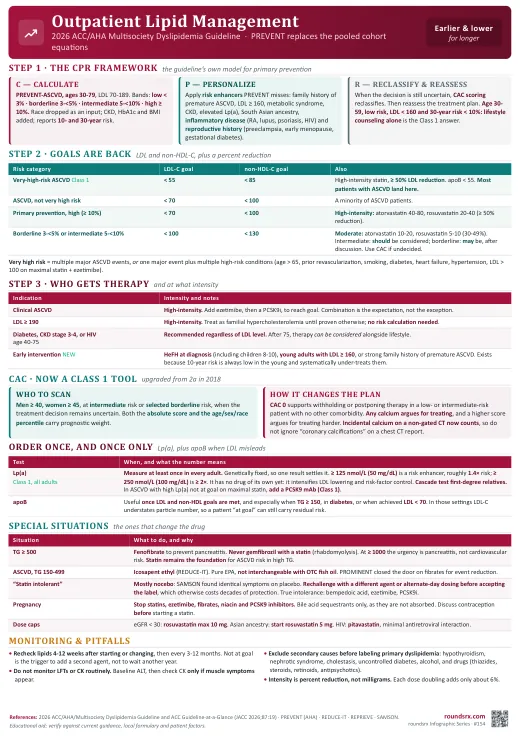
Text version
- 1. Clinical ASCVD (prior MI, stable angina, coronary revascularization, stroke/TIA, PAD with imaging): high-intensity statin, plus ASA 81 mg daily. Eligibility is the diagnosis, so no risk score is needed.
- 2. Severe hypercholesterolemia, LDL ≥190 (often FH): high-intensity regardless of risk, goal ≥50% LDL reduction. Treat HeFH at diagnosis; children with HeFH from age 8–10.
- 3. Primary prevention by PREVENT (age 30–79, LDL 70–189, no DM, no prior event): ≥10% high-intensity with LDL goal <70; 5 to <10% moderate-intensity with goal <100; 3 to <5% shared decision-making with risk enhancers or CAC.
- 4. Diabetes age 40–75 with LDL 70–189: moderate-intensity baseline regardless of the score (Class 1), high-intensity with multiple ASCVD risk factors (Class 2a) or established ASCVD. PREVENT ≥10% triggers add-on ezetimibe or a PCSK9 antibody (Class 2b), not a change in statin intensity. Ages 20–39: reasonable to consider with long-duration diabetes (T2DM ≥10 yr, T1DM ≥20 yr), albuminuria, eGFR <60, retinopathy, neuropathy or ABI <0.9 (Class 2b).
- 5. Early intervention (NEW 2026): HeFH at any age, age ≤30 with LDL ≥160, strong family history of premature ASCVD, or high 30-year PREVENT. Cumulative LDL exposure drives lifetime risk, so delaying wastes the longest-yield window.
- Very-high-risk ASCVD: LDL <55, non-HDL-C <85, plus ≥50% reduction from baseline. Qualifies by either: multiple major ASCVD events (ACS in the past 12 months, prior MI, prior ischemic stroke, symptomatic PAD), or one major event plus multiple high-risk conditions (age >65, prior coronary revascularization, current smoking, DM, HF, HTN, LDL >100 on maximal statin + ezetimibe). Most patients with clinical ASCVD qualify.
- Standard-risk ASCVD: LDL <70, non-HDL-C <100.
- PREVENT ≥10% (high): LDL <70. 5 to <10% (intermediate): <100. 3 to <5% (borderline): optional, <100 if treated, CAC is the useful tiebreaker here. <3% (low): lifestyle, reassess in 4–6 years.
- Diabetes: <70 if ASCVD or multiple risk factors, <100 otherwise.
- Heterozygous FH: <100, or <70 if also ASCVD, with ≥50% reduction. Homozygous FH: <100, treatment-intensive.
- Do not use PREVENT after an ASCVD event; it is not validated post-event, so classify by clinical features instead. The percentage rule never produces a <55 goal.
- Lipid panel 4–12 weeks after starting or changing therapy (6–8 is the sweet spot), which is when the ≥50% reduction goal is actually measured.
- Annual lipid panel once stable at goal, mainly to catch adherence drift.
- Do not recheck LFTs routinely (the FDA dropped routine monitoring in 2012); check only for symptoms or a specific concern.
- Do not check CK routinely; baseline only in selected patients (prior myopathy, multi-statin exposure, high-risk interactions, severe renal or hepatic disease), and on new myalgia.
- TSH at baseline and again if myalgia develops, since hypothyroidism is the leading reversible mimic of statin myalgia and the leading reversible cause of secondary hypercholesterolemia.
- Recheck adherence before escalating. About 50% of patients discontinue statins within one year, often without saying so.
- Watch creatinine on fenofibrate: a mild reversible rise is common and is not by itself a reason to stop.
- Starting low and creeping up when the indication is high-intensity. That is treatment time lost at a suboptimal LDL.
- Gemfibrozil with a statin. It inhibits statin glucuronidation and markedly raises rhabdomyolysis risk. Use fenofibrate when combining.
- Declaring statin intolerance on the first complaint. Rechallenge first, and rule out hypothyroidism, vitamin D deficiency, and CYP3A4 interactions.
- Stopping the statin for statin-associated new-onset diabetes. Continue it and treat the diabetes; CV benefit far outweighs roughly 1 case per 1000 patient-years.
- Withholding a statin for NAFLD/MASLD, compensated cirrhosis, or a stable mild ALT elevation. None of these are contraindications; active hepatitis, decompensated cirrhosis, and acute liver failure are.
- Simvastatin 80 mg (FDA black box for rhabdomyolysis), and simvastatin or lovastatin with protease inhibitors or cyclosporine.
- Substituting OTC fish oil or Lovaza for icosapent ethyl. The CV outcome data belongs to pure EPA only.
- Forgetting to stop lipid therapy in pregnancy. Statins, ezetimibe, fibrates, niacin, and PCSK9i all stop; bile acid sequestrants are the only option.
- LDL ≥190: presume FH until proven otherwise (HeFH is ~1 in 200–500). Rule out secondary causes (TSH, UACR, LFTs), examine for tendinous xanthomas, xanthelasma, and corneal arcus <45, consider genetic testing, and cascade-screen first-degree relatives, half of whom will be affected.
- Homozygous FH (LDL often >500): specialty lipid clinic for statin plus ezetimibe plus PCSK9i plus apheresis, with lomitapide or evinacumab, because standard therapy cannot reach goal.
- TG ≥1000: imminent pancreatitis risk. Fibrate plus icosapent ethyl, dietary fat <15% of calories, eliminate alcohol, treat secondary causes (uncontrolled DM, alcohol, obesity, hypothyroidism, nephrotic syndrome, offending drugs), and genetic workup if persistent.
- True statin intolerance (reproducible myopathy on 2 or more statins, not nocebo): bempedoic acid with or without ezetimibe and PCSK9i. Try an alternative low-dose regimen such as rosuvastatin 5 mg every other day first.
- CK >10× ULN or myoglobinuria/AKI: stop immediately, treat as rhabdomyolysis, permanently discontinue that statin.
- ALT/AST >10× ULN or clinical hepatitis: permanent discontinuation and non-statin LDL lowering instead.
- Elevated Lp(a) ≥50 mg/dL: intensify LDL lowering and counsel family screening. No Lp(a)-specific drug is approved yet, and PCSK9i lowers it only ~25%.
- Modify the drug, not the intensity tier, for special populations: Asian patients start rosuvastatin 5 mg; eGFR <30 use rosuvastatin max 10 mg or pravastatin/atorvastatin; HIV on a protease inhibitor use pravastatin, pitavastatin, or rosuvastatin; cyclosporine use pravastatin or pitavastatin; pregnancy stop all statins.
- CTT meta-analysis: each ~39 mg/dL LDL drop is about a 22% MACE reduction per year, compounding over time. This is why waiting six weeks at every step is costly.
- IMPROVE-IT, 2015: ezetimibe added to statin post-ACS reduced MACE, making it the first add-on with outcome data.
- FOURIER, 2017 and ODYSSEY OUTCOMES, 2018: ~15% MACE reduction each, and safety confirmed down to LDL ~20–30, which is what justifies pushing targets lower.
- REDUCE-IT, 2019: 25% MACE reduction with icosapent ethyl on top of a statin.
- PROMINENT, 2022 plus ACCORD-Lipid, 2010: fibrate-class CV benefit beyond statin is largely disproven, so fenofibrate is for pancreatitis prevention at TG ≥500, not risk reduction.
- CLEAR Outcomes, 2023: 13% MACE reduction in statin-intolerant patients.
- SAMSON, 2020: about 90% of statin-attributed symptoms are nocebo, which is why blinded rechallenge comes before the intolerance label.
- SHARP, 2011: benefit in pre-dialysis CKD, while 4D and AURORA were negative, so do not start a statin for primary prevention in a dialysis patient.
- REPRIEVE, 2023: pitavastatin 4 mg cut MACE 35% in HIV adults age 40–75 below the traditional LDL threshold.