Sepsis & Septic Shock
Septic Shock: Sepsis + vasopressor requirement to maintain MAP ≥ 65 mmHg + serum lactate > 2 mmol/L despite adequate fluid resuscitation. In-hospital mortality > 40%.
⚠️ SSC 2026: qSOFA has poor sensitivity -misses too many septic patients. NEWS/MEWS now recommended as primary screening tools.
Replaced by Sepsis-3 (2016) due to poor specificity -SIRS is present in most hospitalized patients Sepsis-3, 2016 regardless of infection. Still used as a triage trigger in some institutions given its high sensitivity.
| Domain | 2021 SSC | 2026 SSC Update |
|---|---|---|
| Screening | qSOFA suggested outside ICU | NEWS/NEWS2/MEWS/SIRS now recommended OVER qSOFA. qSOFA has poor sensitivity -should not be sole screening tool. |
| Fluids | 30 mL/kg crystalloid within 3h. Balanced crystalloids already suggested over 0.9% saline (weak rec, low-quality evidence; it was the 2016 edition that had no preference). | 30 mL/kg still suggested, with greater emphasis on individualizing fluid after that initial bolus (liberal or restrictive, per patient and system factors). Balanced-over-saline unchanged from 2021. New: fluid removal after resuscitation now addressed. |
| Vasopressors | Start via central line. NE first-line (strong). | Peripheral vasopressor start now OK -don't delay for central access. NE first-line is still a strong "recommend" against dopamine, epinephrine and selepressin; only the comparison against vasopressin or angiotensin II is a conditional "suggest", so this is not a blanket downgrade. New: MAP 60-65 for adults ≥ 65 years. |
| Steroids | Suggested if ongoing vasopressor need (reversed 2016 stance against routine steroids) | Maintained from 2021. Hydrocortisone 200 mg/day for septic shock with ongoing vasopressor requirement. No specific wait time mandated (trial enrollment used ≥ 4h). |
| Antibiotics | Within 1h of recognition | Refined: 1 hour for septic shock, 3 hours for sepsis without shock. New: antibiotic optimization & prehospital antibiotics may reduce mortality (OR 0.58). |
| Beta-lactam dosing | Not addressed | Recommend (strong) prolonged infusion of beta-lactams for maintenance after loading dose. Improves time-dependent killing. |
| Anaerobic coverage | Routine empiric pip-tazo / metronidazole as part of broad-spectrum cover | Stop reflexively adding anaerobic coverage. Chanderraj, 2024 showed empiric anti-anaerobic agents in critically ill patients without an anaerobic source ↑ mortality, C. diff, and VRE. New default empiric: Vanc + Cefepime. Add Zosyn / metronidazole only for clear anaerobic sources (intra-abdominal, aspiration w/ abscess, nec fasc, pelvic, bite wound). |
| Source | Frequency | Typical pathogens |
|---|---|---|
| Pulmonary (pneumonia) | ~40–50% | S. pneumoniae, K. pneumoniae, P. aeruginosa, MRSA, influenza, COVID-19 |
| Genitourinary | ~20–25% | E. coli, Klebsiella, Proteus, enterococci |
| Intra-abdominal | ~15–20% | Polymicrobial gram-negatives + anaerobes (B. fragilis); E. coli, enterococci. Sources: cholangitis, perforation, diverticulitis, abscess, ischemic bowel |
| Skin / soft tissue | ~5–10% | S. aureus (incl. MRSA), Group A strep, Clostridium. Includes necrotizing fasciitis, cellulitis, infected wounds, decubitus ulcers |
| Catheter / line / device | ~5% | CoNS, S. aureus, Candida, gram-negatives. CLABSI, infected hardware (pacemaker, prosthetic joint, VP shunt) |
| CNS, endocarditis, other | < 5% | Variable. CNS: S. pneumoniae, N. meningitidis, Listeria (elderly/immunocompromised). Endocarditis: S. aureus, viridans strep, enterococci. Consider early in sepsis with no clear source, especially with fever + AMS or new murmur |
| No source identified | ~10–15% | Empiric broad-spectrum coverage; reassess daily. Higher in immunocompromised (neutropenic fever, post-transplant). Consider occult abscess, fungal, viral, atypical organisms |
- Fever > 38.3°C OR hypothermia < 36°C (hypothermia = worse prognosis)
- Tachycardia, tachypnea
- Hypotension, warm/flushed skin (early distributive), later cold/mottled
- Altered mental status (confusion, agitation, lethargy)
- Decreased urine output (< 0.5 mL/kg/hr)
- Elevated lactate (tissue hypoperfusion marker)
- Measure serum lactate (repeat if initial > 2 mmol/L to confirm clearance)
- Blood cultures × 2 sets from 2 separate sites -before antibiotics, but do not delay antibiotics > 45 min waiting for cultures
- Broad-spectrum antibiotics administered IV, 1h for septic shock, 3h for sepsis without shock (SSC 2026)
- 30 mL/kg balanced crystalloid (LR or PlasmaLyte) bolus if MAP < 65 mmHg OR lactate ≥ 4 mmol/L (SSC 2026 suggests balanced over 0.9% saline, except TBI)
- Vasopressors if MAP < 65 despite fluid resuscitation → target MAP ≥ 65
- Lactate -venous or arterial; most critical early test; > 4 = cryptic shock regardless of BP
- Blood cultures × 2 peripheral sets (before antibiotics)
- BMP -creatinine (AKI), glucose, bicarb (metabolic acidosis)
- CBC with differential (leukocytosis, left shift, or leukopenia)
- Procalcitonin -helps guide antibiotic duration (de-escalation at < 0.25)
- UA + urine culture (UTI/urosepsis -2nd most common source)
- Sputum Gram stain + culture, respiratory panel (pneumonia -most common source)
- LFTs, lipase, RUQ ultrasound (abdominal source)
- Coagulation panel (PT/INR, PTT, fibrinogen) -if DIC suspected
- LP (cell count, protein, glucose, Gram stain, culture) if CNS source
- C. diff if recent antibiotics + diarrhea
- Bedside echo -cardiac function, IVC collapsibility (volume status), wall motion, pericardial effusion (fastest, most actionable)
- CXR -portable if unstable; pneumonia, pulmonary edema, effusion
- RUQ ultrasound -gallbladder, biliary dilation (cholangitis)
- CT abdomen/pelvis with contrast -abdominal source, abscess (do not delay abx for CT)
- CT head -if AMS, meningismus, focal neuro deficit (LP after if no mass lesion)
| Lactate Level | Category | Action |
|---|---|---|
| < 2 mmol/L | Normal | Standard care; monitor if clinical concern |
| 2–4 mmol/L | Elevated -sepsis | Aggressive resuscitation; repeat lactate in 2h |
| ≥ 4 mmol/L | Cryptic shock | Mandatory aggressive resuscitation: 30 mL/kg balanced crystalloid, ICU evaluation, source control, repeat lactate q2h. Vasopressors if MAP < 65 after fluids (per SSC 2026, not all cryptic shock requires immediate pressors if BP responds). |
▶ How to Escalate Sepsis Care, Step by Step (tap to expand)
| Criterion | What | Why |
|---|---|---|
| Sepsis (Sepsis-3) | Suspected infection + SOFA ↑ ≥ 2 (organ dysfunction) | Sepsis-3 dropped SIRS for SOFA because SIRS over-called and missed sicker patients. SOFA tracks 6 organ systems (resp, coag, hepatic, CV, CNS, renal). |
| Septic shock | Sepsis + MAP < 65 requiring pressors AND lactate > 2 despite adequate volume | Defines the "Hour-1 bundle" trigger. Mortality jumps from ~10% (sepsis) to ~40% (shock); the bundle window is when survival is shaped. |
| Bedside screen | qSOFA ≥ 2 (RR ≥ 22, AMS, SBP ≤ 100) or NEWS2 ≥ 5 at floor/ED | qSOFA is a screening trigger, not a diagnosis. A "0" qSOFA in a sick-looking patient still gets the workup, clinical gestalt overrides scores. |
| Action | How | Why |
|---|---|---|
| Lactate | VBG or specific lactate. Recheck in 2 hr. | Initial lactate stratifies severity; clearance > 10% per 2 hr is the resuscitation goal. Persistent lactate > 4 is high-mortality. |
| Cultures BEFORE antibiotics | 2 blood cultures from separate sites; site-specific (UA, sputum, CSF, peritoneal) as indicated. Don't delay antibiotics > 45 min for cultures. | Pretreatment cultures double yield. But never sacrifice antibiotic timing in shock, get what you can in < 45 min and move on. |
| Antibiotics within 1 hr (shock) or 3 hr (sepsis without shock) | Default empiric: vancomycin + cefepime. Tailor to source (see Step 3). | The move off pip-tazo as universal default is driven by Chanderraj (2024): unnecessary anti-anaerobic coverage strips protective gut anaerobes and is associated with higher mortality, C. diff and VRE. Cefepime + vanc is broad without that anaerobic hit. Note what ACORN did NOT show: its primary AKI/death endpoint was a wash, so "avoid pip-tazo to protect the kidneys" is not the reason. |
| Balanced crystalloid 30 mL/kg | LR or PlasmaLyte (not NS) over 1-3 hr if MAP < 65 or lactate ≥ 4. Re-assess after each 500 mL (passive leg raise, lung auscultation, JVP). | SMART (2018): balanced fluids reduce major adverse kidney events vs NS. CLOVERS (2023): liberal vs restrictive fluid showed no benefit, don't reflex more if not responding. NS only in TBI. |
| Start pressors early | Norepinephrine 0.01-0.05 mcg/kg/min, titrate to MAP ≥ 65. Peripheral start is OK while central line is being placed, don't delay. | SSC 2026: peripheral pressors safe for short-term use, removing the "central access first" delay. Waiting for central line costs survival minutes. |
| Source | Empiric Regimen | Why |
|---|---|---|
| Unknown / undifferentiated | Vancomycin + cefepime | Default. Covers MRSA + Pseudomonas + GNR without unnecessary anaerobic spectrum. |
| Intra-abdominal, aspiration with abscess/empyema, nec fasc, pelvic, bite | Vancomycin + piperacillin-tazobactam, OR vanc + cefepime + metronidazole | Anaerobic coverage essential. Use pip-tazo despite AKI signal when the anaerobic indication is clear. |
| Pneumonia, severe community-acquired | Ceftriaxone + azithromycin (typical CAP), or vanc + cefepime if HAP/VAP risk | Macrolide for atypicals (Legionella, Mycoplasma). Add vanc if MRSA risk (post-influenza, cavitary, IVDU). |
| Urinary | Ceftriaxone (uncomplicated) or pip-tazo/cefepime (complicated, obstruction, hospital exposure) | ~70% E. coli, others Klebsiella, Pseudomonas. Add vanc only if hardware (stent, catheter) or known prior MRSA. |
| Meningitis | Ceftriaxone 2 g IV + vancomycin + dexamethasone (give before/with antibiotics in pneumococcal) + ampicillin (Listeria) if > 50 yr, immunocompromised, alcoholic, pregnant | Dexamethasone reduces mortality and neurologic sequelae in pneumococcal meningitis only when given before/with the first antibiotic dose (de Gans, 2002). |
| Neutropenic fever | Cefepime monotherapy (or pip-tazo). Add vanc only if hemodynamic instability, line infection, severe mucositis, MRSA history. | Routine empiric vanc no longer recommended (IDSA 2018, 2024 update); doesn't improve outcomes and selects resistance. |
| Suspected MRSA bacteremia / line infection | Vancomycin (AUC/MIC 400-600) ± gram-neg coverage; remove infected catheter | Vancomycin is the standard. Daptomycin if MIC ≥ 1.5 or persistent bacteremia. Linezolid for pulm if vanc trough not achievable. |
| Prior ESBL or MDR organism | Meropenem 1 g IV q8h | ESBL inactivates cefepime and pip-tazo unreliably; carbapenems are the standard. Reserve for clear indications to avoid carbapenem resistance. |
- Abscess → IR-guided or surgical drainage
- Necrotizing fasciitis → emergent surgical debridement (don't wait for imaging)
- Cholangitis / obstructive uropathy → urgent decompression (ERCP, percutaneous nephrostomy)
- Infected hardware (line, prosthetic joint, valve, device) → remove or replace
- Perforated viscus → emergent surgery
| Trigger | Do This | Why |
|---|---|---|
| NE ≥ 0.25-0.5 mcg/kg/min still not at MAP 65 | Add vasopressin 0.03 U/min fixed dose | VASST (2008): vasopressin spares NE; mortality signal in less-severe shock subgroup. Fixed dose, no titration. |
| Persistent shock on NE + vasopressin | Add epinephrine; consider hydrocortisone 200 mg/day IV (50 mg q6h or continuous) | APROCCHSS (2018): hydrocortisone + fludrocortisone reduced 90-day mortality. ADRENAL (2018): faster shock reversal without mortality benefit. SSC 2021/2026: conditional recommendation for ongoing vasopressor requirement. |
| Adequate MAP but cold extremities, rising lactate, low ScvO₂ | Add dobutamine 2-20 mcg/kg/min for low cardiac output | Cardiogenic component on top of distributive shock (sepsis cardiomyopathy). Echo to confirm low EF. |
| Lactate not clearing despite all above | Re-check source (missed undrained focus, persistent bacteremia), exclude β-agonist or metformin lactic acidosis, check echo | Persistent lactate after MAP and pressors are optimized usually means undrained source or wrong antibiotic. |
| Element | Target | Why |
|---|---|---|
| Lung-protective ventilation | TV 6 mL/kg PBW, Pplat ≤ 30, target SpO₂ 92-96% | ARDSNet (2000): TV 6 vs 12 mL/kg reduced mortality 22%. Applies to all ICU mechanical ventilation. |
| Glucose | 140-180 mg/dL | NICE-SUGAR (2009): tight control (81-108) increased mortality and 13× severe hypoglycemia. |
| DVT prophylaxis | Enoxaparin (UFH if CrCl < 30) + SCDs | Septic patients have high VTE risk. |
| Stress ulcer prophylaxis | PPI or H2-blocker IF mechanical ventilation > 48 hr, coagulopathy, prior GI bleed, TBI, large burns. Not universally. | SUP-ICU (2018): routine prophylaxis no mortality benefit; weigh C. diff and pneumonia risk. |
| Enteral nutrition | Within 24-48 hr | Preserves gut mucosal integrity. NUTRIREA-2 and CALORIES showed enteral and parenteral mortality similar but enteral has fewer complications. |
| Transfusion threshold | Hgb < 7 (or < 8 if active cardiac ischemia) | TRICC (1999): restrictive (< 7) non-inferior to liberal (< 10). |
- Narrow antibiotics to culture-directed therapy (e.g., vanc → cefazolin if MSSA; cefepime → ceftriaxone if susceptible).
- Stop empiric MRSA coverage if cultures negative at 48 hr and no MRSA risk factors.
- Total duration 5-7 days for most sepsis with good source control and clinical improvement (PRORATA, SAPS, BALANCE). Longer for endocarditis, osteo, undrained abscess, S. aureus bacteremia.
- Procalcitonin can guide stopping (PRORATA: 2.7 day reduction, no mortality penalty).
- De-resuscitate: once stable and MAP supported off pressors, start net-negative fluid balance. SSC 2026 explicitly added this. Fluid overload at day 3-5 worsens mortality.
| Scenario | Do This | Why |
|---|---|---|
| Severe penicillin allergy (anaphylaxis, SJS/TEN) | Aztreonam + vanc + metronidazole for broad coverage; meropenem if SJS to non-PCN beta-lactam | Cefepime is generally safe with non-severe PCN allergy (cross-reactivity ~1-3%), but in severe IgE/SJS history, aztreonam (monobactam) avoids cross-reactivity. |
| Renal failure / on dialysis | Use AUC-guided vancomycin dosing and adjust all renally-cleared drugs | Vanc and beta-lactams need renal dose adjustment. Older observational data suggested pip-tazo + vanc raises AKI rate, but the ACORN RCT (2023) did not confirm it, so do not withhold pip-tazo on that basis alone. Cefepime carries its own risk here: neurotoxicity accumulates in renal failure, so it needs renal dose reduction. |
| Pregnancy | Cefepime, vancomycin, ceftriaxone are safe. Avoid tetracyclines, FQs, aminoglycosides, TMP-SMX (first trimester). | Standard category labels for these. Treat aggressively; sepsis in pregnancy carries high maternal-fetal mortality. |
| Sepsis-induced cardiomyopathy (drop in EF, cold extremities, low CO despite MAP) | Add dobutamine 2-20 mcg/kg/min while continuing NE | Septic cardiomyopathy is reversible, lasts days to weeks. Echo confirms; dobutamine supports CO until myocardium recovers. |
| Suspected adrenal crisis (hyponatremia, hyperkalemia, eosinophilia, on chronic steroids) | Empiric hydrocortisone 100 mg IV q8h upfront, before cosyntropin if life-threatening | Sepsis can precipitate adrenal crisis in chronic steroid users or unrecognized Addison. Stress-dose covers both relative adrenal insufficiency and sepsis itself. |
| Influenza or COVID superinfection suspected | Oseltamivir 75 mg BID or remdesivir/dexamethasone per current protocol; cover MRSA (post-influenza necrotizing pneumonia) and Strep pneumo | Post-influenza bacterial superinfection is classically MRSA (necrotizing) or pneumococcus. Don't withhold antiviral while bacterial workup pending. |
| Refractory shock + abdominal pain or distension | Urgent CT abdomen, surgical consult; consider mesenteric ischemia or perforated viscus | Missed surgical sources kill more than antibiotic choice. If shock won't budge, image and call surgery. |
| Cirrhosis with SBP | Ceftriaxone 2 g IV daily + albumin 1.5 g/kg day 1, 1 g/kg day 3 | Sort (1999): albumin reduces hepatorenal syndrome and mortality in SBP. Don't forget the albumin. |
| Heart failure or low EF on chronic GDMT | Hold ACEi/ARB/ARNI, MRA, SGLT2i during septic shock; continue cautiously after MAP supported and pressors weaning | Hemodynamic vulnerability in shock. SGLT2i specifically also raises euglycemic DKA risk in critical illness. |
| End-of-life / DNR with poor prognosis | Goals-of-care discussion early; palliative trajectory with antibiotics, analgesia, anti-secretory; avoid futile escalation | Septic shock in patients with poor baseline functional status has > 80% mortality. Aggressive ICU care without alignment to goals worsens dying. |
If shock criteria met (MAP < 65, lactate ≥ 4, AMS): activate ICU consult now -not after labs, not after imaging. Bedside echo to exclude obstructive shock (PE, tamponade) and assess LV function.
| Drug | Dose | Bugs Covered | ⚠️ Side Effects | When to Use |
|---|---|---|---|---|
| Piperacillin-tazobactam (Zosyn) | 3.375g IV q6h (or 4.5g q8h extended infusion over 4h) | Gram-positives: Strep, MSSA (not MRSA) Gram-negatives: E. coli, Klebsiella, Proteus, Pseudomonas, Enterobacter Anaerobes: Bacteroides, Fusobacterium | ⚠️ AKI risk when paired with vancomycin is not confirmed (observational signal only; the ACORN RCT was neutral) ACORN, 2023 (use cefepime + vanc as default empiric unless anaerobic source). C. diff (higher than cefepime, broad anaerobic kill). Hypokalemia (common, often missed, check daily BMP; mechanism = non-reabsorbable anion in distal tubule). Thrombocytopenia & neutropenia with courses > 7–14 days. Rash; DRESS (rare); cross-reactivity with severe PCN allergy. Transaminitis; cholestasis with prolonged infusion. False-positive serum galactomannan (critical in heme/onc aspergillus screening). Drug fever. Seizures in renal failure (rare). Diarrhea (non-C. diff). | Reserve for clear anaerobic source (intra-abdominal, aspiration w/ abscess, nec fasc, pelvic, bite wound). No longer the default empiric in 2026, Chanderraj, 2024 showed empiric anti-anaerobic agents without an anaerobic indication ↑ mortality, C. diff, and VRE. |
| Cefepime (Maxipime) | 2g IV q8h | Gram-positives: Strep, MSSA (not MRSA) Gram-negatives: E. coli, Klebsiella, Pseudomonas, Enterobacter, Serratia, Citrobacter No anaerobes | ⚠️ Cefepime-induced neurotoxicity (CIN), encephalopathy, confusion, myoclonus, asterixis, tremor, non-convulsive status epilepticus. Esp. renal failure, elderly, sepsis. Often misdiagnosed as ICU delirium; EEG shows triphasic waves or generalized periodic discharges. Resolves with discontinuation ± HD. Dose-adjust aggressively for CrCl. Overt seizures (part of spectrum). C. diff. Rash; hypersensitivity (PCN cross-reactivity ~1–3%, safe in non-severe PCN allergy). Thrombocytopenia, eosinophilia, positive Coombs (rare AIHA). Transaminitis. Drug fever; infusion-site phlebitis. Candidiasis / thrush with prolonged use. | New 2026 default empiric (paired with vanc). Covers Pseudomonas + GNR without anaerobic spectrum. ↓ AKI vs pip-tazo+vanc. Add metronidazole only if a true anaerobic source is identified. |
| Meropenem (Merrem) | 1g IV q8h | Gram-positives: Strep, MSSA (not MRSA) Gram-negatives: E. coli, Klebsiella, Pseudomonas, Enterobacter, ESBL-producers, Acinetobacter Anaerobes: Bacteroides | ⚠️ Seizures (esp. renal failure, CNS lesion, elderly, high dose, lower risk than imipenem; always dose-adjust for CrCl). ↓ valproic acid 50–90% in 24–48h → breakthrough seizures/status epilepticus (AVOID combo, dose-escalating VPA does NOT rescue; bridge to levetiracetam). C. diff, diarrhea, nausea. Rash / hypersensitivity (PCN cross-reactivity ~1%, safe in non-severe PCN allergy). Thrombocytosis, eosinophilia, positive Coombs (rare AIHA); transaminitis. VRE + Candida superinfection with prolonged courses. Encephalopathy/myoclonus in renal failure. | Use if: prior ESBL/MDR organism, recent hospitalization + IV abx within 90 days, high local resistance, failed pip-tazo. Broadest gram-negative coverage. |
| Vancomycin (Vancocin) | 15–20 mg/kg IV q8–12h (AUC/MIC target 400–600) | Gram-positives only: MRSA, MSSA, Strep, Enterococcus (not VRE) No gram-negatives. No anaerobes. | ⚠️ Nephrotoxicity / AKI (dose- and duration-dependent; the long-assumed extra hit from pairing with pip-tazo was not confirmed by RCT ACORN, 2023; AUC/MIC 400–600 guided dosing ↓ risk vs trough-only). Vancomycin flushing syndrome (formerly "Red Man", histamine release, NOT IgE allergy; infuse over ≥ 1h, pre-treat with antihistamine if recurrent). Ototoxicity (dose/duration; additive with loops + aminoglycosides). DRESS, SJS/TEN (rare). Linear IgA bullous dermatosis. Neutropenia + thrombocytopenia with courses > 7–14 days. Drug fever. Phlebitis, prefer central line for prolonged courses. | Add for MRSA coverage -any sepsis with: prior MRSA, IVDU, skin/soft tissue source, healthcare exposure, HD catheter. Pair with pip-tazo, cefepime, or meropenem. |
| Linezolid (Zyvox) | 600 mg IV/PO q12h | Gram-positives only: MRSA, VRE, Strep, Enterococcus No gram-negatives. No anaerobes. | ⚠️ Thrombocytopenia (courses > 7–14d, monitor CBC weekly; most common dose-limiting toxicity). Serotonin syndrome (weak reversible MAOi, avoid SSRIs, SNRIs, tramadol, meperidine, TCAs; ideally 2-week washout. Classic inpatient pimp trap). Peripheral neuropathy + optic neuritis (courses > 28d, may be irreversible; discontinue at first sign). Myelosuppression / pancytopenia (marrow suppression, > 14d). Lactic acidosis (mitochondrial protein synthesis inhibition, prolonged use, often > 28d). Tyramine reaction (avoid aged cheese, cured meats, wine, MAOi effect). Hypoglycemia in diabetics on sulfonylureas/insulin. Headache, nausea, diarrhea, rash. | Alternative to vanc if: CKD/AKI (no renal adjustment), VRE suspected, MRSA pneumonia (superior lung penetration), no IV access (100% PO bioavailability). |
| Metronidazole (Flagyl) | 500 mg IV q8h | Anaerobes: Bacteroides fragilis, Clostridium, Fusobacterium, Prevotella Protozoa: C. diff (PO), Giardia, Entamoeba | ⚠️ Disulfiram-like reaction with alcohol (flushing, tachycardia, nausea, vomiting, counsel: NO alcohol during + 72h after. Applies to mouthwash, cough syrup, IV meds in propylene glycol). Peripheral neuropathy (dose- and duration-related, distal axonal, courses > 4–6 weeks; may be irreversible). CNS toxicity, encephalopathy, cerebellar syndrome (ataxia, dysarthria, nystagmus), seizures. MRI: symmetric cerebellar dentate / corpus callosum splenium lesions; reversible with discontinuation. Metallic taste + nausea (very common, adherence issue). Warfarin INR ↑ (CYP2C9 inhibition, recheck INR at 48–72h; anticipate dose reduction). Lithium toxicity. Reversible leukopenia. Optic neuropathy (rare). Aseptic meningitis (very rare). | Add to cefepime or meropenem when anaerobic coverage needed (intra-abdominal, abscess, aspiration with empyema). Not needed with pip-tazo (already covers anaerobes). |
After initial bolus: reassess after each 500 mL. Check JVP, lung auscultation, passive leg raise response. Do not reflexively give more fluids if no hemodynamic response -start vasopressors. Fluid overload in sepsis = worse outcomes. CLOVERS, 2023 showed no benefit to liberal fluid strategy, supporting a conservative approach. Use crystalloids over colloids -CRISTAL, 2013 found no 28-day mortality difference between colloids and crystalloids. Notably, FEAST, 2011 demonstrated that fluid boluses increased mortality in febrile children (resource-limited setting), underscoring the importance of judicious fluid use.
Add vasopressin 0.03 units/min (fixed dose, no titration) when NE reaches 0.25–0.5 mcg/kg/min (spares NE, possibly reduces mortality) VASST 2008.
Add epinephrine for refractory shock. Use dobutamine (2–20 mcg/kg/min) only if MAP adequate but persistent signs of low CO (cold extremities, rising lactate, low ScvO₂).
Hydrocortisone 200 mg/day IV (50 mg q6h or continuous) for septic shock with ongoing vasopressor requirement (SSC 2021/2026 -conditional recommendation). Shortens shock duration. ADRENAL 2018; APROCCHSS 2018 CORTICUS, 2008.
Drain abscess (IR-guided or surgical). Remove infected IV lines (replace in new site). Decompress biliary obstruction (ERCP or percutaneous). Surgical consult for perforated viscus, necrotizing fasciitis, infected prosthetic. Time to source control should be < 6–12 hours for drainage procedures.
Glucose: Target 140–180 mg/dL with insulin infusion NICE-SUGAR, 2009. Avoid hypoglycemia.
DVT prophylaxis: Enoxaparin (or UFH if CrCl < 30) + SCDs.
Stress ulcer prophylaxis: IV PPI or H2-blocker if high-risk (mechanically ventilated > 48h, coagulopathy, history of GI bleed, TBI, burns > 35% BSA). Not all ICU patients need it -SUP-ICU, 2018: no mortality benefit from routine prophylaxis; weigh risk of C. difficile and nosocomial pneumonia.
Nutrition: Early enteral nutrition within 24–48h. Enteral is preferred over parenteral -NUTRIREA-2, 2018 and CALORIES, 2014 showed no mortality difference between parenteral and enteral, but enteral maintains gut integrity.
Antibiotic de-escalation: Reassess at 48–72h based on cultures + clinical trajectory. Target 5–7 days total if good source control and clinical improvement. Use procalcitonin to guide stopping PRORATA 2010.
| Parameter | Target | Notes |
|---|---|---|
| MAP | ≥ 65 mmHg (60-65 if age ≥ 65) | Higher (≥ 75) in chronic hypertension or AKI. SSC 2026: lower target 60-65 for older adults spares vasopressor exposure. |
| Lactate | Clearance ≥ 10% per 2h | Target < 2 mmol/L; failure to clear = reassess |
| UOP | ≥ 0.5 mL/kg/hr | Oliguria = inadequate perfusion or AKI |
| ScvO₂ | ≥ 70% | Low = high O₂ extraction → low CO or anemia |
| Glucose | 140–180 mg/dL | Avoid hypoglycemia -check q1–2h |
| Hgb | ≥ 7–9 g/dL | Transfuse if Hgb < 7 (or < 8 if cardiac ischemia) TRICC, 1999 |
- No anaerobic source → no anti-anaerobic agent. Routine empiric pip-tazo, metronidazole, or clindamycin in critically ill patients without an anaerobic indication is associated with higher mortality, C. difficile, and VRE. Chanderraj, 2024
| Clinical Scenario | Empiric Regimen | Notes |
|---|---|---|
| Sepsis, no clear source (default while workup pending) | Cefepime (Maxipime) 2g IV q8h (Pseudomonas, E. coli, Klebsiella, Enterobacter, MSSA) + Vancomycin (Vancocin) 25–30 mg/kg loading (MRSA, Strep, Enterococcus) | New 2026 default. Covers MRSA + Pseudomonas + GNR without unnecessary anaerobic coverage. Use this instead of Vanc + Zosyn unless an anaerobic source is identified. |
| CAP (community-acquired pneumonia) Pulmonary source = ~40–50% of sepsis | Ceftriaxone (Rocephin) 1–2g IV daily + Azithromycin (Zithromax) 500 mg IV/PO | Typical organisms (S. pneumoniae, H. influenzae) + atypicals (Mycoplasma, Legionella). Add vanc if MRSA risk (post-influenza, cavitary, prior MRSA). Levofloxacin monotherapy is an alternative. |
| Severe CAP + sepsis / HAP / VAP | Cefepime (Maxipime) 2g IV q8h + Vancomycin (Vancocin) | Pseudomonas + MRSA coverage. Cefepime preferred over Zosyn (2026), pneumonia is not an anaerobic source unless aspiration with abscess or empyema. |
| Urosepsis (community-acquired) GU source = ~20–25% of sepsis | Ceftriaxone (Rocephin) 1–2g IV daily | E. coli is #1 (~80%). Urinary tract is not an anaerobic source. Adjust by Gram stain + culture. Add ampicillin if Enterococcus on Gram stain. Cefepime if Pseudomonas risk (recurrent UTI, indwelling catheter, prior Pseudomonas). |
| Biliary / intra-abdominal source Abdominal source = ~15–20% of sepsis (perforation, peritonitis, cholangitis, diverticulitis, abscess) | Pip-tazo (Zosyn) 4.5g IV q6h OR Ceftriaxone + Metronidazole (Flagyl) 500 mg IV q8h | True anaerobic source. Anaerobic coverage is appropriate here. Urgent source control (ERCP, IR drainage, surgery) is as critical as antibiotics. |
| SBP (cirrhosis + ascites) | Ceftriaxone (Rocephin) 2g IV daily | SBP is monomicrobial GNR (E. coli, Klebsiella), does NOT need anaerobic coverage. If healthcare-associated SBP or recent broad abx: cefepime or meropenem. |
| Cellulitis (admitted, severe, non-necrotizing) Skin/soft tissue source = ~5–10% of sepsis | Vancomycin (Vancocin) (MRSA) + Cefepime only if GNR risk or unstable | Not an anaerobic infection. Most non-necrotizing cellulitis is Group A strep + S. aureus. Vanc alone is often sufficient. Skip Zosyn unless polymicrobial features. |
| Aspiration pneumonia with lung abscess, empyema, or witnessed large-volume aspiration | Ampicillin-sulbactam (Unasyn) 3g IV q6h OR Pip-tazo (Zosyn) 4.5g IV q6h | Routine "aspiration" CAP does NOT need anaerobic coverage. Reserve for clear anaerobic features: abscess, empyema, putrid sputum, severe dental disease, witnessed aspiration of gastric contents. |
| Neutropenic fever (ANC < 500) | Cefepime (Maxipime) 2g IV q8h ± Vancomycin | Cefepime monotherapy is the standard. Add vanc only for: hemodynamic instability, line infection, skin/soft tissue source, severe mucositis, or known MRSA colonization. Add micafungin at day 4–5 if persistent fever. |
| Suspected meningitis CNS source = < 5% of sepsis | Ceftriaxone (Rocephin) 2g IV q12h + Vancomycin + Dexamethasone (Decadron) 0.15 mg/kg IV q6h × 4d | Dex before or with first abx dose. Add ampicillin 2g IV q4h for Listeria if > 50yo, immunocompromised, or pregnant. Add acyclovir if HSV encephalitis suspected. |
| Necrotizing fasciitis | Vancomycin + Pip-tazo (Zosyn) 4.5g IV q6h + Clindamycin (Cleocin) 900 mg IV q8h | Polymicrobial soft tissue → anaerobes appropriate. Clindamycin = toxin suppression (50S inhibition), not for coverage. Surgical emergency, debridement ASAP. |
| Suspected fungal sepsis | Micafungin (Mycamine) 100 mg IV daily OR Fluconazole (Diflucan) 800 mg IV load → 400 mg daily | Risk factors: TPN, prior broad-spectrum abx, abdominal surgery, Candida colonization, persistent fever despite antibiotics. Micafungin preferred empirically (broader Candida coverage). Step down to fluconazole if C. albicans confirmed susceptible. |
| Known prior MDR organism (prior ESBL/CRE culture, MDR colonization, or local antibiogram > 10–20% ESBL) | Meropenem (Merrem) 1g IV q8h (ESBL, AmpC, Pseudomonas) + Vancomycin (Vancocin) (MRSA) | Reserve carbapenems for documented resistant organisms or high institutional ESBL prevalence. Add micafungin if Candida risk (TPN, lines, abdominal surgery). |
- Intra-abdominal, perforation, peritonitis, abscess, cholangitis, diverticulitis, ischemic bowel
- Aspiration pneumonia with clear risk, poor dentition, lung abscess, empyema, witnessed large-volume aspiration. Routine CAP-aspiration does NOT need anaerobes.
- Necrotizing soft tissue infection, gas-forming, polymicrobial, Fournier's
- Female pelvic, PID, tubo-ovarian abscess, septic abortion, postpartum endometritis
- Oropharyngeal / dental / head & neck, Ludwig's angina, deep neck space infection, odontogenic abscess
- Bite wounds, human or animal
| Agent | Dose | Receptor | Role | Avoid |
|---|---|---|---|---|
| Norepinephrine (Levophed) 1ST LINE | 0.01–3 mcg/kg/min | α₁>>β₁ | First-line. ↑ SVR + mild inotropy | - |
| Vasopressin (Pitressin) ADD-ON | 0.03 units/min (fixed, no titration) | V1/V2 | Add vasopressin when NE dose reaches 0.25–0.5 mcg/kg/min (per SSC 2026). Adding vasopressin early allows NE dose reduction (NE-sparing effect). May reduce AKI (V2-mediated water reabsorption). Non-catecholamine → works even in catecholamine-resistant shock (acidosis, downregulated adrenergic receptors). VASST 2008 SSC 2026 | Cardiac ischemia (coronary vasospasm), mesenteric ischemia at high doses, hyponatremia (V2 effect -monitor Na⁺) |
| Epinephrine (Adrenalin) 2ND LINE | 0.01–0.5 mcg/kg/min | α₁, β₁, β₂ | Refractory shock. Adds inotropy. | Falsely elevates lactate (β₂ effect) |
| Phenylephrine (Neo-Synephrine) | 0.5–6 mcg/kg/min | α₁ pure | If tachyarrhythmia limits NE | Low CO states (pure vasoconstriction) |
| Dobutamine (Dobutrex) | 2–20 mcg/kg/min | β₁>β₂ | Low CO despite adequate MAP | Without vasopressor if MAP < 65 |
| Dopamine (Intropin) AVOID | - | D1, β₁, α₁ | Avoid in sepsis -more arrhythmias, higher mortality SOAP II, 2010 | Avoid |
| Drug | Indication | Dose | Evidence |
|---|---|---|---|
| Hydrocortisone (Solu-Cortef) | Septic shock with ongoing vasopressor requirement (SSC 2021/2026 -conditional) | 200 mg/day IV (50 mg q6h or continuous) | ADRENAL 2018 -faster shock reversal; APROCCHSS 2018 -mortality benefit with hydrocort + fludrocort |
| Drotrecogin alfa | - | Withdrawn from market | PROWESS-SHOCK 2012 -no benefit |
| Clinical Scenario | Why This Empiric | Culture Result | De-Escalate To | Duration |
|---|---|---|---|---|
| Sepsis, no clear source most common starting point | Vanc + Cefepime, covers MRSA + Pseudomonas + GNR. No anaerobic source → no Zosyn (2026). | Blood cx: MSSA | Stop both. → Cefazolin 2g IV q8h | Bacteremia: 2–4 weeks |
| Sepsis, no clear source | Vanc + Cefepime, broadest non-anaerobic empiric | Blood cx: MRSA | Stop cefepime. Continue Vancomycin (AUC-guided) | Min 2 weeks, longer if endocarditis |
| Fever + tachycardia (unclear source) very common, often turns out to be SIRS, not sepsis | Vanc + Cefepime, empiric for possible sepsis without anaerobic source | All cx negative at 48h. PCT < 0.25. Improving. | Stop all antibiotics. Consider non-infectious SIRS? | Stop if no infection identified |
| CAP (standard) Pulmonary source = ~40–50% of sepsis | Ceftriaxone + Azithro, standard CAP: typicals + atypicals | Legionella urinary antigen positive | Stop ceftriaxone. Continue Azithromycin 500mg IV/PO daily alone (or levofloxacin) | 5 days (azithro) or 7 days (levo) |
| Severe CAP + sepsis | Vanc + Zosyn, severity warranted broad coverage beyond standard CAP regimen | Sputum: S. pneumoniae (pan-sensitive). MRSA swab neg. | Stop vanc (NPV > 95%). Zosyn → Ceftriaxone 1g IV daily → PO amoxicillin when afebrile | 5 days total (PCT-guided) |
| Urosepsis GU source = ~20–25% of sepsis | Vanc + Cefepime, empiric until source confirmed (no anaerobes, urinary tract is not an anaerobic source) | Urine cx: E. coli (pansensitive) | Stop both. → Ceftriaxone 1g IV daily → PO cipro or TMP-SMX | UTI: 5–7 days. Pyelo: 7–10 days |
| Pyelonephritis + sepsis | Ceftriaxone 1g IV daily, first-line for community-acquired urosepsis (GNR coverage) | Urine: E. coli (susceptible to cipro + TMP-SMX) | IV → PO ciprofloxacin 500mg BID or TMP-SMX DS BID when afebrile + tolerating PO | 7 days total |
| Perforated appendicitis (post-op) Abdominal source = ~15–20% of sepsis | Zosyn 3.375g IV q6h, GNR + anaerobe coverage for abdominal source | Intra-abdominal: E. coli + Bacteroides (susceptible) | Continue Zosyn → PO amox-clav 875/125 q12h when tolerating PO | 4 days post source control STOP-IT, 2015 |
| SBP (cirrhosis + ascites) | Ceftriaxone 2g IV daily, SBP is monomicrobial GNR (E. coli, Klebsiella). Not polymicrobial → does NOT need anaerobic coverage. If healthcare-associated SBP or recent abx: cefepime or meropenem. | Ascitic fluid cx: E. coli. Susceptible to ceftriaxone. | Continue ceftriaxone. | 5 days. Repeat paracentesis at 48h, PMN should drop > 25%. |
| Cellulitis (admitted, severe) Skin/soft tissue source = ~5–10% of sepsis | Vanc + Cefepime, MRSA + GNR. Non-necrotizing cellulitis is NOT an anaerobic infection, skip Zosyn (2026). | Blood cx negative at 48h. No abscess. Non-purulent. | Stop both. → PO cephalexin 500mg q6h. If purulent: TMP-SMX DS BID | 5 days |
| HAP/VAP | Vanc + Cefepime, hospital-acquired = Pseudomonas + MRSA risk. Cefepime preferred over Zosyn (2026), pneumonia is not an anaerobic source unless aspiration with abscess/empyema. | Sputum: Pseudomonas aeruginosa (susceptible to cefepime) | Stop vanc. Continue Cefepime 2g IV q8h | 7 days for HAP/VAP |
| Line sepsis (suspected CLABSI) | Vanc + Cefepime, MRSA + GNR coverage for line infection (line is not an anaerobic source) | Blood cx: Coag-negative Staph (1 of 2 bottles) | Likely contaminant. 1 bottle + improving + no hardware → stop vanc. If 2/2 bottles or prosthetic → treat. | Contaminant: stop. True: 5–7 days (no hardware) or 4–6 wks (prosthetic) |
| Neutropenic fever | Vanc + Cefepime, cefepime = anti-pseudomonal monotherapy for febrile neutropenia; vanc if line infection suspected | Blood cx: Enterococcus faecalis (ampicillin-susceptible) | Stop both. → Ampicillin 2g IV q4h | 2–4 weeks (rule out endocarditis with TTE/TEE) |
| Neutropenic fever (no source found) | Vanc + Cefepime, standard febrile neutropenia regimen | All cx negative at 72h. ANC recovering (> 500). | Stop antibiotics when afebrile × 48h + ANC > 500 × 2 days | Stop with ANC recovery. |
| Sepsis + prior ESBL on antibiogram uncommon, modifier based on prior cultures | Meropenem + Vanc, known ESBL colonization requires carbapenem empirically | Blood cx: ESBL E. coli | Stop vanc. Continue meropenem. IV → PO TMP-SMX if susceptible for step-down | 7–14 days (source-dependent) |
| Sepsis + TPN/central line + prior abx | Vanc + Cefepime + Micafungin, Candida risk factors (TPN, lines, broad abx). No anaerobic source → cefepime, not Zosyn. | Blood cx: Candida albicans (fluconazole-susceptible) | Stop vanc + cefepime. Micafungin → Fluconazole 400mg IV/PO daily. Remove all central lines. | 14 days from first negative blood cx |
| VAP + prior meropenem use | Meropenem + Vanc, prior carbapenem use selects for resistant organisms | Sputum: Stenotrophomonas maltophilia | Stop meropenem (intrinsically resistant). → TMP-SMX 15mg/kg/day IV divided q6-8h | 10–14 days. Meropenem selects for Steno. |
| Necrotizing fasciitis rare, surgical emergency | Vanc + Zosyn, broadest empiric for polymicrobial soft tissue infection | Wound cx: Group A Strep | Stop both. → Penicillin G 4MU IV q4h + Clindamycin 900mg IV q8h (toxin suppression) | Until debridement complete + clinical improvement |
Patient: 78 y/o F with DM2 and CKD3, presents with confusion, dysuria, and fever 39.2°C for 1 day.
Key findings: HR 112, BP 108/68, RR 24. Lactate 4.2, WBC 18.4K, Cr 2.8 (baseline 1.6), UA positive for nitrites and leukocyte esterase.
Management:
- Blood cultures x2 drawn, then ceftriaxone 1g IV within 1 hour SSC, 2026
- 30 mL/kg LR bolus (lactate ≥ 4 = mandatory resuscitation)
- Repeat lactate at 2h, clearance ≥ 10% is the target
- CT abdomen to rule out renal abscess or obstruction
Teaching point: Cryptic shock, lactate ≥ 4 with normal blood pressure. This patient meets septic shock criteria even though MAP is adequate. Do not be falsely reassured by a normal BP when lactate is elevated.
Patient: 62 y/o M with COPD, presents with productive cough and fevers. CXR shows RLL consolidation. MAP 52 after 2L LR.
Key findings: HR 128, RR 32, SpO₂ 88% on 6L NC. Lactate 6.8, WBC 22K, procalcitonin 14.5.
Management:
- Norepinephrine via peripheral IV, do not delay for central line CENSER, 2019
- Cefepime 2g IV q8h + vancomycin 25 mg/kg load (pneumonia is not an anaerobic source, SSC 2026 / Chanderraj, 2024 prefers cefepime over Zosyn)
- NE at 0.3, MAP still 58, add vasopressin 0.03 u/min VASST, 2008
- Hydrocortisone 50 mg IV q6h (ongoing vasopressor-dependent shock) ADRENAL, 2018
Antibiotic Stewardship: Day 2, sputum culture grows S. pneumoniae (pan-sensitive). MRSA nasal swab negative (NPV > 95%). De-escalate: stop vancomycin, narrow cefepime → ceftriaxone 1g IV daily. Check PCT trend, if ≥ 80% decline from peak, target 5-day total course.
Teaching point: Vasopressor escalation: NE first → vasopressin second (fixed 0.03 u/min) → hydrocortisone if still requiring high-dose pressors. Wean NE first, vasopressin last. Always reassess antibiotics at 48-72h when cultures finalize.
Patient: 55 y/o F, admitted with severe CAP and sepsis. Started on cefepime + vancomycin empirically (SSC 2026, pneumonia is not an anaerobic source).
Key findings: Admission PCT 8.2. Blood cultures grow pan-sensitive S. pneumoniae. MRSA nasal swab negative. Day 3: PCT 1.4 (83% decline), afebrile x24h.
Management:
- De-escalate vancomycin (MRSA swab negative, NPV > 95%)
- Narrow cefepime to ceftriaxone (culture-directed for S. pneumoniae)
- PCT ≥ 80% decline, stop antibiotics at day 5 PRORATA, 2010
- Total duration: 5 days (not the traditional 7-14)
Antibiotic Stewardship: Culture-directed narrowing is the goal. MRSA swab negative → stop vancomycin. Pan-sensitive organism → narrow to simplest effective agent. PCT-guided stop rule avoids unnecessary antibiotic days, fewer C. diff, less resistance, shorter stay.
Teaching point: Procalcitonin-guided de-escalation safely reduces antibiotic duration by 2-3 days. Stop rule: PCT < 0.25 or ≥ 80% decline from peak. Every unnecessary antibiotic day increases C. diff and resistance risk.
Patient: 78F from nursing home, altered mental status, T 39.2°C, HR 112, BP 82/48, WBC 22k. Foley catheter in place. UA: positive nitrites, leukocyte esterase, bacteria.
Key findings: Lactate 4.8 mmol/L → septic shock.
Management:
- Blood cultures × 2 + urine culture BEFORE antibiotics
- Cefepime 2g IV within 1 hour (covers Pseudomonas, catheter-associated UTI risk). Add vancomycin if concerned for MRSA bacteremia.
- 30 mL/kg LR bolus. Reassess after each liter.
- Norepinephrine via peripheral IV, don't wait for central line SSC, 2026
Antibiotic Stewardship: Day 2, urine culture grows E. coli (pan-sensitive). Narrow cefepime → ceftriaxone 1g IV daily. Plan transition to PO ciprofloxacin or TMP-SMX for discharge. Total course: 7-10 days for complicated UTI.
Teaching point: Catheter-associated UTI + septic shock = remove the catheter (source control), cover Pseudomonas empirically, start pressors early, and narrow at 48h when cultures return.
Patient: 55M with diabetes, rapidly spreading erythema on left leg × 12 hours. Pain out of proportion to exam. Crepitus on palpation. T 39.8°C, HR 125, BP 95/58, WBC 28k, lactate 5.2.
This is a surgical emergency, NOT a medical one.
- Do NOT wait for LRINEC score if clinical suspicion is high. Pain out of proportion + crepitus + sepsis = OR now.
- Vancomycin + pip-tazo + clindamycin (clindamycin inhibits toxin production in Group A Strep)
- Emergent surgical consult → radical debridement within hours. Every hour of delay ≈ +7.6% mortality.
- Expect return to OR every 24–48h for re-exploration until margins are clean.
Antibiotic Stewardship: Post-debridement, wound cultures guide narrowing. If Group A Strep confirmed → narrow to penicillin G + clindamycin (toxin suppression). If polymicrobial → maintain broad coverage. Duration guided by clinical response, not a fixed number of days.
Teaching point: Nec fasc is a surgical disease with medical support. The antibiotic that matters most is the scalpel. Call surgery BEFORE imaging.
- Cultures finalized? → Narrow antibiotics today if possible. What day of antibiotics are we on?
- Lactate cleared? → < 2 on two consecutive measurements = adequate perfusion
- Vasopressor trajectory → Weaning or escalating? Note exact dose and trend
- UOP adequate? → Target ≥ 0.5 mL/kg/hr. If oliguric -reassess volume status + pressor dose
- Source controlled? → Drain placed? Infected line removed? Surgery consulted?
- Procalcitonin trend → Falling PCT supports antibiotic cessation PRORATA 2010
- Glucose 140–180 mg/dL? → Avoid hypoglycemia; tight control not beneficial NICE-SUGAR, 2009
- DVT prophylaxis ordered? Stress ulcer prophylaxis (SUP) indicated? Updated (SCCM/ASHP, 2024): SUP only if coagulopathy (PLT <50K, INR >1.5), shock (on vasopressors), or chronic liver disease. Vent alone is no longer a clear indication. Enteral feeding is protective, if tolerating feeds, SUP is likely unnecessary. Discontinue when risk factors resolve.
- Nutrition started? → Enteral preferred within 24–48h if hemodynamically stable
- Sedation/delirium assessment → CAM-ICU, RASS target, daily SAT/SBT
| Parameter | Frequency | Target / Action |
|---|---|---|
| MAP (arterial line) | Continuous | ≥ 65 mmHg; higher if chronic HTN |
| Urine output | Hourly | ≥ 0.5 mL/kg/hr; oliguria = reassess volume + pressors |
| Lactate | q2h until < 2 × 2 | Target clearance ≥ 10%/2h |
| Blood glucose | q1–2h (insulin infusion) | 140–180 mg/dL; avoid < 70 |
| BMP | q6–12h initially | Monitor AKI (creatinine), electrolytes, bicarb |
| CBC | Daily | Thrombocytopenia = DIC; trend WBC |
| Cultures | At 48–72h | De-escalate antibiotics based on growth + sensitivities |
| Procalcitonin | q48–72h | If falling and < 0.25 → consider stopping antibiotics PRORATA 2010 |
| Coags (INR, fibrinogen, D-dimer) | Daily if coagulopathy | Fibrinogen < 1.5 + falling = DIC |
| Temperature | Continuous | Hypothermia = worse prognosis than fever |
Certain infections require longer: endocarditis (4–6 weeks), osteomyelitis (6 weeks -oral step-down is acceptable OVIVA, 2019), S. aureus bacteremia (minimum 14 days from first negative culture).
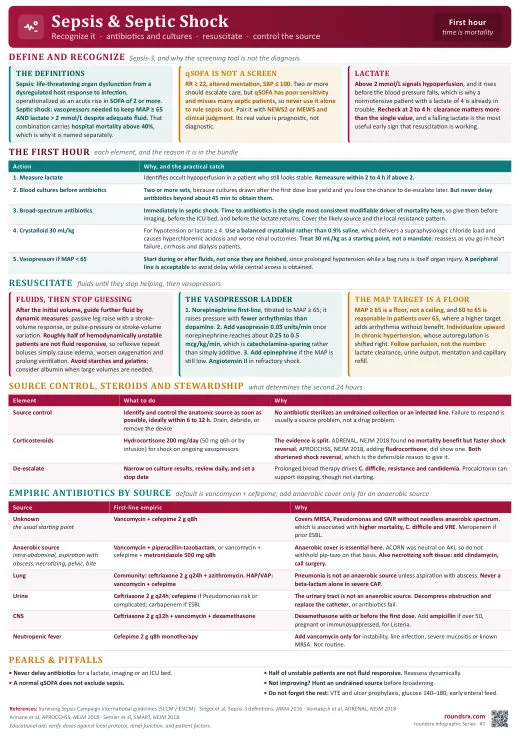 ⤢ Tap to open full size
Text version
- Sepsis: SOFA ≥ 2 + suspected infection
- Septic shock: Vasopressors + lactate > 2 despite IVF
- qSOFA: AMS + RR ≥ 22 + SBP ≤ 100 (≥ 2 = high risk, screen only)
- SIRS: ≥ 2 of temp >38/<36, HR >90, RR >20, WBC >12k/<4k (historical, high sensitivity triage)
- Lactate ≥ 4 = cryptic shock even if BP normal
- 🫁 Pulmonary ~40–50% (pneumonia)
- 🚿 GU ~20–25% (urosepsis)
- 🫀 Intra-abdominal ~15–20%
- 🩹 Skin/soft tissue ~5–10%
- 💉 Line / device ~5%
- 🧠 CNS / endocarditis < 5%
- ❓ No source identified ~10–15%
- Delaying antibiotics for cultures
- Using dopamine SOAP II, 2010
- NS over balanced crystalloids
- No source control
- Broad abx never narrowed
- Missing hypothermia = bad sign