Superior Vena Cava Syndrome
| Cause | Frequency | Details |
|---|---|---|
| Lung cancer | ~50% | NSCLC > SCLC. Right-sided tumors compress SVC directly. #1 malignant cause. |
| Lymphoma | ~15% | Mediastinal mass, NHL > Hodgkin. Often highly chemo-sensitive. |
| Other malignancy | ~10% | Thymoma, germ cell tumors, metastatic disease (breast, renal). |
| Thrombosis (catheter-related) | 20–40% | Central venous catheters, ports, pacemaker/defibrillator leads, dialysis catheters. Rising incidence with increasing device use. |
| Other benign | <5% | Fibrosing mediastinitis (histoplasmosis), aortic aneurysm, goiter, sarcoidosis. |
- SVC obstruction (extrinsic compression, intraluminal thrombus, or direct invasion) → venous hypertension in head, neck, upper extremities
- Collateral formation, azygos, internal mammary, lateral thoracic, paraspinous veins dilate over days to weeks to decompress
- Gradual onset allows collateral development → most patients are hemodynamically stable
- Rapid-onset obstruction (e.g., acute thrombosis) → insufficient collaterals → more severe symptoms, higher risk of cerebral edema
- Facial and neck swelling, periorbital edema, facial plethora (worse in the morning, worse when bending forward or supine)
- Upper extremity edema, bilateral, non-pitting
- Dyspnea, most common symptom (~60%), from laryngeal/bronchial edema or pleural effusion
- Cough, hoarseness, vocal cord or recurrent laryngeal nerve edema
- Head fullness, headache, worse when bending forward (Pemberton sign)
- JVD, prominent chest wall veins, visible collateral circulation across anterior chest
- Pemberton sign, facial plethora, JVD, and dyspnea when arms raised above head for 1 minute
| Grade | Description | Symptoms | Urgency |
|---|---|---|---|
| Grade 0 | Asymptomatic | Radiographic SVC obstruction only, no symptoms | Non-urgent |
| Grade 1 | Mild | Facial/neck edema, mild dyspnea, no functional limitation | Non-urgent |
| Grade 2 | Moderate | Significant edema, moderate dyspnea with exertion, head fullness | Semi-urgent |
| Grade 3 | Severe | Severe edema, dyspnea at rest, mild cerebral symptoms (headache, dizziness) | Urgent |
| Grade 4 | Life-threatening | Stridor, laryngeal edema, cerebral edema (AMS, seizures), hemodynamic collapse | Emergency |
| Study | Role | Details |
|---|---|---|
| CT chest with IV contrast | Test of Choice | Shows mass location/size, intraluminal thrombus, extent of SVC obstruction, collateral vessels, and guides biopsy planning. Sensitivity >95%. |
| CT venography (CTV) | Alternative | Better visualization of venous anatomy and thrombus extent. Use if contrast allergy with premedication. |
| MR venography (MRV) | Contrast allergy | No iodinated contrast needed. Good for thrombus and soft tissue detail. Slower, less available emergently. |
| Chest X-ray | Initial screen | Mediastinal widening (64%), pleural effusion (26%), right hilar mass. Normal CXR does NOT rule out SVC syndrome. |
| Venous duplex US | Adjunct | Upper extremity venous duplex if catheter-related thrombosis suspected. Cannot visualize intrathoracic SVC directly. |
- CBC with differential, leukocytosis (infection vs paraneoplastic), anemia
- BMP, renal function (contrast planning), electrolytes
- LDH, elevated in lymphoma, germ cell tumors
- Uric acid, tumor lysis syndrome screen if bulky malignancy suspected
- Coagulation studies, PT/INR, PTT (baseline before biopsy, anticoagulation planning)
- AFP, beta-hCG, if mediastinal germ cell tumor suspected (young male with anterior mediastinal mass)
- Flow cytometry, if lymphoma suspected (peripheral blood or tissue)
- CT-guided percutaneous biopsy, preferred if accessible mass, high diagnostic yield
- Bronchoscopy with biopsy, if endobronchial lesion or central mass
- Mediastinoscopy, direct visualization, higher yield but more invasive; GA risk in patients with severe SVC syndrome (airway collapse)
- Thoracoscopy (VATS), for peripheral or pleural-based masses
- Sputum cytology, low yield but non-invasive; reasonable first step
- Lymph node biopsy, if palpable supraclavicular or cervical node (excisional preferred for lymphoma)
- Elevate head of bed to 30-45 degrees, reduces venous pressure in head/neck
- Dexamethasone 4 mg IV q6h, reduce airway and cerebral edema; especially effective if lymphoma suspected
- Endovascular SVC stenting, fastest symptom relief (within hours). >90% technical success rate. Procedure of choice for emergent obstruction regardless of etiology
- Emergent radiation, consider if stenting unavailable; 250-400 cGy x 2-4 fractions. Rapid shrinkage of radiosensitive tumors
- Secure airway, prepare for difficult intubation (laryngeal edema); consider awake fiberoptic intubation. Avoid sedation that may worsen respiratory compromise
- Supplemental O₂, maintain SpO₂ > 92%
| Tumor Type | Primary Treatment | Response | Notes |
|---|---|---|---|
| SCLC | Cisplatin/Etoposide chemotherapy | Highly chemo-sensitive (77% response) | Most responsive malignancy. Chemo is first-line, not radiation. |
| Lymphoma (NHL/HL) | R-CHOP or regimen-specific chemo | Highly chemo-sensitive (>80% response) | Steroids alone may produce dramatic shrinkage initially. Need tissue BEFORE steroids if possible (can obscure lymphoma dx). |
| NSCLC | Radiation ± chemotherapy | Moderate (60% response) | Less chemo-sensitive than SCLC. Radiation provides local control. Consider immunotherapy/targeted therapy based on molecular markers. |
| Germ cell tumor | BEP chemotherapy | Highly chemo-sensitive | Young males, anterior mediastinal mass. Check AFP/beta-hCG. |
| Thymoma | Surgery ± radiation | Variable | Surgical resection if feasible. Radiation for unresectable. |
- Endovascular stenting, symptomatic relief in 24-72 hours, >90% success rate. Used as bridge to definitive chemo/radiation, or for recurrent/refractory obstruction
- Radiation therapy, for NSCLC and less chemo-sensitive tumors. Can be combined with chemo. Onset of relief in 1-2 weeks.
- Anticoagulation, heparin infusion (aPTT-guided) → transition to warfarin or DOAC (rivaroxaban, apixaban). Duration: minimum 3 months; longer if ongoing risk factor (indwelling catheter)
- Catheter removal, remove the offending catheter if no longer needed and safe to do so. If catheter is essential (e.g., chemo port), anticoagulate and consider exchange
- Catheter-directed thrombolysis, alteplase infusion via catheter for acute/severe thrombosis with significant symptoms. Best results within 5-7 days of symptom onset
- Endovascular stenting, for persistent stenosis after anticoagulation/thrombolysis, or if recurrent thrombosis
- Elevate HOB, 30-45 degrees at all times to reduce venous congestion
- Supplemental O₂, titrate to SpO₂ > 92%
- Diuretics, limited role (furosemide 20-40 mg IV). May provide temporary symptom relief by reducing intravascular volume but does not address obstruction. Avoid aggressive diuresis in dehydrated patients.
- Avoid upper extremity IV access on affected side, elevated venous pressure causes unreliable drug delivery, inaccurate BP readings, and risk of compartment syndrome with tourniquets. Use lower extremity or femoral access.
- DVT prophylaxis, consider in lower extremities (upper extremity already anticoagulated if thrombotic)
| Drug | Dose | Purpose | Notes |
|---|---|---|---|
| Dexamethasone (Decadron) | 4 mg IV q6h | Reduce airway/cerebral edema | First-line in emergent SVC syndrome. Especially effective if lymphoma suspected. Taper over 5-7 days once definitive treatment initiated. |
| Furosemide (Lasix) | 20–40 mg IV | Temporary edema reduction | Limited evidence. May reduce intravascular volume and provide symptomatic relief. Avoid in dehydrated patients. |
| Drug | Dose | Monitoring | Notes |
|---|---|---|---|
| Heparin (UFH) | 80 u/kg bolus → 18 u/kg/hr infusion | aPTT q6h (target 60-80s) | Preferred for acute/severe thrombosis. Short half-life, reversible with protamine. Bridge to oral anticoagulation. |
| Enoxaparin (Lovenox) | 1 mg/kg SC q12h | Anti-Xa levels if renal impairment | Alternative to UFH for stable patients. Avoid if CrCl < 30 (use UFH instead). |
| Rivaroxaban (Xarelto) | 15 mg BID x 21 days → 20 mg daily | CrCl, LFTs | Oral option for transition. No monitoring required. Avoid with strong CYP3A4 inhibitors. |
| Apixaban (Eliquis) | 10 mg BID x 7 days → 5 mg BID | CrCl, LFTs | Preferred DOAC in renal impairment (less renal clearance). Safe down to CrCl 15. |
| Warfarin (Coumadin) | 5 mg daily (adjust to INR 2-3) | INR q1-2 days until stable | Traditional option. Overlap with heparin x 5 days AND INR > 2 x 24h before stopping heparin. |
| Drug | Dose | Route | Notes |
|---|---|---|---|
| Alteplase (Activase) | 0.5-1 mg/hr infusion x 12-24h | Catheter-directed | For acute thrombotic SVC syndrome (< 5-7 days). Lower dose than systemic lysis → fewer bleeding complications. Monitor fibrinogen q6h. |
| Cancer | Regimen | Key Agents | Response to SVC Syndrome |
|---|---|---|---|
| SCLC | EP (Etoposide/Cisplatin) | Cisplatin 75 mg/m² D1 + Etoposide 100 mg/m² D1-3 | 77% response rate. Most chemo-responsive cause of SVC syndrome. |
| DLBCL (NHL) | R-CHOP | Rituximab, Cyclophosphamide, Doxorubicin, Vincristine, Prednisone | >80% response rate. Steroids alone may produce initial response. |
| Hodgkin | ABVD | Doxorubicin, Bleomycin, Vinblastine, Dacarbazine | Excellent response. Highly curable lymphoma. |
| Germ cell | BEP | Bleomycin, Etoposide, Cisplatin | Highly chemo-sensitive. Cure rates > 90% for good-risk disease. |
Patient: 64 y/o M, 40-pack-year smoker, presents with 2 weeks of progressive facial swelling, neck fullness, and dyspnea on exertion. Notes his wedding ring and watch have become tight.
Key findings: Facial plethora, bilateral upper extremity edema, prominent chest wall veins. Pemberton sign positive. SpO₂ 94% on RA. CT chest: 6 cm right hilar mass encasing SVC with 80% luminal narrowing and extensive collateral vessels.
Management:
- Elevate HOB to 45 degrees. Supplemental O₂ via NC.
- Grade 2-3, stable, NOT an emergency. Pursue tissue diagnosis before treatment.
- CT-guided biopsy → NSCLC (squamous cell). PD-L1 testing and molecular profiling sent.
- Endovascular SVC stenting for symptomatic relief (facial edema significantly impairing quality of life).
- Definitive treatment: concurrent chemoradiation based on staging workup.
Teaching point: Most SVC syndrome from lung cancer evolves over weeks with collateral formation. Resist the urge to treat empirically, tissue diagnosis first. Stenting provides rapid symptomatic relief while awaiting definitive therapy.
Patient: 28 y/o M presents with 5 days of rapidly progressive facial swelling, orthopnea, and now stridor. Found to have anterior mediastinal mass on CXR.
Key findings: Severe facial edema, cyanotic, audible stridor, SpO₂ 88% on 15L NRB. CT chest: large anterior mediastinal mass compressing SVC and main bronchi. LDH 1,200, uric acid 9.2.
Management:
- Grade 4, TRUE EMERGENCY. Do NOT delay treatment for tissue diagnosis.
- Dexamethasone 10 mg IV stat, then 4 mg IV q6h (lymphoma likely, steroids may be cytolytic).
- Emergent SVC stenting for airway and venous decompression.
- Tumor lysis syndrome prophylaxis, aggressive IVF, rasburicase for uric acid 9.2.
- Once stabilized: core needle biopsy → DLBCL confirmed. Start R-CHOP.
Teaching point: Grade 4 SVC syndrome with stridor is the one true emergency. Stent and steroids first. In young patient with anterior mediastinal mass + elevated LDH, lymphoma and germ cell tumor are top differentials. Always screen for TLS in bulky malignancy.
Patient: 55 y/o F with metastatic breast cancer and right subclavian port placed 6 months ago. Presents with 3 days of right arm swelling, facial puffiness, and mild dyspnea.
Key findings: Right arm edema, mild facial edema, right-sided JVD. No stridor, no AMS. CT chest with contrast: thrombus extending from port tip into SVC with 60% occlusion. No progression of her known lung metastases.
Management:
- Grade 1-2, thrombotic, not malignant compression. Not an emergency.
- Start heparin infusion (aPTT-guided) → transition to apixaban 10 mg BID x 7 days → 5 mg BID.
- Port still needed for ongoing chemo, do NOT remove. Anticoagulate through the port.
- If symptoms worsen despite anticoagulation → catheter-directed thrombolysis or stenting.
- Minimum 3 months anticoagulation; consider indefinite while port remains in place.
Teaching point: Catheter-related SVC thrombosis is managed medically with anticoagulation, not chemo/radiation. Remove the catheter only if it is no longer needed. Anticoagulation duration extends as long as the risk factor (device) persists.
- Airway assessment → stridor, voice changes, dyspnea severity? Grade today vs yesterday?
- Edema trajectory → facial/arm edema improving or worsening? Measure arm circumference daily.
- SpO₂ trend → O₂ requirement stable or increasing?
- Tissue diagnosis → biopsy done? Pathology back? Flow cytometry results? Molecular markers pending?
- Stent status → if stented, any complications (migration, re-occlusion)? Dual antiplatelet therapy started?
- Anticoagulation → if thrombotic: aPTT in range? Transitioning to oral? Duration plan?
- Access → ALL IVs, blood draws, and BP cuffs on lower extremities? No upper extremity access on affected side?
- TLS screen → if bulky malignancy: uric acid, potassium, phosphorus, calcium, LDH trending?
- Definitive treatment plan → oncology consulted? Chemo/radiation start date? IR follow-up if stented?
- HOB elevated → maintained at 30-45 degrees?
| Parameter | Frequency | Target / Action |
|---|---|---|
| Airway assessment (stridor, voice) | q4h initially | Any new stridor = emergent reassessment + ICU |
| SpO₂ | Continuous | > 92%; escalate O₂ delivery if dropping |
| Facial/arm edema | q8-12h | Measure arm circumference. Document subjective improvement. |
| aPTT (if on heparin) | q6h until stable | Target 60-80 seconds (1.5-2.5x control) |
| CBC | Daily | Monitor for thrombocytopenia (HIT screen if platelets drop > 50%) |
| BMP | Daily | Renal function, electrolytes (especially if TLS risk) |
| LDH, uric acid | q12-24h if TLS risk | Rising uric acid → rasburicase; rising K⁺/PO₄ = TLS |
| Repeat CT chest | After treatment initiation | Assess response: tumor shrinkage, stent patency, collateral resolution |
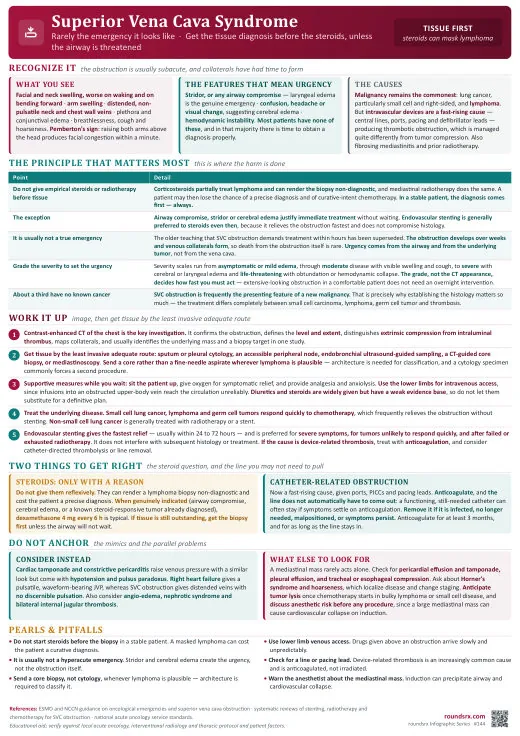
Text version
- Lung cancer, #1 cause (~50%), right-sided tumors
- Lymphoma, #2 (~15%), NHL > Hodgkin
- Thrombosis, 20-40%, catheters/pacemakers/ports
- Other, thymoma, germ cell, fibrosing mediastinitis
- Facial/neck/arm edema (worse bending forward)
- Dyspnea, cough, head fullness
- JVD, chest wall collateral veins
- Pemberton sign (arms raised → facial congestion)
- Grades 0-4 (only Grade 4 = true emergency)
- Treating before tissue diagnosis
- Upper extremity IVs or BP on affected side
- Calling all SVC syndrome an "emergency"
- Steroids before biopsy (obscures lymphoma)
- Missing TLS in bulky malignancy
- Forgetting to screen for germ cell (AFP, hCG)