Non-Opioid Symptom Management
- Multimodal analgesia, combine agents with different mechanisms (peripheral, central, anti-inflammatory) to achieve synergistic relief at lower individual doses
- Anticipatory prescribing, order PRN symptom medications on admission before symptoms escalate
- Non-pharmacologic adjuncts, positioning, fan therapy, sleep hygiene, music therapy, ice/heat, and spiritual care are evidence-based and underutilized
- Goals-of-care alignment, symptom management intensity should match patient and family goals
| Symptom | First-Line Non-Opioid | Second-Line | Key Principle |
|---|---|---|---|
| Pain | Acetaminophen (Tylenol) 1g q6h scheduled, Ibuprofen (Advil) 400–600mg q6h | Gabapentin (Neurontin), Lidocaine 5% patch, Ketorolac (Toradol) IV, Cyclobenzaprine (Flexeril) | Scheduled acetaminophen reduces opioid use by 30%. WHO ladder modified for non-opioid focus. |
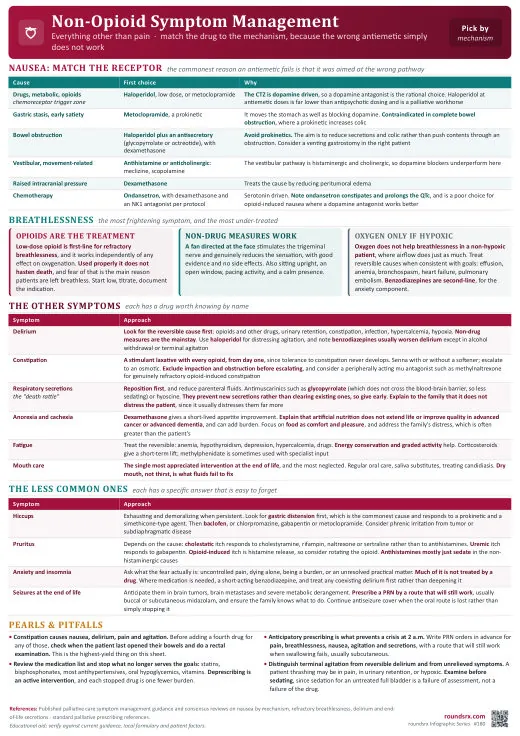
| Nausea/Vomiting | Ondansetron (Zofran) 4mg IV/PO q6h | Metoclopramide (Reglan) 10mg, Prochlorperazine (Compazine) 10mg, Scopolamine patch | Match antiemetic to mechanism: 5-HT3 for chemo/post-op, dopamine antagonist for gastroparesis, anticholinergic for vestibular. |
| Dyspnea | Fan to face, upright positioning, oxygen only if SpO2 < 90% | Low-dose morphine 2mg IV q2h (exception, treats air hunger centrally), Lorazepam (Ativan) 0.5mg for anxiety component | Fan across trigeminal V2 distribution suppresses breathlessness centrally. More effective than O2 in non-hypoxic patients. |
| Constipation | Senna (Senokot) 2 tabs BID + PEG 3350 (MiraLAX) 17g daily | Bisacodyl (Dulcolax) 10mg PR, Methylnaltrexone (Relistor), Naloxegol (Movantik) 25mg PO daily | Stimulant laxative (senna) + osmotic (PEG) is the evidence-based regimen. Docusate is no better than placebo AGA-ACG, 2023, do not use. Start bowel regimen with every opioid order. |
| Insomnia | Sleep hygiene protocol, Melatonin 3–5mg QHS | Trazodone (Desyrel) 25–50mg QHS | Avoid benzodiazepines and zolpidem in hospitalized patients, delirium, falls, respiratory depression risk. Fix the environment first. |
| Pruritus | Hydroxyzine (Vistaril) 25mg PO q6h, moisturizers | Diphenhydramine (Benadryl) 25mg (use cautiously, anticholinergic), Cholestyramine (Questran) for cholestatic pruritus | Identify cause: uremic → gabapentin; cholestatic → cholestyramine/naltrexone; histamine-mediated → antihistamines. |
| Hiccups | Baclofen (Lioresal) 5–10mg TID, Gabapentin (Neurontin) 100–300mg TID | Metoclopramide (Reglan) 10mg TID (if gastric stasis), Chlorpromazine (Thorazine) 25–50mg | Chlorpromazine is the only FDA-approved drug but is held in reserve (sedation, hypotension, QTc, EPS). Baclofen/gabapentin are first-line for tolerability. Persistent > 48h or intractable > 1 month needs a cause workup. |
- Pain: ice/heat application, positioning, physical therapy, TENS unit, guided imagery, music therapy
- Nausea: ginger ale, small frequent meals, acupressure wristbands (P6 point), aromatherapy (peppermint oil)
- Dyspnea: fan to face, upright/tripod positioning, pursed lip breathing, cool room temperature, reduce anxiety
- Insomnia: minimize nighttime vitals/labs, earplugs/eye mask, limit caffeine after noon, consistent wake time, reduce ambient light
- Constipation: ambulation, adequate hydration, fiber supplementation (if not obstructed), abdominal massage
- Pruritus: cool compresses, moisturizers, oatmeal baths, keep nails short, loose-fitting clothing
| Tool | Application | Details |
|---|---|---|
| Numeric Rating Scale (NRS) | Pain (alert patients) | 0–10 scale. Most widely used. Document at rest AND with movement. |
| Wong-Baker FACES | Pain (non-verbal, pediatric, cognitive impairment) | Visual faces scale. Useful when patients cannot verbalize a number. |
| BPS (Behavioral Pain Scale) | Pain (intubated/sedated patients) | Scores facial expression, upper limb movement, ventilator compliance (3–12). > 5 = significant pain. |
| CPOT (Critical-Care Pain Observation Tool) | Pain (non-verbal ICU patients) | 4 domains: facial expression, body movements, muscle tension, ventilator compliance or vocalization. Score 0–8. |
| ESAS (Edmonton Symptom Assessment Scale) | Global symptom burden | 9 symptoms rated 0–10: pain, fatigue, nausea, depression, anxiety, drowsiness, appetite, dyspnea, wellbeing. Quick, validated, tracks trends over time. |
| CAM (Confusion Assessment Method) | Delirium screening | 4 features: acute onset + fluctuating course, inattention, disorganized thinking, altered consciousness. Need features 1+2 plus 3 or 4. |
- Renal function (eGFR): NSAIDs contraindicated if eGFR < 30. Gabapentin requires dose reduction. PEG 3350 safe in CKD. Avoid magnesium-based laxatives in renal failure.
- Hepatic function: Acetaminophen max 2g/day in cirrhosis (not contraindicated, just dose-reduce). Avoid NSAIDs in cirrhosis (GI bleed + hepatorenal syndrome risk). Ondansetron max 8mg/day in severe hepatic impairment.
- Medication reconciliation: Identify drug-induced symptoms, PPIs cause hypomagnesemia, statins cause myalgias, antibiotics cause nausea/diarrhea, diuretics cause constipation. Treat the cause, not just the symptom.
- Polypharmacy screening: Anticholinergic burden score, hydroxyzine + diphenhydramine + promethazine stacked = delirium risk. Use Beers Criteria in elderly.
- Allergies/intolerances: NSAID allergy → acetaminophen safe. True aspirin allergy (angioedema/anaphylaxis) → avoid all NSAIDs. Ondansetron → try prochlorperazine.
- Nausea: bowel obstruction (KUB/CT), medication side effect (review med list), hypercalcemia (check calcium), increased ICP (neuro exam + imaging), gastroparesis (DM history)
- Constipation: opioid-induced (most common inpatient cause), bowel obstruction (imaging), hypothyroidism (TSH), hypercalcemia, hypokalemia, medications (anticholinergics, calcium channel blockers)
- Dyspnea: pleural effusion (CXR → thoracentesis), PE (CT-PA), pneumonia, heart failure exacerbation, anxiety/panic, metabolic acidosis (compensatory hyperventilation)
- Pruritus: cholestatic liver disease (LFTs, bilirubin), uremia (BUN/Cr), drug reaction (timeline with new medications), contact dermatitis (exam)
- Insomnia: uncontrolled pain, delirium (CAM), medication effect (steroids, beta-agonists), sleep apnea, hospital environment
- Scheduled acetaminophen,1g PO/IV q6h (max 4g/day; 2g/day in hepatic impairment). Reduces opioid consumption by ~30%. Schedule it, PRN acetaminophen is rarely requested by patients. Sinatra, 2005
- NSAIDs, excellent for inflammatory, musculoskeletal, and renal colic pain. Ketorolac (Toradol) 15–30mg IV q6h (max 5 days, GI/renal toxicity). Ibuprofen 400–600mg PO q6h with food. Avoid in CKD (eGFR < 30), GI bleed history, heart failure, cirrhosis PRECISION, 2016
- Gabapentinoids, first-line for neuropathic pain. Gabapentin 100–300mg TID (titrate up). Pregabalin 75mg BID. Reduce dose in renal impairment. Side effects: sedation, dizziness, peripheral edema.
- Lidocaine 5% patch, apply to area of maximal pain (not on broken skin). Up to 3 patches simultaneously, 12h on / 12h off. Excellent for post-herpetic neuralgia, localized musculoskeletal pain.
- Muscle relaxants,Cyclobenzaprine (Flexeril) 5–10mg TID for acute musculoskeletal spasm. Avoid in elderly (anticholinergic, sedation). Short-term only (2–3 weeks).
- Ketamine (sub-anesthetic),0.1–0.3 mg/kg/hr IV infusion for refractory pain. Pain service consult. Evidence in sickle cell crisis, burns, opioid-tolerant patients.
| Mechanism | Common Causes | Preferred Antiemetic |
|---|---|---|
| Serotonin (5-HT3) | Chemotherapy, post-operative, radiation | Ondansetron (Zofran) 4mg IV/PO q6h |
| Dopamine (D2) | Gastroparesis, medications, uremia | Metoclopramide (Reglan) 10mg IV/PO q6h (prokinetic), Prochlorperazine (Compazine) 10mg IV/PO q6h |
| Vestibular / Motion | Vertigo, inner ear, opioid-induced | Scopolamine patch 1.5mg q72h (transdermal), Meclizine 25mg q6h |
| Increased ICP / Obstruction | Brain metastases, bowel obstruction | Dexamethasone 4–8mg IV daily (reduces edema + direct antiemetic) |
| Anticipatory / Anxiety | Pre-chemo, anxiety-related | Lorazepam (Ativan) 0.5–1mg, behavioral therapy |
- Fan therapy, direct airflow to face. Stimulates trigeminal V2 mechanoreceptors, suppresses central breathlessness perception. Multiple RCTs demonstrate efficacy. Free, safe, first-line for all causes of dyspnea.
- Positioning, upright or tripod position improves diaphragm mechanics and reduces venous return (reduces pulmonary congestion)
- Supplemental O2, only if SpO2 < 90%. In non-hypoxic dyspnea, supplemental O2 is no better than room air via fan Abernethy, 2010
- Anxiolytics,Lorazepam (Ativan) 0.5mg SL/PO for anxiety-driven dyspnea component. Use cautiously, sedation risk
- Low-dose opioids (exception), morphine 2mg IV q2h treats air hunger centrally by reducing ventilatory drive to hypoxia/hypercapnia. This is the one scenario where low-dose opioids are appropriate even in a non-opioid strategy.
- Treat the cause, diuresis for CHF, thoracentesis for large effusion, antibiotics for pneumonia, bronchodilators for COPD/asthma
- Step 1: PEG 3350 (MiraLAX) 17g PO daily (osmotic, first-line) + Senna (Senokot) 2 tabs PO BID (stimulant). Start with every opioid order. Do NOT use docusate (Colace), no better than placebo per AGA-ACG, 2023.
- Step 2: Add PEG 3350 (MiraLAX) 17g in 8oz water daily (osmotic). Safe in renal failure. Takes 1–3 days for effect.
- Step 3: Bisacodyl (Dulcolax) 10mg PO or PR for acute relief. Suppository works within 15–60 min.
- Step 4 (opioid-induced): Methylnaltrexone (Relistor) 8–12mg SC q48h. Peripheral mu-opioid antagonist, reverses GI opioid effects WITHOUT reversing analgesia. Also: Naloxegol (Movantik) 25mg PO daily.
- Avoid: magnesium-based laxatives in CKD (hypermagnesemia risk), lactulose if concern for bowel obstruction
- Sleep hygiene first, minimize nighttime vitals/labs (cluster care), earplugs + eye mask, reduce ambient light, limit caffeine after noon, consistent wake time, turn off unnecessary alarms and monitors
- First-line: Melatonin 3–5mg PO QHS (30 min before desired sleep). Safe, minimal interactions, no delirium risk. Evidence supports use in ICU to restore circadian rhythm.
- Second-line: Trazodone (Desyrel) 25–50mg PO QHS. Serotonin antagonist/reuptake inhibitor. Causes drowsiness without anticholinergic burden. Low delirium risk vs alternatives.
- Avoid in hospitalized patients: benzodiazepines (delirium, falls, respiratory depression), zolpidem/Ambien (parasomnias, falls, delirium, Beers Criteria), diphenhydramine for sleep (anticholinergic, delirium, especially in elderly)
| Etiology | Treatment | Notes |
|---|---|---|
| Histamine-mediated (allergic, drug reaction, urticaria) | Hydroxyzine (Vistaril) 25mg PO q6h or Diphenhydramine (Benadryl) 25mg PO/IV q6h | Hydroxyzine preferred, less anticholinergic than diphenhydramine. Avoid diphenhydramine in elderly (Beers Criteria). |
| Cholestatic (obstructive jaundice, PBC, drug-induced) | Cholestyramine (Questran) 4g PO BID–TID, Rifampin 150mg PO BID, Naltrexone 25–50mg PO daily | Cholestyramine binds bile salts. Separate from other meds by 2h (reduces absorption). Rifampin induces bile salt metabolism. |
| Uremic (CKD/ESRD) | Gabapentin (Neurontin) 100mg PO after each dialysis session, UVB phototherapy | Gabapentin is first-line for uremic pruritus, dose-adjust for renal function. Antihistamines less effective here. |
| Opioid-induced | Rotate opioid, Nalbuphine 2.5–5mg IV, Ondansetron 4mg IV | Mu-receptor mediated. Ondansetron can help. Nalbuphine (mixed agonist-antagonist) reverses pruritus without reversing analgesia. |
- GI (most common): GERD, gastric distension, hiatal hernia, PUD, pancreatitis, hepatitis, subphrenic abscess. Why it matters: often reversible with a PPI, decompression, or simethicone.
- Drugs (common and missed): dexamethasone / corticosteroids (classic in onc and palliative patients), benzodiazepines, opioids, chemotherapy, alpha-methyldopa. Review the med list first, stopping or switching the offender often fixes it without adding a drug.
- CNS: stroke (classically lateral medullary / Wallenberg), brainstem lesion, MS, tumor, encephalitis. Suspect if any focal neuro signs, get brain imaging.
- Phrenic / vagus irritation along its course: neck mass or goiter, mediastinal mass, pneumonia, empyema, pericarditis, MI, esophagitis, aortic aneurysm.
- Metabolic: uremia, hyponatremia, hypocalcemia, hypokalemia. Cheap to check and reversible.
- Post-operative, psychogenic, idiopathic (diagnosis of exclusion).
- Med review + BMP, LFTs, glucose first (catches the drug cause and the metabolic causes for almost no effort).
- CXR for diaphragm, mediastinum, lungs.
- Escalate only if red flags: CT chest/abdomen, brain MRI if any neuro sign, EGD if GI symptoms, ECG. Do not order everything at once, let the history target the imaging.
- Treat the cause + non-pharmacologic first: PPI for GERD, simethicone or NG decompression for gastric distension, stop the offending drug. Vagal / nasopharyngeal maneuvers (breath-hold/Valsalva, swallowing granulated sugar, cold-water gargle, catheter tip in the posterior pharynx).
- First-line drug: Baclofen (Lioresal) 5–10 mg PO TID (up to q6h). GABA-B agonist with the best trial evidence; preferred first-line in chronic/palliative patients because it lacks the long-term movement-disorder risk of neuroleptics. Why caution in renal impairment: baclofen is renally cleared and accumulates, causing sedation and encephalopathy, dose-reduce in CKD.
- First-line alternative: Gabapentin (Neurontin) 100–300 mg PO TID, titrate to effect (max ~1200 mg/day). Well tolerated; especially useful when hiccups coexist with neuropathic pain or in cancer patients.
- If gastric stasis/distension: Metoclopramide (Reglan) 10 mg PO TID. Prokinetic; the other agent with RCT support (65% vs 24% placebo improvement). Why time-limit it: tardive dyskinesia risk rises with duration, keep courses short.
- Reserve: Chlorpromazine (Thorazine) 25–50 mg PO TID–QID or 25 mg IV. The only FDA-approved drug for hiccups, but now held in reserve rather than first-line because sedation, orthostatic hypotension, QTc prolongation, and extrapyramidal/tardive effects make it a poor long-term choice, especially in the elderly.
- Refractory: haloperidol or valproate as alternatives; phrenic nerve block (IR-guided) as a last resort when drugs fail and hiccups are disabling.
- Use PO whenever possible, equivalent efficacy for most agents, lower cost, fewer line-related complications
- IV preferred when: NPO status, active vomiting, severe acute pain requiring rapid onset, bowel obstruction/ileus, unreliable GI absorption (post-surgical, critical illness)
- IV acetaminophen, onset 5–10 min (vs 30–60 min PO). Cost is ~100x higher. Reserve for NPO patients or immediate post-operative period. Switch to PO as soon as tolerating.
- IV ketorolac, onset 10 min. Max 5 days (GI and renal toxicity). Convert to PO ibuprofen as soon as tolerating oral.
- Pain improving: Scheduled → PRN → discontinue. Remove ketorolac by day 5. Taper gabapentin (do not stop abruptly, seizure risk). Remove lidocaine patches last (benign).
- Nausea resolved: Switch ondansetron from scheduled to PRN → discontinue after 24h symptom-free. Taper dexamethasone (do not stop abruptly if > 7 days).
- At discharge: Reconcile all symptom medications. Provide written de-escalation plan. Avoid discharging patients on ketorolac, IV medications, or hospital-only agents.
| Drug | Class | Dose | Route | Max Daily | Key Considerations |
|---|---|---|---|---|---|
| Acetaminophen (Tylenol) | Analgesic/Antipyretic | 1g q6h | PO/IV | 4g (2g if hepatic impairment) | Schedule it, PRN is underused. Safe in CKD. IV onset 5 min but ~100x cost of PO. |
| Ibuprofen (Advil/Motrin) | NSAID | 400–600mg q6h | PO | 2400mg | Take with food. Avoid if eGFR < 30, GI bleed hx, CHF, cirrhosis. PRECISION, 2016 |
| Ketorolac (Toradol) | NSAID (parenteral) | 15–30mg q6h | IV/IM | 120mg (day 1), 60mg (day 2+) | Max 5 days. Same contraindications as all NSAIDs. Excellent for renal colic, post-surgical, MSK pain. |
| Gabapentin (Neurontin) | Gabapentinoid | 100–300mg TID | PO | 3600mg (titrate slowly) | First-line neuropathic pain. Dose-adjust in renal impairment. Sedation, dizziness. Also treats uremic pruritus and hiccups. |
| Pregabalin (Lyrica) | Gabapentinoid | 75mg BID | PO | 600mg | ~6× more potent than gabapentin (300 mg gabapentin ≈ 50 mg pregabalin). More predictable (linear) absorption. Schedule V controlled substance. Dose-adjust in CKD. |
| Lidocaine 5% patch (Lidoderm) | Topical anesthetic | 1–3 patches to painful area | Topical | 3 patches/12h (12h on/12h off) | No systemic absorption at standard doses. Safe in CKD/hepatic disease. Do not apply to broken skin. |
| Cyclobenzaprine (Flexeril) | Muscle relaxant | 5–10mg TID | PO | 30mg | Short-term use only (2–3 weeks). Avoid in elderly (anticholinergic, sedation). Contraindicated with MAOIs. |
| Ondansetron (Zofran) | 5-HT3 antagonist | 4mg q6h | IV/PO/ODT | 16mg (8mg if hepatic impairment) | First-line antiemetic. Causes constipation, add senna. QTc prolongation at higher doses. ODT tab dissolves on tongue. |
| Metoclopramide (Reglan) | Dopamine antagonist / Prokinetic | 10mg q6h | IV/PO | 40mg | Prokinetic for gastroparesis. Avoid in complete bowel obstruction. Black box: tardive dyskinesia with > 12 weeks use. |
| Prochlorperazine (Compazine) | Dopamine antagonist / Phenothiazine | 10mg q6h | IV/PO/PR | 40mg | Excellent for migraine-associated nausea. Akathisia and EPS possible. Give with diphenhydramine 25mg to prevent dystonia. |
| Promethazine (Phenergan) | Phenothiazine / Antihistamine | 12.5–25mg q4–6h | IM/PO/PR | 75mg | Strongly anticholinergic, avoid in elderly. Never give IV push (tissue necrosis, gangrene). Give deep IM only. |
| Scopolamine (Transderm Scop) | Anticholinergic | 1.5mg patch q72h | Transdermal | 1 patch | Best for vestibular/motion-related nausea. Apply behind ear. Onset 4–8h. Crosses BBB, delirium risk in elderly. |
| Senna (Senokot) | Stimulant laxative | 2 tabs (17.2mg) BID | PO | 4 tabs (34.4mg) | Essential component of bowel regimen. Stimulates colonic motility. Takes 6–12h for effect. |
| Docusate (Colace) NOT RECOMMENDED | Stool softener | , | PO | , | No better than placebo per AGA-ACG, 2023. Removed from hospital formularies (UAB 2024). No FDA-approved indication. Do not prescribe. Use PEG 3350 + senna instead. |
| PEG 3350 (MiraLAX) | Osmotic laxative | 17g in 8oz water daily | PO | 34g | Safe in CKD. Tasteless, mixes into any liquid. Takes 1–3 days. Can increase to BID for refractory constipation. |
| Lactulose (Kristalose) | Osmotic laxative | 15–30 mL daily–BID | PO | 60 mL/day | Alternative to PEG. Also used for hepatic encephalopathy (30–45 mL q1–2h titrated to 3–4 BMs/day). More bloating than PEG. Safe in CKD. |
| Bisacodyl (Dulcolax) | Stimulant laxative | 10mg PO or PR | PO/PR | 30mg | Suppository works within 15–60 min (useful for acute relief). PO takes 6–12h. Do not crush enteric-coated tablets. |
| Melatonin | Hormone / Sleep aid | 3–5mg QHS | PO | 10mg | Safe, no delirium risk. Give 30 min before desired sleep. Evidence in ICU circadian rhythm restoration. |
| Trazodone (Desyrel) | SARI antidepressant | 25–50mg QHS | PO | 100mg (for insomnia) | Low delirium risk. Minimal anticholinergic burden. Rare: priapism. Safe in CKD. |
| Hydroxyzine (Vistaril) | Antihistamine (H1) | 25mg q6h | PO/IM | 100mg | First-line for histamine-mediated pruritus. Moderate anticholinergic, use cautiously in elderly. Also has anxiolytic properties. |
- NSAIDs + anticoagulants,3–6x increased GI bleeding risk. If must use, add PPI and limit to 3–5 days.
- Ondansetron + QTc-prolonging drugs (haloperidol, fluoroquinolones, methadone), check baseline ECG. Avoid if QTc > 500ms.
- Metoclopramide + antipsychotics, both are dopamine antagonists. Additive EPS/tardive dyskinesia risk.
- Gabapentin + opioids, synergistic respiratory depression. FDA warning. Start gabapentin low and titrate slowly if on opioids.
- Stacking anticholinergics (hydroxyzine + diphenhydramine + promethazine + scopolamine), delirium, urinary retention, ileus. Calculate anticholinergic burden score.
- NSAIDs + ACEi/ARB + diuretic,"triple whammy" for AKI. Avoid this combination entirely.
| Scenario | Drug | Dose | Duration | Notes |
|---|---|---|---|---|
| Herpes Labialis (Cold Sores), Recurrent | ||||
| First-line (episodic) | Valacyclovir (Valtrex) | 2g PO BID × 1 day (2 doses, 12h apart) | 1 day | Start at earliest prodrome (tingling, burning). Most convenient regimen. Adjust for CrCl < 50. |
| Alternative (episodic) | Acyclovir (Zovirax) | 400 mg PO 5×/day × 5 days | 5 days | Less convenient dosing. Cheaper. Adequate hydration to prevent crystalluria. |
| Alternative (episodic) | Famciclovir (Famvir) | 1500 mg PO × 1 dose | 1 dose | Single-dose option. Prodrug of penciclovir. |
| Suppressive therapy | Valacyclovir | 500 mg–1g PO daily | Ongoing | For frequent recurrences (≥6/year). Reduces outbreaks by 70–80%. CDC STI Guidelines, 2021 |
| Primary Herpetic Gingivostomatitis | ||||
| Immunocompetent | Valacyclovir | 1g PO BID × 7–10 days | 7–10 days | Start within 72h of symptom onset. Acyclovir 400 mg PO 5×/day is alternative. Primary episode is more severe and prolonged. |
| Immunocompromised (mild–moderate) | Valacyclovir | 1g PO BID × 7–14 days | 7–14 days | Longer course. Step up to IV if not improving or unable to take PO. NIH OI Guidelines |
| Immunocompromised (severe) or NPO | Acyclovir IV | 5 mg/kg IV q8h | 7–14 days | For severe mucocutaneous HSV, disseminated disease, or patients unable to take PO. Transition to PO when lesions regressing. Hydrate aggressively, crystalluria/AKI risk. |
| Orolabial HSV in Immunocompromised (HIV, Transplant, Chemo) | ||||
| Treatment | Valacyclovir | 1g PO BID × 5–10 days | 5–10 days | Or acyclovir 400 mg PO 5×/day. Famciclovir 500 mg PO BID is alternative. |
| Chronic suppression | Valacyclovir | 500 mg PO BID | Ongoing | For CD4 < 200 or frequent recurrences. Acyclovir 400 mg PO BID is alternative. |
| Drug | Dose | How to Use | Max | Key Safety Points |
|---|---|---|---|---|
| Lidocaine Viscous 2% | 15 mL (1 tbsp) swish & spit | Swish in mouth for 1–2 min, then spit out. Do not swallow unless pharyngeal pain (then gargle & swallow). | 8 doses/24h. Minimum 3h between doses. Max 300 mg (4.5 mg/kg) | ⚠️ Aspiration risk, numbs throat/swallow reflex. NPO × 60 min after use. ⚠️ Seizures/cardiac toxicity if absorbed excessively (traumatized mucosa). ⚠️ FDA Black Box in children < 3 yo (deaths reported). ⚠️ Methemoglobinemia risk. |
| Magic Mouthwash (compound) | 15 mL swish & spit q4–6h | Typical formulation: lidocaine 2% + diphenhydramine + antacid (Maalox) ± nystatin. Swish 1–2 min, spit. | 4–6 doses/24h | Compounded, no standardized formula. Minimal evidence vs individual components. Commonly ordered but not superior to single-agent lidocaine viscous in most studies. |
- Herpetic gingivostomatitis, severe oral pain preventing PO intake. Apply 15–30 min before meals to facilitate eating.
- Chemotherapy-induced mucositis, common with 5-FU, methotrexate, melphalan (post-ASCT). WHO grade 3–4 mucositis.
- Aphthous ulcers (canker sores), for symptomatic relief of large/multiple ulcers.
- Esophageal candidiasis pain, as bridge while awaiting fluconazole effect (2–3 days).
- Radiation mucositis, head/neck radiation patients with severe oral pain.
Patient: 82 y/o F with osteoporosis and CKD3 (eGFR 38), admitted with left hip fracture awaiting surgical repair. NRS pain score 7/10 at rest, 9/10 with movement.
Key considerations: Elderly + CKD → NSAIDs contraindicated. Opioids risky → delirium, respiratory depression, falls. Need multimodal non-opioid approach.
Management:
- Scheduled Acetaminophen 1g PO q6h (safe in CKD, max 4g/day)
- Gabapentin 100mg PO BID (dose-reduced for CKD, titrate to 100mg TID)
- Lidocaine 5% patch to anterior thigh/hip region (12h on/12h off)
- Ice packs to hip q2h for 20 min, positioning with pillows between knees
- Fascia iliaca nerve block by anesthesia (single-shot or continuous catheter, gold standard for hip fracture)
- Reserve low-dose morphine 2mg IV q4h PRN for breakthrough only
Teaching point: In elderly patients with CKD, the non-opioid toolbox becomes critical because both NSAIDs and opioids carry high risk. Regional anesthesia (nerve block) + scheduled acetaminophen + gabapentin + topical agents can achieve excellent pain control with minimal systemic side effects.
Patient: 65 y/o M with metastatic colon cancer, admitted with partial small bowel obstruction. Persistent nausea/vomiting despite ondansetron 4mg IV q6h. NG tube in place.
Key considerations: Ondansetron targets 5-HT3 pathway. Bowel obstruction nausea is multifactorial, need mechanism-based approach. Metoclopramide contraindicated in complete obstruction.
Management:
- Continue Ondansetron 4mg IV q6h (partial benefit)
- Add Dexamethasone 8mg IV daily (reduces bowel wall edema + direct antiemetic via central mechanisms)
- Add Haloperidol 0.5mg IV q8h (dopamine antagonist, different pathway than ondansetron)
- Scopolamine patch 1.5mg behind ear (anticholinergic, reduces GI secretions and vestibular input)
- Avoid metoclopramide (prokinetic in obstruction = perforation risk)
- Surgical and palliative care co-management for goals of care
Teaching point: When first-line antiemetic fails, layer agents from different receptor classes rather than increasing the dose. Ondansetron (5-HT3) + haloperidol (D2) + scopolamine (muscarinic) + dexamethasone (central) provides quadruple-pathway coverage.
Patient: 75 y/o M, POD 2 after colectomy. Reports sleeping < 2 hours per night since admission. CAM negative but appearing increasingly confused during daytime. Night nurse requesting "something for sleep."
Key considerations: Post-surgical elderly patient at extreme delirium risk. Sleep deprivation is a major delirium trigger. Benzodiazepines and zolpidem will precipitate delirium.
Management:
- Environmental: Cluster nighttime vitals/labs, earplugs + eye mask, lights off by 10 PM, curtains open by 7 AM, minimize nighttime alarms
- Melatonin 5mg PO QHS (restore circadian rhythm, no delirium risk)
- Trazodone 25mg PO QHS if melatonin insufficient (low anticholinergic burden)
- Ensure pain is controlled (uncontrolled pain → poor sleep → delirium)
- Review medication list, discontinue any unnecessary anticholinergics, steroids at bedtime
- Do NOT order zolpidem, lorazepam, or diphenhydramine for sleep
Teaching point: Sleep deprivation is a modifiable delirium risk factor. The hospital environment is inherently sleep-disruptive. Fix the environment first, then use melatonin (safe) or trazodone (safe), never benzodiazepines or zolpidem in post-surgical elderly patients.
- Pain score today? → NRS at rest AND with activity. Trend from yesterday? Is multimodal regimen working?
- Acetaminophen scheduled? → If not, why not? This should be on every patient unless contraindicated (active liver failure).
- NSAID appropriate? → Check eGFR, GI bleed history, anticoagulation status, CHF. If on ketorolac, what day are we on? (Max 5)
- Bowel regimen ordered? → PEG 3350 + senna (not docusate, ineffective per AGA-ACG 2023). If on opioids, is it adequate? Last BM? Abdominal exam?
- Nausea controlled? → Is antiemetic matched to mechanism? If ondansetron failing, try different receptor pathway.
- Sleep last night? → Hours slept. Is environment optimized? Melatonin ordered? Avoid benzos/zolpidem in elderly.
- Delirium screen (CAM)? → Sleep deprivation + uncontrolled pain + anticholinergics = delirium triad. Address all three.
- Anticholinergic burden? → Count anticholinergic meds (hydroxyzine, diphenhydramine, promethazine, scopolamine). Minimize stacking.
- Renal/hepatic function today? → Dose-adjust gabapentin for CKD. Reduce acetaminophen for hepatic impairment. Remove NSAIDs if AKI develops.
- De-escalation plan? → Are symptoms improving? Can we step down from IV to PO? From scheduled to PRN? Discharge-ready regimen?
Text version
- Step 1: Acetaminophen 1g q6h SCHEDULED (reduces opioid use 30%)
- Step 2: Add NSAID (ibuprofen 400mg q6h or ketorolac 15–30mg IV, max 5 days)
- Step 3: Add gabapentin (neuropathic), lidocaine 5% patch (localized), cyclobenzaprine (spasm)
- Avoid NSAIDs if: eGFR < 30, GI bleed hx, CHF, cirrhosis, on anticoagulants
- Chemo/post-op → ondansetron 4mg q6h (5-HT3)
- Gastroparesis → metoclopramide 10mg q6h (prokinetic, max 12 wks)
- Vestibular → scopolamine patch q72h
- Obstruction/ICP → dexamethasone 4–8mg IV daily
- Refractory → layer from different receptor classes
- Dyspnea: Fan to face (trigeminal V2). O2 only if SpO2 < 90%. Morphine 2mg IV for air hunger.
- Constipation: PEG 3350 17g daily + senna 2 tabs BID. Docusate is no better than placebo (AGA-ACG 2023), do not use.
- Insomnia: Melatonin 3–5mg QHS → trazodone 25mg. NEVER benzos/zolpidem in hospital.
- Histamine itch: hydroxyzine 25mg q6h
- Cholestatic: cholestyramine 4g BID, rifampin, naltrexone
- Uremic: gabapentin 100mg post-dialysis
- Hiccups: baclofen 5–10mg TID or gabapentin 100–300mg TID first-line; chlorpromazine 25–50mg (only FDA-approved, reserve)
- Ketorolac > 5 days → GI bleed + AKI
- NSAIDs + ACEi + diuretic = "triple whammy" AKI
- Stacking anticholinergics → delirium
- Promethazine IV push → tissue necrosis
- Metoclopramide in complete obstruction → perforation
- Stopping gabapentin abruptly → seizure risk
- Pain score at rest + activity? Trend?
- Acetaminophen scheduled? NSAID day count?
- Bowel regimen ordered? Last BM?
- Sleep hours? Melatonin ordered? No benzos?
- CAM delirium screen done?
- Anticholinergic burden count?
- Renal function → dose adjustments needed?