Outpatient Diabetes Management
- Metformin (Glucophage) remains first-line for most patients (A1c reduction ~1.5%, weight neutral, cheap, CV benefit UKPDS 34, 1998). Dose by eGFR ↗
- Lifestyle: 150 min/week moderate exercise, 5–7% weight loss target, medical nutrition therapy DPP, 2002
- A1c target: < 7% for most DCCT, 1993 (correlates with TIR >70%). < 6.5% if early disease, no hypoglycemia risk ADVANCE, 2008. < 8% if elderly, multiple comorbidities, limited life expectancy ACCORD, 2008. ADA 2026: Older adults with complex health → TIR goal 50% (12 hrs/day); time below 70 <1% (15 min/day).
| Comorbidity | Preferred Agent | Key Trial | Notes |
|---|---|---|---|
| ASCVD or high CV risk | GLP-1 RA (semaglutide, liraglutide, dulaglutide) PREFERRED | SUSTAIN-6, 2016 LEADER, 2016 | Reduce MACE (MI, stroke, CV death). Weight loss 5–15%. Weekly injection (semaglutide SC) or daily (liraglutide). GI side effects (nausea) limit titration. Also available PO (oral semaglutide). |
| Heart failure (HFrEF or HFpEF) | SGLT2i (empagliflozin, dapagliflozin) PREFERRED | EMPA-REG, 2015 DAPA-HF, 2019 | Reduce HF hospitalization and CV death -even in patients WITHOUT diabetes EMPEROR-Preserved, 2021. Now part of HF guideline-directed therapy. Also renal-protective. |
| CKD (eGFR 20–60 or albuminuria) | SGLT2i (dapagliflozin, empagliflozin) PREFERRED | DAPA-CKD, 2020 EMPA-KIDNEY, 2022 | Slow CKD progression by 30–40%. Can use down to eGFR 20 (initiate) or continue to dialysis. Glucose-lowering effect diminishes at low GFR but renal benefit persists. |
| Obesity (weight loss priority) | GLP-1 RA (semaglutide > others) or tirzepatide (dual GIP/GLP-1) | SURPASS, 2021 SURMOUNT, 2022 | Tirzepatide: most potent A1c reduction (~2.5%) and weight loss (~15–20%). Semaglutide 2.4 mg (Wegovy) FDA-approved for obesity regardless of DM. |
| MASLD / MASH (liver fibrosis in T2DM) | GLP-1 RA (semaglutide preferred) or tirzepatide ADA 2026 - 1ST LINE | ESSENCE, 2024 | First-line for liver fibrosis in T2DM per ADA 2026. Pioglitazone is an alternative (also improves liver histology) but causes weight gain. Semaglutide reverses MASH fibrosis without worsening steatohepatitis. Avoid agents that worsen hepatic disease (sulfonylureas can complicate, methotrexate-like agents). |
| Stroke history (secondary prevention) | GLP-1 RA (semaglutide, dulaglutide) | REWIND, 2019 SUSTAIN-6, 2016 | GLP-1 RA reduces stroke specifically (39% in SUSTAIN-6, 24% in REWIND). Stronger anti-stroke effect than SGLT2i. Add ASA + statin per ASCVD guidelines. |
| A1c ≥ 10% WITH symptoms (polyuria, polydipsia, weight loss, ketones) | Insulin (often basal + metformin) URGENT | ADA 2026 algorithm | Symptomatic hyperglycemia or evidence of catabolism (DKA, ketosis, >5% weight loss) requires rapid glucose control with insulin. Start basal 0.1-0.2 units/kg, titrate every 3 days. Once stable and asymptomatic, can transition to oral agents based on comorbidities. Rule out T1DM (GAD antibodies, C-peptide). |
| eGFR < 30 | GLP-1 RA preferred (lower hypoglycemia) REPLACE METFORMIN ADA 2026 | FDA labeling, ADA 2026 | Metformin contraindicated -STOP IT (lactic acidosis risk; some guidelines tolerate down to 30 with reduced dose). SGLT2i loses glucose-lowering effect < 30 but renal/CV benefit persists -continue if already on for renal protection. Sulfonylureas avoid (especially glyburide -prolonged hypoglycemia). DPP-4i (linagliptin only -hepatically cleared, no renal adjustment) and insulin are alternatives. |
| Older adult / frail (≥ 65, multiple comorbidities, limited life expectancy) | Metformin (if tolerated) or DPP-4i (linagliptin) REPLACE IF INTOLERANT | Geriatric guidelines | Keep metformin if the patient tolerates it; switch to linagliptin if GI side effects, anorexia, or sarcopenia/weight-loss concern. Relax A1c target to < 8% (or 8.5% if frail/dementia). Avoid SU and basal-bolus insulin (hypoglycemia risk = falls, fractures, hospitalization). DPP-4i is well-tolerated, no hypoglycemia. SGLT2i OK if no orthostasis. GLP-1 RA OK if no GI fragility / weight-loss concern. |
| Cost / simplicity priority | Sulfonylurea (glipizide, glimepiride) or pioglitazone COST-DRIVEN ONLY | UKPDS 1998 (no CV benefit for SU) | Why SUs are NOT first-line in most cases: (1) hypoglycemia risk -severe especially in elderly, CKD, missed meals, alcohol; glyburide is on AGS Beers Criteria. (2) Weight gain 2-3 kg -opposite of what most T2DM patients need. (3) Secondary failure within 5-10 years as β-cell function declines. (4) No CV mortality benefit (unlike metformin, GLP-1 RA, SGLT2i). (5) No renal protection. (6) Possible cardiac harm signal from K-ATP channel effects (mostly historical concern). Genuine indications where SUs ARE preferred: (a) MODY (HNF1A or HNF4A) -first-line on clinical merit, excellent response. (b) Pancreatitis history (precludes GLP-1 RA / DPP-4i). (c) Bridge while awaiting prior auth on a preferred agent. (d) Cost truly is the deciding factor (uninsured patient -SU pennies/day vs SGLT2i $300-500/mo, GLP-1 RA $800-1500/mo). Glipizide preferred over glyburide (shorter half-life, no active renal metabolites). Pioglitazone: useful in MASLD/MASH (improves liver histology), but causes fluid retention (avoid HFrEF), fracture risk in postmenopausal women, weight gain, bladder cancer concern. |
• Initial combo therapy: Start GLP-1 RA + SGLT2i together when A1c is ≥1.5–2% above goal OR high CVD risk, regardless of A1c
• GLP-1 RA in T1DM: Now recommended for adults with T1DM and BMI ≥30 (≥27.5 for Asian Americans), first time ever
• GLP-1 RA for advanced CKD: Preferred for glycemic management when eGFR <30 (lower hypoglycemia risk)
• GLP-1 RA for MASLD/MASH: First-line for liver fibrosis in T2DM
• Dual GIP/GLP-1 (tirzepatide): Added to HFpEF algorithm alongside SGLT2i
• SGLT2i + finerenone: Simultaneous initiation for UACR ≥100 mg/g with eGFR 30–90
• CGM at diagnosis: Recommended at diabetes onset for anyone who may benefit, no longer limited to insulin users
• BP target: Systolic <120 mmHg for high CV or renal risk (lowered from 130)
Patient: 62M with T2DM (A1c 8.2%), prior MI, BMI 31, eGFR 68. Currently on metformin 1000 mg BID. BP 138/82 on lisinopril. LDL 72 on statin.
Key findings: Established ASCVD (prior MI), requires cardiorenal protective agent regardless of A1c. Not at A1c goal despite metformin. Overweight.
Management:
- Add semaglutide 0.25 mg SQ weekly → titrate to 1 mg (GLP-1 RA with proven CV benefit) SUSTAIN-6, 2016
- Continue metformin (complementary mechanism, renal-safe at eGFR > 30)
- A1c target < 7% for this patient (established ASCVD, reasonable life expectancy)
- Counsel on GI side effects (nausea, improves with slow titration)
- Recheck A1c in 3 months; if still above target, consider adding SGLT2i for additive cardiorenal benefit
Teaching point: In T2DM with ASCVD, GLP-1 RA or SGLT2i should be added independent of A1c. The CV benefit is beyond glucose lowering. ADA 2026 recommends these as first-line add-on in ASCVD.
Patient: 58F with T2DM (A1c 7.8%), HFrEF (EF 35%), eGFR 38, UACR 380 mg/g. On metformin 500 BID, lisinopril, carvedilol, spironolactone. BMI 28.
Key findings: Triple indication for SGLT2i: T2DM + HFrEF + CKD with albuminuria. Current A1c near goal but cardiorenal protection is the primary reason to add SGLT2i.
Management:
- Add dapagliflozin 10 mg daily (or empagliflozin 10 mg) DAPA-CKD, 2020
- Continue metformin (reduce to 500 mg daily if eGFR drops below 30)
- Warn: initial eGFR dip of 10-15% is expected and not a reason to stop (hemodynamic, not structural)
- Monitor K⁺ closely (on spironolactone + ACEi + SGLT2i)
- Counsel on genital mycotic infections (candidiasis risk ~5-8%), maintain hygiene
Teaching point: SGLT2 inhibitors are now pillar therapy for HF and CKD independent of diabetes status. The initial eGFR dip is tubuloglomerular feedback, protective long-term. Do not stop for a 10-15% creatinine rise.
Patient: 47M newly diagnosed T2DM. A1c 11.2%, FBG 310. Polyuria, polydipsia, 15 lb weight loss over 2 months. BMI 36. No ASCVD. eGFR 92. GAD antibodies negative.
Key findings: Symptomatic hyperglycemia with A1c > 10%, indication for initial insulin therapy per ADA guidelines. GAD negative confirms T2DM (not LADA).
Management:
- Start basal insulin: glargine 0.2 U/kg/day (or 10 units) at bedtime, titrate by 2 U q3 days to FBG 80-130
- Start metformin 500 mg daily → titrate to 1000 mg BID over 4 weeks (GI tolerance)
- Plan to add GLP-1 RA once insulin dose stabilizes (weight benefit, potential insulin de-escalation)
- DSME referral (diabetes self-management education), nutrition counseling
- Recheck A1c in 3 months, once A1c < 9%, may attempt insulin taper with oral/injectable agents
Teaching point: A1c > 10% with symptoms = start insulin (oral agents alone are too slow). This is temporary, once glucose toxicity resolves, beta-cell function often partially recovers and insulin can be weaned.
| Test | Diabetes | Prediabetes | Normal |
|---|---|---|---|
| HbA1c (NGSP-certified, DCCT-aligned) | ≥ 6.5% | 5.7-6.4% | < 5.7% |
| Fasting plasma glucose (≥ 8h fast) | ≥ 126 mg/dL | 100-125 mg/dL (IFG) | < 100 mg/dL |
| 2-hour OGTT (75 g glucose load) | ≥ 200 mg/dL | 140-199 mg/dL (IGT) | < 140 mg/dL |
| Random plasma glucose | ≥ 200 mg/dL WITH classic symptoms | , | , |
- USPSTF 2021: screen adults age 35-70 with overweight/obesity (BMI ≥ 25, or ≥ 23 in Asian Americans). Repeat every 3 years if normal.
- ADA 2025: screen all adults age ≥ 35, OR younger if BMI ≥ 25 plus ≥ 1 risk factor. Repeat at least every 3 years.
- ADA 2026 update: CGM at diagnosis recommended for anyone who may benefit -no longer limited to insulin users.
- First-degree family history of DM
- High-risk race/ethnicity (African American, Latino, Native American, Asian American, Pacific Islander)
- HTN (≥ 140/90 or on antihypertensive)
- HDL < 35 or triglycerides > 250
- Physical inactivity
- PCOS
- History of gestational DM, delivery of macrosomic baby (> 9 lb)
- Prior CV event or stroke
- Acanthosis nigricans, severe obesity
- HIV (especially on ART), schizophrenia / on antipsychotics, transplant recipients on calcineurin inhibitors / steroids
| Type | Mechanism | Clue | Workup |
|---|---|---|---|
| Type 2 (~90-95%) | Insulin resistance + relative β-cell deficiency | Adult onset, overweight/obese, family history, gradual symptoms, often metabolic syndrome features | Antibodies negative. C-peptide normal/high (early). No further classification testing usually needed. |
| Type 1 (~5-10%) | Autoimmune β-cell destruction | Younger (most < 30, but can occur at any age), lean, rapid onset, DKA at diagnosis common, weight loss | GAD-65 antibodies (most useful), IA-2, ZnT8, ICA, IAA. Low C-peptide. Need lifelong insulin. |
| LADA (Latent Autoimmune DM in Adults) | Slow-progressing T1 phenotype in adults | Adult onset (≥ 30) appearing as T2, but rapid failure of oral agents, usually leaner than typical T2 | GAD-65 positive in adult who looks like T2. Often misdiagnosed for years. Will need insulin sooner than expected. |
| MODY (Monogenic Diabetes) | Single-gene defects (HNF1A, HNF4A, GCK most common) | Strong family history (autosomal dominant), young onset (< 25), lean, no antibodies, atypical course | Genetic testing. GCK-MODY rarely needs treatment; HNF1A/HNF4A respond well to sulfonylureas. |
| Secondary DM | Pancreatic disease, drug-induced, endocrinopathy, post-transplant | Pancreatic surgery / chronic pancreatitis / cystic fibrosis / hemochromatosis; on glucocorticoids, antipsychotics, calcineurin inhibitors, thiazides; Cushing's, acromegaly, pheochromocytoma, hyperthyroidism | Workup the underlying cause. Often resolves or improves when the trigger is treated. |
| Test | Reason We Check | What It Changes |
|---|---|---|
| HbA1c | Confirm diagnosis + baseline for treatment response | Drives initial regimen choice. A1c > 9% → consider dual therapy or initial insulin. A1c > 10% with symptoms → likely insulin (especially if T1 not yet excluded). |
| BMP / eGFR | Baseline kidney function for drug dosing + screen for diabetic nephropathy | eGFR < 30: hold metformin, dose-adjust SGLT2i, avoid sulfonylureas with active metabolites (glyburide). eGFR 30-45: reduce metformin to 1000 mg/day. |
| UACR | Detect microalbuminuria (earliest sign of diabetic nephropathy) | UACR ≥ 30 mg/g → start ACEi/ARB even if BP is normal. UACR ≥ 100 with eGFR 30-90 → add finerenone (FIDELIO/FIGARO). Add SGLT2i (renal-protective). |
| Fasting lipid panel | ASCVD risk stratification + statin indication | DM age 40-75 + LDL 70-189 → moderate-intensity statin regardless of any risk score (2026 ACC/AHA, Class 1). Multiple ASCVD risk factors → high-intensity is reasonable (Class 2a). 10-year PREVENT-ASCVD ≥ 10% → add ezetimibe or a PCSK9 antibody to reach LDL < 70 (Class 2b); the score no longer sets statin intensity. LDL ≥ 190 → high-intensity regardless. CHANGED The older "ASCVD risk ≥ 7.5% → high-intensity" rule used the retired Pooled Cohort Equation. |
| LFTs (ALT, AST) | Baseline; screen for MASLD/MASH (formerly NAFLD) | ALT elevated → FIB-4 score for fibrosis stratification. ADA 2026: GLP-1 RA is first-line for liver fibrosis in T2DM. |
| TSH | Higher rate of autoimmune thyroid disease, especially in T1DM | Hypothyroid → levothyroxine; abnormal TSH worsens lipid profile and may complicate weight management. |
| Vitamin B12 | Baseline (or after 4-5 years) for patients on metformin -inhibits B12 absorption | B12 deficiency → switch metformin or supplement; can mimic peripheral neuropathy. |
| Dilated retinal exam | Detect retinopathy at baseline | T2DM (Type 2): at diagnosis, then q1-2 years if normal. T2DM patients often have ~4-10 years of subclinical hyperglycemia before diagnosis, so 20-30% already have retinopathy at first screen. T1DM (Type 1): within 5 years of diagnosis, then annually. T1DM is diagnosed acutely so retinopathy hasn't had time to develop. Earlier referral if any retinopathy present or pregnancy planned (pregnancy can rapidly worsen retinopathy). |
| Foot exam (monofilament, vibration, ABI if pulses absent) | Detect peripheral neuropathy + PAD | Neuropathy + foot deformity = high ulcer/amputation risk. Refer podiatry. Document protective sensation, pulses, deformity. |
| Population | Target | Evidence / Rationale |
|---|---|---|
| Most adults with T2DM | < 7.0% | UKPDS 33, 1998 + DCCT, 1993. Below this drives microvascular benefit. |
| Young, early disease, low hypoglycemia risk | < 6.5% | ADVANCE, 2008. Tighter target acceptable when hypoglycemia risk is low and life expectancy is long. |
| Established CV disease, advanced complications, or hypoglycemia-prone | < 8.0% | ACCORD, 2008. Avoid < 6.5% in this group -intensive control increased mortality. |
| Frail elderly, limited life expectancy, dementia | < 8.5% or symptom-driven | Avoid hypoglycemia. ADA 2026: TIR > 50% (12 hr/day) is reasonable goal; time below 70 mg/dL < 1% (15 min/day). |
| Pregnancy (preexisting or gestational) | A1c < 6.0-6.5% if achievable without hypoglycemia FBG < 95, 1-h PP < 140, 2-h PP < 120 | Tight control prevents fetal complications. Insulin is preferred -metformin/glyburide cross placenta with mixed long-term data. |
- Time in Range (TIR, 70-180 mg/dL): goal > 70% for most T2DM. > 60% acceptable in older adults / hypoglycemia-prone.
- Time below range (< 70 mg/dL): < 4% for most. < 1% in older adults.
- Time above range (> 180 mg/dL): < 25% goal.
- Glucose variability (CV): < 36% goal.
- SMBG frequency: 4× daily (before meals + bedtime) on basal-bolus or pump. 1-2× daily on basal only or oral regimen. Rough rule: 1% A1c reduction needs ≥ 4 daily fingersticks or CGM equivalent.
- ADA 2026 expansion: CGM is now recommended at diagnosis for anyone who may benefit (not just insulin users).
| Pillar | Target / Action | Notes |
|---|---|---|
| 1. BP control | < 130/80 most patients. < 120 SBP if high CV risk (ADA 2026 update from 130). | ACEi or ARB first-line if albuminuria or any compelling indication. Don't combine ACEi+ARB (ONTARGET, 2008). See Outpatient HTN topic. |
| 2. Lipid management | DM age 40-75: moderate-intensity statin regardless of risk score (Class 1), goal LDL < 100 and non-HDL-C < 130. Multiple ASCVD risk factors: high-intensity is reasonable (Class 2a), goal LDL < 70 and non-HDL-C < 100. Established ASCVD: high-intensity statin, goal LDL < 55 if very high risk (most patients), otherwise < 70. PREVENT-ASCVD ≥ 10% adds ezetimibe or a PCSK9 antibody (Class 2b) and does not change intensity. CHANGED 2026 ACC/AHA; the "risk ≥ 7.5% → high-intensity" rule rested on the retired Pooled Cohort Equation. | Atorvastatin 10-20 mg or rosuvastatin 5-10 mg (moderate). Atorva 40-80 / rosuva 20-40 (high). Consider ezetimibe or PCSK9 if not at goal. |
| 3. Renal protection | SGLT2i if eGFR > 20 (regardless of A1c). ACEi/ARB if UACR ≥ 30. Finerenone if UACR ≥ 100 with eGFR 30-90 + on optimized RAAS. | SGLT2i has independent renal benefit (DAPA-CKD, EMPA-KIDNEY). Finerenone reduces CV + renal events (FIDELIO-DKD, FIGARO-DKD). |
| 4. Antiplatelet | ASA for established ASCVD (secondary prevention). Shared decision in primary prevention (ASCEND 2018: small CV benefit, equal bleeding harm in DM without CVD). | Avoid routine primary-prevention ASA in DM > 70 (ASPREE 2018). Clopidogrel if true ASA allergy. |
| 5. Weight management | 5-7% weight loss for prediabetes prevention. 10-15% for diabetes remission potential. Bariatric surgery if BMI ≥ 35 + comorbidity. | GLP-1 RA (semaglutide) and tirzepatide are now disease-modifying for obesity-driven T2DM. DiRECT, 2018 showed remission possible with weight loss. |
| Screening | When to start | Frequency | Action on abnormal |
|---|---|---|---|
| Dilated retinal exam | T2DM (Type 2): at diagnosis. T1DM (Type 1): within 5 years of diagnosis. Pregnancy: 1st trimester (or pre-conception). | q1-2 years if normal. Annually if any retinopathy. q3-6 months if proliferative or pregnant. | Refer ophthalmology. Anti-VEGF injections for DME or PDR. Tighter glycemic and BP control. |
| UACR + serum Cr/eGFR | T2DM: at diagnosis. T1DM: within 5 years of diagnosis. Pregnancy: pre-conception. | Annually. Confirm albuminuria with 2/3 abnormal samples within 6 months before labeling. | UACR ≥ 30: ACEi/ARB. UACR ≥ 100 with eGFR 30-90: add finerenone. Add SGLT2i. |
| Foot exam (visual + monofilament + vibration + pulses) | At diagnosis | Comprehensive annually. Visual + foot inspection at every visit. | Loss of protective sensation: refer podiatry, prescribe diabetic shoes (Medicare benefit), education on daily foot inspection. |
| Lipid panel | At diagnosis | Annually if at goal; q3-6 months if titrating. | Statin if criteria met. Recheck 4-12 weeks after dose change. |
| BP measurement | At diagnosis | Every clinic visit. Encourage home BP monitoring. | ≥ 130/80: confirm with home/ABPM. Start or escalate antihypertensive. |
| Dental exam | At diagnosis | Every 6-12 months | Periodontal disease worsens glycemic control; treat. |
| Depression screening (PHQ-2 / PHQ-9) | At diagnosis | Annually (more if symptoms) | Higher prevalence in DM. Treat (CBT, SSRI). Worsens self-management. |
| B12 (if on metformin) | After 4-5 years on metformin | Periodically; sooner if neuropathy or anemia. | Replace if low. Consider switching off metformin if recurrent. |
| Severity | Definition | Treatment |
|---|---|---|
| Level 1 (Alert) | BG < 70 mg/dL, patient self-treating | 15-15 rule: 15 g fast-acting carbs (4 oz juice, 3-4 glucose tabs, 1 tbsp honey). Recheck in 15 minutes. Repeat if still < 70. Add complex carb + protein after corrected. |
| Level 2 (Clinically significant) | BG < 54 mg/dL | Same as Level 1, but evaluate regimen. Adjust meds within 24-48 h. |
| Level 3 (Severe) | Altered mental status / requires assistance, regardless of BG | Glucagon 1 mg IM/SC (or 3 mg intranasal, Baqsimi) at home. D50 25 g IV (1 amp) in clinic/ED. Position in recovery, call EMS. Follow with carbs once awake. |
- Long-standing T1DM or insulin-treated T2DM lose adrenergic warning symptoms (tremor, sweating, palpitations).
- Treatment: 2-3 weeks of strict avoidance of hypoglycemia (relax A1c target temporarily) restores adrenergic awareness.
- CGM with predictive low alerts is the single biggest tool for these patients.
- Counsel against driving with BG < 100 in a hypo-unaware patient.
- Continue insulin (especially basal). Adjust bolus to carbs eaten -reduce by 25-50% if eating less, but don't stop.
- Check BG q3-4 h while ill. Check ketones (urine or blood β-hydroxybutyrate) if BG > 250 in T1DM.
- Hydration: sip clear fluids; alternate sugar-free and sugar-containing if BG dropping.
- Hold metformin if vomiting, dehydrated, or hospitalized. Resume when eating and stable.
- Hold SGLT2i if NPO, severe illness, surgery within 3 days, or any GI illness with poor PO intake (euglycemic DKA risk). Resume when eating normally.
- When to call provider / go to ED: persistent vomiting, BG > 300 despite correction, ketones moderate-large, AMS, RR > 24, abdominal pain, can't keep fluids down for 4+ hours.
- Influenza -annually. Higher mortality in DM with flu.
- Pneumococcal -PCV20 alone, OR PCV15 followed by PPSV23 ≥ 1 year later. ACIP 2022 algorithm.
- Hepatitis B -3-dose series for adults age 19-59 with DM (and shared decision ≥ 60). Higher HBV exposure risk via fingerstick equipment in shared settings.
- Tdap -once, then Td or Tdap booster q10 years.
- Shingrix (zoster) -2 doses for adults ≥ 50.
- RSV -single dose routinely at ≥ 75, and at 50-74 with risk conditions, which includes diabetes (ACIP lowered the high-risk age from 60 to 50 in 2025).
- COVID-19 -keep current per CDC.
- DSMES referral at 4 critical times: at diagnosis, annually, when complications develop, when transitions in care occur (insulin start, pump start, pregnancy, transplant).
- Medical Nutrition Therapy (MNT) with a registered dietitian -Medicare covers.
- Endocrinology referral: T1DM, complex T2DM, recurrent severe hypoglycemia, hypoglycemia unawareness, considering pump or advanced CGM, A1c not at goal despite triple therapy.
- Bariatric surgery referral: BMI ≥ 35 with T2DM (or BMI ≥ 30 with poor glycemic control on multiple agents). Roux-en-Y and sleeve gastrectomy both produce diabetes remission rates of 60-80% at 1 year.
- Mental health referral: depression, eating disorder, diabetes distress.
▶ How to Escalate Meds in Uncomplicated T2DM (tap to expand)
| What | How | Why |
|---|---|---|
| Metformin | 500 mg PO daily with largest meal, titrate to 1000 mg BID over 2-4 weeks | A1c drop ~1-1.5%, weight-neutral, no hypoglycemia, mortality benefit (UKPDS 34). Slow titration limits GI side effects, the #1 reason patients quit. Hold at eGFR < 30. |
| Lifestyle | Mediterranean or low-carb diet, 150 min/week moderate activity, 5-10% weight loss | 5-10% weight loss alone drops A1c ~0.5-1%. Reinforce at every visit, never "graduates" off the plan. |
| Class | Pick | Why / When |
|---|---|---|
| GLP-1 RA PREFERRED | Semaglutide 0.25 → 1 → 2 mg weekly (Ozempic), or oral 3 → 7 → 14 mg daily (Rybelsus) | Biggest A1c drop (~1.5-2%) and weight loss (~10-15%). Best when A1c gap is large or BMI matters. GI side effects rate-limit; titrate slowly. |
| SGLT2i PREFERRED | Empagliflozin 10-25 mg daily, dapagliflozin 10 mg daily | A1c drop ~0.5-1%, modest weight loss, BP drop, cardio-renal benefit even without overt HF/CKD. Cheaper than GLP-1 RA. Watch genital mycotic infection and euglycemic DKA. |
| DPP-4i | Sitagliptin 100 mg, linagliptin 5 mg daily | Use if patient won't tolerate GLP-1 RA GI effects or refuses injection, and SGLT2i not tolerated. Weight-neutral, very low hypo risk, but only ~0.5-0.7% A1c. Use sitagliptin or linagliptin (HF-safe); avoid saxagliptin/alogliptin (HF signal). |
| Sulfonylurea | Glipizide 2.5-5 mg daily, titrate to max 20 mg/day | Cheap, ~1-1.5% A1c, but weight gain and hypoglycemia (especially in CKD, elderly, skipped meals). Only when cost dominates. Glipizide preferred over glyburide (shorter half-life, no renal active metabolites). |
| TZD | Pioglitazone 15-30 mg daily | Cheap, durable A1c effect ~1%, no hypoglycemia. But weight gain, edema, fracture risk (postmenopausal women), bladder cancer signal, HF caution (fluid retention, avoid in NYHA III-IV). |
| What | How | Why |
|---|---|---|
| Start basal | Glargine (Lantus/Toujeo) or degludec (Tresiba) 10 units qHS, or 0.1-0.2 U/kg | Adds A1c reduction not capped by β-cell reserve. Long-acting analogs have less nocturnal hypo than NPH. |
| Titrate | Increase by 2 units every 3 days until fasting glucose 80-130 | Target the fasting BG, basal insulin doesn't fix postprandial spikes. "2-by-3" is the most teachable rule for residents and patients. |
| Keep | Continue metformin + GLP-1 RA + SGLT2i | The oral/injectable agents lower the insulin dose needed (less weight gain, less hypoglycemia, and preserves cardio-renal benefit). |
- Add prandial rapid-acting insulin (lispro, aspart, glulisine) at the largest meal first; expand to all 3 meals if needed. Most flexible, most hypoglycemia.
- Switch to a co-formulated GLP-1 RA + basal: Xultophy (degludec/liraglutide) or Soliqua (glargine/lixisenatide). One injection, GLP-1 RA component covers postprandial, simpler than basal-bolus.
| Scenario | Do This Instead | Why |
|---|---|---|
| A1c > 10% at diagnosis | Start dual therapy upfront (metformin + GLP-1 RA, or metformin + basal insulin) | Single agent won't close a > 3% gap. Three months of metformin monotherapy wastes time while glucotoxicity worsens β-cell function. |
| A1c > 12% with osmotic symptoms (polyuria, polydipsia, unintentional weight loss) | Start basal insulin upfront; can wean later | Glucotoxicity itself suppresses β-cell function; reversing it with insulin often restores enough endogenous insulin to wean back to orals/GLP-1 RA within months. |
| Random glucose > 300 + ketonuria | Insulin and rule out T1DM/LADA (anti-GAD, C-peptide) before assuming T2DM | Adult-onset T1DM is missed often; ketosis at presentation is a red flag. Wrong diagnosis means wrong drug class and risk of DKA. |
| BMI > 35 or weight loss is the dominant goal | Lead with GLP-1 RA or tirzepatide (Mounjaro 2.5 → 15 mg weekly), bariatric referral if BMI > 40 | Tirzepatide A1c drop ~2-2.5% and weight loss 15-20%, eclipses every other oral combination. |
| eGFR < 30 | Avoid metformin and most SGLT2i; use linagliptin (no renal adjustment) ± GLP-1 RA ± insulin | Metformin lactic acidosis risk and SGLT2i glycemic efficacy fall off; linagliptin is hepatically cleared. |
| Drug | Starting → Target Dose | Key Notes |
|---|---|---|
| Metformin (Glucophage) 1ST LINE | 500 mg PO daily/BID with meals → titrate q1-2 weeks to 1000 mg BID (max 2000-2550 mg/day) | A1c reduction ~1-1.5%. Weight neutral, very cheap, mortality benefit (UKPDS 34, 1998). GI side effects (diarrhea, nausea) -titrate slowly, take with food, ER form better tolerated. B12 deficiency after 4-5 years -check B12 periodically. Lactic acidosis rare; hold at eGFR < 30, dose-reduce 30-45 to 1000 mg/day max. Hold 48 h around iodinated contrast if eGFR < 60 or AKI. |
| Drug | Dose | Key Notes |
|---|---|---|
| Dapagliflozin (Farxiga) HF + CKD | 10 mg PO daily (no titration) | HFrEF/HFpEF benefit (DAPA-HF, DELIVER). CKD benefit (DAPA-CKD). Initiate down to eGFR 20; continue to dialysis. A1c ~0.5-0.7%. |
| Empagliflozin (Jardiance) HF + CKD + ASCVD | 10 mg PO daily (T2DM); titrate to 25 mg if needed for glycemia. 10 mg only for HF/CKD indication. | EMPA-REG, 2015 first to show CV benefit. EMPEROR-Reduced/Preserved/EMPA-KIDNEY all positive. Initiate to eGFR 20. |
| Canagliflozin (Invokana) | 100 mg PO daily → 300 mg if eGFR ≥ 60 | CREDENCE, 2019 showed renal protection. Black-box warning for amputation (mostly toe) and bone fracture from CANVAS -less seen with newer agents but still on label. |
| Ertugliflozin (Steglatro) LESS USED | 5 mg PO daily → 15 mg | VERTIS-CV was non-inferior but didn't show same CV/renal benefits as the others. Reserve if cost dictates. |
| Drug | Dose | Key Notes |
|---|---|---|
| Semaglutide SC (Ozempic) PREFERRED GLP-1 | 0.25 mg SC weekly × 4 wk → 0.5 → 1.0 → 2.0 mg weekly | SUSTAIN-6, 2016. Strongest A1c reduction in class (~1.5-2%). Weight loss 5-10 kg. |
| Semaglutide PO (Rybelsus) | 3 mg daily × 30 d → 7 → 14 mg daily | Take fasting with ≤ 4 oz water, then wait 30 min. Same class CV benefit (PIONEER trials). Lower bioavailability than SC. |
| Semaglutide for obesity (Wegovy) OBESITY INDICATION | 0.25 → 0.5 → 1.0 → 1.7 → 2.4 mg weekly | FDA-approved for obesity (BMI ≥ 30, or ≥ 27 with comorbidity). STEP 1, 2021: ~15% weight loss. SELECT, 2023: 20% MACE reduction in obesity without DM. |
| Liraglutide (Victoza / Saxenda) | 0.6 mg SC daily × 1 wk → 1.2 → 1.8 mg daily (Victoza, T2DM); up to 3.0 mg (Saxenda, obesity) | LEADER, 2016. Daily injection. Largely replaced by once-weekly options. |
| Dulaglutide (Trulicity) | 0.75 mg SC weekly → 1.5 → 3.0 → 4.5 mg | REWIND, 2019. Easier injection device than semaglutide. |
| Tirzepatide (Mounjaro / Zepbound) DUAL GIP/GLP-1 | 2.5 mg SC weekly × 4 wk → titrate by 2.5 mg q4 wk → max 15 mg | SURPASS, 2021: A1c ~2-2.5%, weight loss 12-15 kg. SURMOUNT-1, 2022: 20% weight loss in obesity. CV outcomes pending (SURPASS-CVOT). |
| Exenatide ER (Bydureon BCise) LESS USED | 2 mg SC weekly | Older agent. Modest A1c. Largely replaced by semaglutide/dulaglutide. |
| Drug | Dose | Key Notes |
|---|---|---|
| Sitagliptin (Januvia) HF-SAFE | 100 mg PO daily (50 if eGFR 30-45; 25 if < 30) | Most-used DPP-4i. A1c ~0.5-0.7%. Weight neutral. TECOS, 2015 showed no increased HF hospitalization -preferred DPP-4i if HF history. |
| Linagliptin (Tradjenta) CKD-FRIENDLY HF-SAFE | 5 mg PO daily (no renal adjustment) | Hepatically cleared. Useful when eGFR fluctuates or CKD limits other choices. CARMELINA, 2018 confirmed no HF hospitalization signal -safe choice in HF + CKD. |
| Saxagliptin (Onglyza) HF SIGNAL | 5 mg PO daily (2.5 if eGFR < 45) | SAVOR-TIMI 53, 2013 showed increased HF hospitalization. Avoid if HFrEF; switch to sitagliptin or linagliptin. |
| Alogliptin (Nesina) | 25 mg PO daily (12.5 if eGFR 30-60; 6.25 if < 30) | Less commonly used; similar profile to sitagliptin. |
| Drug | Dose | Key Notes |
|---|---|---|
| Glipizide (Glucotrol) PREFERRED SU | 2.5-5 mg PO daily → max 20 mg/day (split BID if > 15) | Shorter half-life and no active renal metabolites -preferred SU in CKD or elderly. A1c ~1-1.5%. Cheap. Weight gain ~2 kg. |
| Glimepiride (Amaryl) | 1-2 mg PO daily → max 8 mg | Once-daily, modest hypoglycemia risk. OK in mild CKD; cautious if eGFR < 30. |
| Glyburide (Diabeta) AVOID IN CKD / ELDERLY | 2.5-5 mg PO daily → max 20 mg | Avoid: long half-life and active metabolites cleared renally → severe prolonged hypoglycemia in CKD or elderly. AGS Beers Criteria flags it explicitly. |
| Insulin | Onset / Peak / Duration | Role |
|---|---|---|
| Glargine U-100 (Lantus, Basaglar) BASAL | 1-2 h / no peak / 20-24 h | Once-daily basal. Most commonly used. Less hypoglycemia than NPH. |
| Glargine U-300 (Toujeo) | 6 h / no peak / 30-36 h | Flatter profile than U-100. Less nocturnal hypoglycemia. |
| Detemir (Levemir) | 1-2 h / mild peak 6-8 h / 12-24 h | Often needs BID dosing. Less popular than glargine. |
| Degludec (Tresiba) | 1-2 h / no peak / > 42 h | Ultra-long. Lowest hypoglycemia rate. Flexible dosing time. DEVOTE, 2017. |
| NPH (Humulin N, Novolin N) CHEAP | 1-2 h / 4-10 h / 12-18 h | OTC, cheap. More hypoglycemia (peak), variable absorption. Budget option only. |
| Rapid-acting (bolus / mealtime) | ||
| Lispro (Humalog), Aspart (Novolog), Glulisine (Apidra) | 10-15 min / 1 h / 3-5 h | Take 15 min before meal. Standard mealtime insulins. Lispro U-200 / Aspart fast-acting (Fiasp) are concentrated/faster variants. |
| Inhaled insulin (Afrezza) | ~5 min / 30 min / 1.5-3 h | Niche use. Required PFTs (avoid in COPD/asthma). Bronchospasm risk. |
| Pre-mixed (rarely used in modern practice) | ||
| 70/30, 75/25, 50/50 | Combined | Two daily injections. Less flexible than basal-bolus. Used for adherence-limited patients. |
- A1c ≥ 10% with symptoms at diagnosis -consider insulin initially (often with metformin).
- BG ≥ 300 with ketones or DKA features -start insulin urgently.
- A1c not at goal on triple therapy (metformin + SGLT2i/GLP-1 + third agent).
- Pregnancy -insulin is the agent of choice.
- Hospitalized / acute illness -insulin (basal-bolus or sliding scale).
- Start 10 units bedtime OR 0.1-0.2 units/kg daily (glargine, degludec, or detemir).
- Titrate by 2 units q3 days until fasting BG < 130 (or per regimen).
- Continue metformin and other oral agents (especially SGLT2i and GLP-1 RA -synergistic with insulin).
- Hypoglycemia < 70 once → reduce by 10-20%. Severe hypoglycemia → reduce by 20-30% and reassess.
- Start when basal alone insufficient and PP glucose elevated.
- Total daily dose (TDD): 0.4-0.6 units/kg in T2DM (less in T1DM, more in steroid-induced DM).
- 50/50 rule: half TDD as basal (once-daily long-acting), half divided across 3 meals as bolus.
- Carb counting: insulin-to-carb ratio (ICR) starts at 1 unit per 10-15 g carbs; correction factor (CF / ISF) starts at 1 unit per 50 mg/dL above target.
- Refer to endocrinology / CDE for pump or hybrid closed-loop systems if multiple injections aren't controlling.
| Drug | Dose | When Used |
|---|---|---|
| Pioglitazone (Actos) | 15-45 mg PO daily | A1c ~1-1.5%. Useful in NAFLD/MASH and insulin resistance. Avoid: HFrEF (fluid retention), bladder cancer history (PROactive signal), high fracture risk (postmenopausal women). Causes weight gain ~3-5 kg. |
| Acarbose (Precose) / Miglitol (Glyset) RARELY USED | 25-100 mg PO TID with first bite of meal | α-glucosidase inhibitors -delay carb absorption. Modest A1c (~0.5%). Severe flatulence/diarrhea limits use. Cheap but rarely tolerated. |
| Bromocriptine quick-release (Cycloset) RARELY USED | 0.8-4.8 mg PO each morning | Dopamine agonist, modest A1c (~0.3-0.5%). Takes advantage of morning dopaminergic signaling. Largely abandoned. |
| Colesevelam (Welchol) RARELY USED | 3.75 g (6 tabs) PO daily | Bile acid sequestrant. Modest A1c (~0.5%). Bonus LDL reduction. Constipation. Can interfere with absorption of other drugs (separate by 4 h). |
| Pramlintide (Symlin) NICHE | 15-60 mcg SC pre-meals (T1) / 60-120 mcg (T2) | Amylin analog, used as adjunct to insulin to control PP glucose and weight. Severe hypoglycemia if not paired with reduced bolus insulin. |
| Finerenone (Kerendia) CKD ADJUNCT | 10 mg PO daily (eGFR 25-60); 20 mg if K⁺ stable | Non-steroidal MRA. Not a glycemic agent but reduces CV + renal events in DM with CKD on top of ACEi/ARB + SGLT2i. FIDELIO-DKD, 2020 + FIGARO-DKD, 2021. Watch K⁺ and eGFR. |
- Glucocorticoids -drive hyperglycemia (especially PP). Adjust insulin and BBG monitoring during courses.
- Atypical antipsychotics (olanzapine, clozapine, quetiapine) -metabolic syndrome, weight gain, can precipitate DM. Use aripiprazole or lurasidone if equivalent.
- Calcineurin inhibitors (tacrolimus > cyclosporine) -post-transplant DM common.
- Thiazides at high dose -worsen glycemic control (modestly). Low dose (12.5-25 mg HCTZ or chlorthalidone) is fine.
- Statins -small absolute increase in DM diagnosis (~9% relative; ~1 case per 1000 patient-years), but CV benefit far outweighs. Continue.
- β-blockers -mask hypoglycemia symptoms (especially atenolol). Use with caution in insulin-treated patients with hypoglycemia unawareness.
- Niacin at high doses -worsens glycemia, often discontinued in DM.
- Saxagliptin and alogliptin (DPP-4i) -avoid in HFrEF; saxagliptin showed increased HF hospitalization in SAVOR-TIMI 53 (2013) and alogliptin had a similar signal in EXAMINE (2013). Not a class effect -sitagliptin (TECOS, 2015) and linagliptin (CARMELINA, 2018) are HF-safe and remain appropriate choices.
- Glyburide -avoid in CKD and elderly (renal active metabolites, prolonged hypoglycemia).
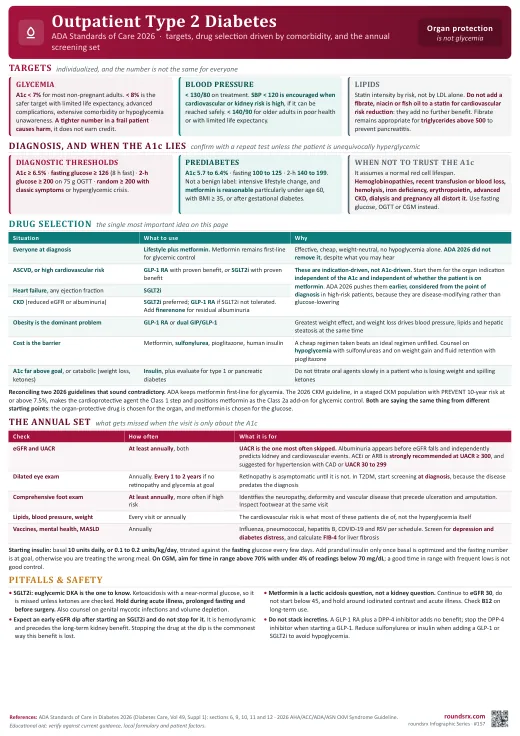
Text version
- Diagnose: A1c ≥ 6.5%, FPG ≥ 126, 2-h OGTT ≥ 200, or random ≥ 200 with classic symptoms. Need two abnormal results on different days, or one plus classic symptoms, because a single value can be assay or stress artifact.
- A1c < 7% for most DCCT, 1993, correlates with TIR > 70%. This is the threshold where microvascular benefit accrues.
- < 6.5% if early disease, young, no hypoglycemia risk ADVANCE, 2008, since the downside of tight control is low when life expectancy is long.
- < 8% if established CVD, advanced complications, or hypoglycemia-prone ACCORD, 2008: pushing below 6.5% here increased mortality 22%. < 8.5% if frail elderly or dementia.
- Screen all adults age ≥ 35 (ADA), or younger if BMI ≥ 25 plus ≥ 1 risk factor; repeat q3 years, because T2DM runs subclinical for years before symptoms.
- A1c is unreliable when RBC lifespan is short (hemolysis, transfusion, hemoglobinopathy, pregnancy 2nd-3rd trimester, EPO) which reads falsely low, or in iron deficiency, splenectomy, uremia which reads falsely high. Use FPG or fructosamine instead.
- Send GAD-65 ± C-peptide if young (< 30), lean, DKA at presentation, or rapid failure of oral agents: missing LADA or T1DM means the wrong drug class and a DKA risk.
- GLP-1 RA / dual GIP-GLP-1 elevated to first-line after metformin in T2DM with obesity, ahead of SU and TZD SURMOUNT-1, 2022 SELECT, 2023.
- SGLT2i for ALL CKD (eGFR ≥ 20, regardless of A1c), mirroring KDIGO 2024, because the renal benefit is independent of glucose lowering.
- GLP-1 RA + SGLT2i preferred over insulin when ASCVD, HF, or CKD coexist. Insulin is no longer the default escalation.
- Initial combination on day 1 when A1c is ≥ 1.5-2% above goal or CV risk is high: a single agent cannot close that gap and waiting wastes β-cells.
- CGM at diagnosis for anyone who may benefit, no longer restricted to insulin users.
- BP target systolic < 120 for high CV or renal risk, lowered from 130.
- GLP-1 RA first-line for MASLD/MASH liver fibrosis in T2DM ESSENCE, 2024; and GLP-1 RA in T1DM with BMI ≥ 30 (≥ 27.5 in Asian Americans) for the first time.
- Lp(a) once per lifetime in diabetes, paralleling the 2026 ACC/AHA dyslipidemia guideline.
- Default rule, these are ADD-ON to metformin, not replacement. Keep metformin (mortality benefit, weight neutral, cheap, synergistic) and layer the comorbidity-targeted agent on top. Replace only when metformin is contraindicated: eGFR < 30, severe GI intolerance, or prior lactic acidosis.
- ASCVD or high CV risk → GLP-1 RA (semaglutide, liraglutide, dulaglutide). Reduces MACE, meaning MI, stroke, CV death SUSTAIN-6, 2016 LEADER, 2016, plus 5-15% weight loss. GI nausea rate-limits titration.
- Heart failure, HFrEF or HFpEF → SGLT2i (empagliflozin, dapagliflozin). Reduces HF hospitalization and CV death even in patients without diabetes DAPA-HF, 2019 EMPEROR-Preserved, 2021, so it is now guideline-directed HF therapy in its own right.
- CKD, eGFR 20-60 or albuminuria → SGLT2i (dapagliflozin, empagliflozin). Slows CKD progression 30-40% DAPA-CKD, 2020 EMPA-KIDNEY, 2022. Initiate down to eGFR 20 and continue to dialysis: the glucose-lowering effect fades at low GFR but the renal benefit persists.
- Obesity is the priority → GLP-1 RA (semaglutide) or tirzepatide. Tirzepatide gives the most potent A1c reduction (~2.5%) and weight loss (~15-20%), which is disease-modifying in obesity-driven T2DM rather than merely glucose-lowering.
- MASLD / MASH → GLP-1 RA (semaglutide preferred), ADA 2026 first-line for liver fibrosis in T2DM. Pioglitazone also improves liver histology but causes weight gain.
- Prior stroke → GLP-1 RA. The anti-stroke effect is specific and stronger than SGLT2i (non-fatal stroke down 39% in SUSTAIN-6, 2016, 24% in REWIND, 2019). Add ASA plus statin per ASCVD guidelines.
- A1c ≥ 10% WITH symptoms (polyuria, polydipsia, weight loss, ketones) → insulin urgently. Catabolism means oral agents are too slow: start basal 0.1-0.2 units/kg, titrate every 3 days, and rule out T1DM (GAD antibodies, C-peptide). Transition to orals once asymptomatic, since reversing glucotoxicity often restores β-cell function.
- eGFR < 30 → STOP metformin (lactic acidosis risk) and use GLP-1 RA preferentially for its low hypoglycemia risk. SGLT2i loses glucose-lowering effect here but keep it if already on for renal protection. Avoid sulfonylureas, especially glyburide. Linagliptin (hepatically cleared, no renal adjustment) and insulin are the alternatives.
- Older adult / frail → keep metformin if tolerated, switch to linagliptin only if GI intolerance, anorexia, or sarcopenia concern. Relax A1c to < 8% (8.5% if frail or demented) and avoid SU and basal-bolus insulin, because hypoglycemia here means falls, fractures, and hospitalization.
- Cost is genuinely the deciding factor → sulfonylurea (glipizide) or pioglitazone. Why SUs are not first-line: hypoglycemia (glyburide is on AGS Beers Criteria), weight gain 2-3 kg, secondary failure within 5-10 years as β-cell function declines, no CV mortality benefit, and no renal protection. Where SUs genuinely win: MODY (HNF1A / HNF4A) on clinical merit, pancreatitis history that precludes incretins, bridging a prior authorization, or an uninsured patient (SU pennies/day vs SGLT2i $300-500/mo, GLP-1 RA $800-1500/mo).
- A1c q3 months while titrating: RBC turnover means anything sooner still reflects the prior regimen.
- Dilated retinal exam: T2DM at diagnosis (20-30% already have retinopathy from 4-10 years of subclinical hyperglycemia), T1DM within 5 years of diagnosis; then q1-2 years if normal, annually if any retinopathy.
- UACR + eGFR annually. UACR ≥ 30 → start ACEi/ARB even if BP is normal; UACR ≥ 100 with eGFR 30-90 → add finerenone. Confirm with 2 of 3 abnormal samples before labeling.
- Foot exam: comprehensive annually (monofilament, vibration, pulses), visual inspection every visit, because loss of protective sensation plus deformity is the amputation pathway.
- B12 after 4-5 years on metformin, which blocks B12 absorption and can mimic diabetic peripheral neuropathy.
- After starting an SGLT2i: expect a 0.2-0.3 Cr bump (10-15% eGFR dip). It is hemodynamic tubuloglomerular feedback, reverses, and is protective long-term: do NOT stop for it.
- CGM targets: TIR (70-180) > 70%, time below 70 < 4%, time above 180 < 25%, CV < 36%. In frail older adults TIR > 50% with time below 70 under 1% (about 15 min/day) is the safer goal.
- BP every visit, lipids annually. Most CV deaths in diabetes come from BP, lipids, and unaddressed CKD, not from glucose.
- Stopping the SGLT2i for the initial eGFR dip. A 10-15% creatinine rise is expected and hemodynamic, not structural injury.
- Euglycemic DKA on SGLT2i. Hold 3 days before surgery and pause during NPO status, severe illness, or any GI illness with poor intake, because glucose may look normal while ketones climb.
- Letting a sick insulin-treated patient stop insulin. This is the #1 outpatient cause of DKA admissions in T1DM. Reduce bolus 25-50% if eating less, but never stop basal.
- Glyburide in CKD or the elderly. Renally cleared active metabolites cause prolonged severe hypoglycemia; use glipizide instead (shorter half-life, no active renal metabolites).
- Saxagliptin or alogliptin in HFrEF (HF hospitalization signal). This is NOT a class effect: sitagliptin TECOS, 2015 and linagliptin CARMELINA, 2018 are HF-safe.
- Combining a DPP-4i with a GLP-1 RA. Overlapping incretin mechanism means no added benefit and more nausea.
- Recurrent hypoglycemia treated as an event, not a regimen problem. Reverse the regimen: usual culprits are sulfonylureas, insulin doses out of proportion to current weight, missed meals, alcohol, and recent renal decline causing drug accumulation.
- Forgetting the pre-anesthesia GLP-1 hold (ASA 2023: 1 week for weekly agents, 1 day for daily) given delayed gastric emptying and aspiration risk.
- ED or urgent call: persistent vomiting, BG > 300 despite correction, moderate-to-large ketones, altered mental status, RR > 24, abdominal pain, or unable to keep fluids down for 4+ hours. These are the DKA/HHS tripwires.
- Level 3 hypoglycemia (altered mental status or needs assistance, whatever the number): glucagon 1 mg IM/SC or 3 mg intranasal at home, D50 25 g IV in clinic, then carbs once awake and a same-week regimen change.
- Endocrinology: T1DM, recurrent severe hypoglycemia, hypoglycemia unawareness, pump or advanced CGM candidacy, or A1c off goal despite triple therapy.
- Bariatric surgery: BMI ≥ 35 with T2DM, or BMI ≥ 30 with poor control on multiple agents. Roux-en-Y and sleeve both give 60-80% diabetes remission at 1 year.
- DSMES at the 4 critical times: at diagnosis, annually, when complications develop, and at care transitions (insulin start, pump, pregnancy, transplant), because these are the moments self-management actually breaks down.
- Hypoglycemia unawareness: 2-3 weeks of strict hypoglycemia avoidance (temporarily relax the A1c target) restores adrenergic warning symptoms; CGM with predictive low alerts is the single biggest tool.
- UKPDS 34, 1998: metformin cut all-cause mortality 36% despite similar A1c to SU/insulin, which is why metformin stayed first-line and SUs did not.
- EMPA-REG OUTCOME, 2015: first SGLT2i CV outcome trial, and the benefit was too large and too fast to be explained by A1c lowering.
- LEADER, 2016 and SUSTAIN-6, 2016: established GLP-1 RA as the cardioprotective class in ASCVD.
- DAPA-CKD, 2020: SGLT2i became standard of care in CKD with or without diabetes.
- ACCORD, 2008: the reason A1c targets are relaxed, not tightened, in high-risk patients.
- DiRECT, 2018: remission is achievable with weight loss, which reframes obesity treatment as diabetes treatment.
- Legacy effect: the 10-year post-trial UKPDS follow-up showed lower MI and death in the intensively treated group even after A1c had equalized. Treat early and hard; relax later.